
'Hired shepherds': When grandparents raise their children's children
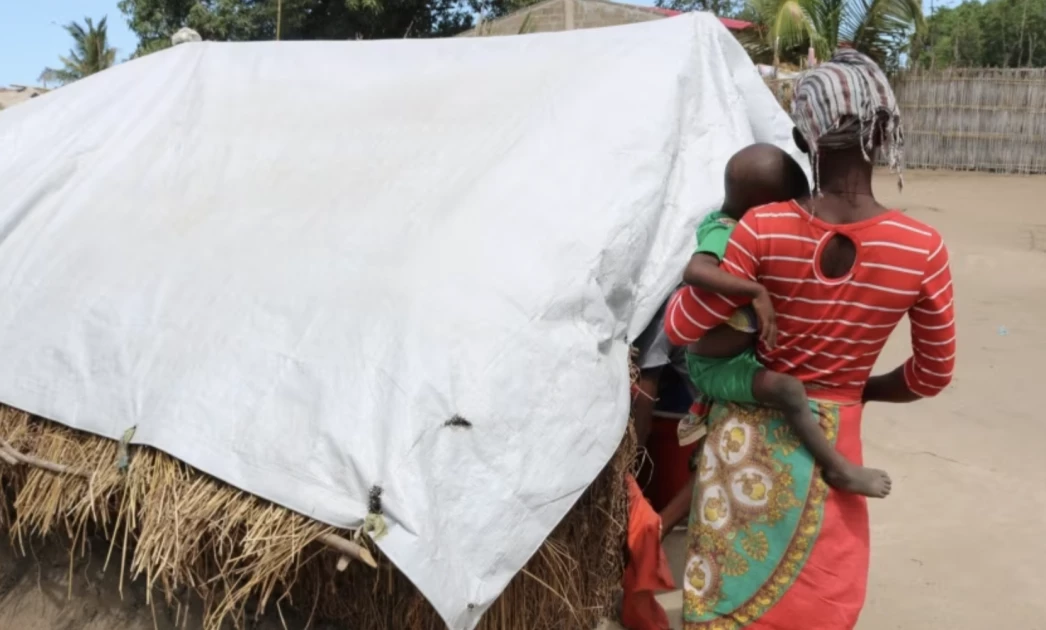
A woman walks with a child in the northern Mozambique province of Cabo Delgado, Mozambique. Photo/Reuters

Audio By Vocalize
A recent study by Citizen Digital has however disclosed that not only are the seemingly vulnerable children the only ones under their grandparents' care but also those resulting from abandonment by their supposed irresponsible guardians.
In one of the constituencies in Machakos County, research found that about 35 out of every 300 to 400 school-capacity of pupils in local primary schools are cared for by their grandparents.
The researcher deduced the findings from a sample of three public primary schools after both the Ministry of Education and Kenya National Bureau of Statics (KNBS) confirmed there was no absolute data survey regarding children in the said category.
Even though most people globally would argue that children living with their grandparents have more pros than cons when it comes to behaviour and intellect, the local study shows that when the stay is prolonged, it can result in more challenges for the caregiver and the child.
What benefits can children gain from living with their grandparents?
Recent 2021 research in the United Kingdom found that children who spent more time with their grandparents were at a decreased risk for having emotional and behavioural issues, and were far better off in terms of their emotional intelligence.
To the child, the research revealed granddads and grandmas could offer a window into the lives of their grandchildren's parents and bring out better insight into parenthood, hone in on new skill sets and also foster intergenerational family connections.
As for the grandparents, the study concluded that staying with their heirs brought happiness and ultimately helped them live longer.
“Those who babysit their grandkids have a 37% lower mortality rate compared to people of the same age who do not have consistent childcare duties assigned to their daily lives,” reads the 2021 report by Kristin McCarthy.
Although a similar study by a UK-based insurance company Ageas, shows parents who leave their children with their parents save a total of £16 billion (Ksh. 2.5 trillion) a year in childcare costs, or £1,786 (Ksh. 276,000) a year per family, Kenya being a developing country means that is an additional burden to most grandparents who mostly live in the countryside.
Currently, according to the Ministry of Labour and Social Protection-Department of Children Services, about 13 per cent of children studying in the countryside are under the care of their grandparents.
Introduction
The usual interaction between a grandparent and grandchildren that involves visits during school holidays or the occasional weekend visits and vacations is just a part-time responsibility to them. Things, however, get arduous when they have to assume the whole responsibility of parenting, considering their age, limited energy, health problems and limited financial resources.
A popular belief throughout generations is that having a grandmother or grandfather watch the children while you go out into the world and earn a dollar can help families out financially and give them something to keep them busy seems like an offer no one would refuse.
Even though this research focused on grannies who have full custody of the child due to either single parenthood, death of parents, abandonment and irresponsibility of parents, it is notable that in some cases, parents have to work in different places and they leave their children under the care of their grandparents.
In this case, the financial status of the family is taken care of but in exchange, the grandparents have to assume the full-time parenting role. In such a situation the child is staying with the grandparents but they do not have full custody of the child.
This is similar to early teen pregnancies where teenagers give birth and they have to go back to school leaving their babies under the care of their grandparents.
Legally, grandparents acquire legal custody of the child in case the parent is declared unfit to raise the child due to mental health issues, drug abuse or premature death of the parent. In this case, the grandparents assume the whole responsibility.
The challenge
The necessity for sustenance increases because being able to provide for the children's needs such as education costs, medical needs, guidance and discipline requires support from other family members.
Under the circumstances of abandonment where the parents are drug addicts, troubled, vanished or just irresponsible, according to Matungulu Sub-County Children’s officer Nathan Kyule, the grandparents are forced to take care of the financial needs.
He says that it becomes exacting for the elderly especially in providing for the child and enrolling them to school.
Kyule notes that children being raised by their grandparents do not get enough parental support and in most cases end up dropping out of school and are privy to neglect.
Their ageing grandparents are not active enough to engage in many activities such as sporty adventures and games, especially with the new requirements of the Competency-based Curriculum (CBC).
“Most grandparents who we have seen neglect their grandchildren are not the ones whose parents are deceased but rather whose parents are alive, either living in Nairobi or have completely abandoned them,” Kyule revealed.
“We’ve observed that grandparents are more of ‘hired shepherds’ while instilling discipline and are not strict to their grandchildren… the two parties are actually buddies and that’s why most cases of indiscipline emanate from such kids.”
Andrew (not his real name) is a 64-year-old man who lives with his wife, 62, his two unmarried sons in their early 30s and 40s and grandchildren from their daughter Mary who is a divorcee.
Mary once worked in Nairobi where she lived with her then-husband before the two went their separate ways and she had to bring the children back to the village for financial support from her parents who unfortunately are unemployed.
Andrew and his wife are casual labourers and own small farms where they grow food crops on small scale.
While in the company of a teacher who teaches his grandchildren, we enter Andrew’s compound on a Sunday evening as the family prepares dinner and finds the eldest granddaughter Yvonne carrying her youngest one-year-old sibling Faith. Yvonne is an 11-year-old girl in Grade 5 at a local day school.
Her other sister Pauline is a PP2 pupil aged seven while the third born is Patrick, a three-year-old.
The scruffily-clad kids who seemingly appear malnutritioned move into the mud-hut kitchen a few minutes to 7PM where their grandmother is busy lighting fire to prepare their supper. They sit beside her on the floor to shelter from the night breeze which is setting in. The toddlers are shivering due to their light clothes and Yvonne is donning an old torn school dress from her previous institution.
Andrew decries financial constraints in feeding the family of nearly 10 people citing the harsh drought that has struck the Lower Eastern part of the country which means a scarce harvest.
“These kids require food, clothes, and books and their mother who is in Nairobi doesn’t have a job. I depend on my other daughter but she is also a casual labourer in the Capital,” he says adding that CBC is demanding.
“As you can see my maize is drying up. Unlike the other times, I am foreseeing tougher days ahead if it does not rain in the coming weeks.”
He says that the two children, Yvonne and Pauline, were forced to start school two years behind schedule as he strained to raise funds.
Andrew’s family, just like many others in this (Kilimambogo) village and across the country are feeling the burden of raising their children’s children notwithstanding the fact that most live below the poverty line.
Children from these similar households lack basic amenities for proper growth such as a balanced diet, clothing, medical care and adequate education.
“As for my education, in our time I did CPE. I don’t understand this thing they are calling CBC. Sometimes they want me to help them with their homework and I just can’t… I tell them to go back to the teacher mimi sijasoma (I am not educated).”
At times, children act as co-parents taking care of their siblings like the case of Yvonne who we observed has been carrying her edgy sister for more than one hour.
“At times when my wife goes to the market, especially on Fridays, Yvonne has to remain behind so that she takes care of her younger sister since I have to work to feed the family.”
Educational support
Anybody born in the early 90s will agree that education was only but a privilege left to the most affluent families in both the pre-and colonial eras.
This means that most parents of then, the current grannies of our time are ‘illiterate’ in matters CBC which requires learners to be offered assistance in their school activities and homework.
Mrs Susan Mutuku is the headteacher of a local primary school, where Yvonne and most children in the area attend.
According to Susan, more than 30 students in the institution are being taken care of by their grandparents due to issues such as divorce, single motherhood, poverty and unemployment and negligence by parents.
She underscores the impact of the rising cases highlighting the lack of basic school requirements, failure by students to do their assignments, poor performance, truancy and absenteeism and increased school dropouts which in turn lead to early pregnancies and in some isolated cases HIV/AIDs infections.
The deputy headteacher Janet Mutuku who deals with children’s welfare and knew most of the students from the affected families revealed that most pupils lack basic amenities in schools such as proper school attire, and stationery and most pupils say they can only afford one meal a day.
“Preparation is consequential in children. Most grandparents in this region are illiterate, and lack gadgets needed in schools such as mobile phones which are crucial in the current CBC curriculum, especially the ICT-related courses.”
She, however, noted that some grandparents were better off than supposed 'irresponsible' parents and guardians precisely the habitual drunkards who tend to abandon their kids’ basic needs probably due to poverty.
Emotional and Psychological support
Child psychologists believe that grandparents may not be able to keep up with the present parenting skills due to the age gap and therefore it becomes challenging for them because they lack knowledge of child development issues.
While emphasising on developmental states depending on the age when the grandmother begins raising the kids, Jacqueline Ngina a psychologist based in Makueni says some lack parental love, disconnect and others exhibit clingy behaviours at the late stages of their lives.
"Developmental stages are very important. From 0 to one age, you will see the children may develop trust issues if the grandmother is fond of leaving the child unattended for long durations. Others may show messy/ disorganisation later or rather become pessimists depending on the traits of the caregiver."
On the issue of age difference, she adds, poses a social challenge between the grandparents and the grandchildren since the children may often feel disconnected from their grandparents or completely misunderstood if for instance they had been used to their parents’ way of parenting.
Abandonment
In situations where parents abscond their childcare duties leaving their children under the care of grandparents, Ageas report shows that the children may end up with emotional trauma and in some lone cases, the fear of abandonment later in life.
The children in this category are prone to anxiety, mood swings, anger issues or depression and may be victims of low self-esteem and have trouble making friends.
Rhoda (not her real name) who completed her KCPE in 2022 garnering 300 is a classic example of parental neglect.
The 13-year-old girl had been staying with her step-grandmother and a step-dad who is a Boda Boda rider in the area. Her mother reportedly disappeared while she was in class seven after she allegedly remarried for the seventh time and Mutheu was forced to remain behind since she was heading to class eight.
“I think my mother relocated to Machakos after remarrying her second husband. I decided to stay here with my step-grandmother because I wanted to complete my class eight. I have not seen her since 2021,” Rhoda explained, saying they had been constantly relocating.
“This is my fifth school since I joined class one because we have been moving from one place to another.”
In November 2022 shortly after finishing her KCPE, Rhoda was precipitously told to leave her home to look for her mother.
She was forced to seek refuge from her teachers whom she says, throughout her studies, were supportive by providing her with basic school items. They later referred her to the head teacher who voluntarily took her in for about two weeks before reaching out to the mother. She took the girl and the two moved to Machakos.
Out of the over 10 families we visited in the company of the teacher, most families lacked basic amenities such as electricity, adequate water and proper resources needed for education.
The two school heads and the sub-county officer say the lack of amenities has psychologically affected most children’s health.
“When children lack the basics their colleagues have, they tend to be emotionally upset and with time you as a teacher can notice their esteem levels are affected.”
Likewise, they added that hard-up grandparents lack the resources to fully provide medical care whenever their grandchildren fall ill. It is possible that they may not be able to visit the hospital every time they are sick or afford the right diet.
“Due to a lack of authoritative parental skills and minimum supervision from the grandparents, these children develop negative habits. The methods of disciplining these children may not be appropriate or effective enough. Boys start using drugs while the girls up pregnant at a young age due to a lack of appropriate guidance,” Children’s officer Kyule says.
Kyule says the government has taken the initiative through the Department of Children Services to call out the parents and urge the grandparents to reject calls by their children to take care of their children.
“We have been following up on such families and if we get reports of children living with their grandparents while the parents are out there, we are now directing the grandparents to bring to us their children.”
Join the Discussion
Share your perspective with the Citizen Digital community.
No comments yet
This discussion is waiting for your voice. Be the first to share your thoughts!