
OPINION: It’s about time! Stronger engagement of women needed for climate justice to be a reality
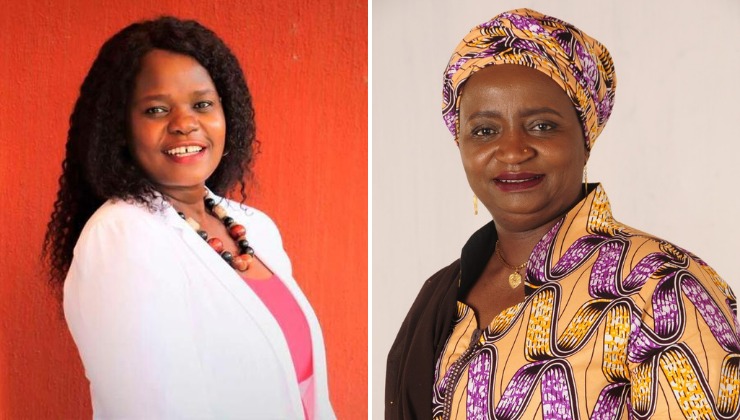
(Left) Anna Mutavati UN Women Kenya Country Representative, Kenya and Dr. Asha Mohammed, Kenya Red Cross Secretary General.

Audio By Vocalize
“The decisions you make here will help determine whether the rains will return to our lands. The decisions you make here will help determine whether the fruit trees we plant will live or perish. The decisions you make here will help determine whether children will have food and water.” These were the words of 26-year-old, Kenyan climate activist Elizabeth Wathuti while addressing leaders at Glasgow during the 2021 COP26 summit.
Ms. Wathuti gave this speech at a time when Kenya was facing (still is) acute drought that has caused severe hunger and malnutrition for communities in the Arid and Semi-Arid areas where in most cases more women and children are highly vulnerable. In her remarks, she emphasised that climate justice and climate action are in the hands of our leaders and that policies designed by governments and their stakeholders will determine the future of our continent.
Inclusion in Climate Policies
Women and girls’ climate activists like Vanessa Nakate, Elizabeth Wathuti, Greta Thunberg among others, are breaking the glass ceiling by advancing the climate change conversation and calling for climate action in global forums.
Their voices which capture the magnitude of challenges relating to climate change, are proof that for climate change emergencies to be addressed, both genders need to have the same level ground to speak out and advise on policies that lead to climate action and food secure solutions.
Progress is being made to include the voices of women in climate change decision-making spaces and processes. However, for a gender that contributes 70% of Africa’s food through agriculture, women are not granted the credit they deserve, and, unfortunately on land rights, own less than 20% of it worldwide, yet the land they till is the fulcrum productive resource for food security and wellbeing.
It is a moral duty for organisations and governments to reposition their stance on women’s leadership, moving from constitutions that proclaim gender equality on paper, and actually doing the work of having women at the leadership tables where critical solutions on climate justice are made.
UN Women, through its mandate for advancing Gender Equality and Women’s Empowerment, and working with its development and CSO partners, is centering women’s voices in climate change policy design. They do this is by supporting National and County governments to integrate gender perspectives in climate smart agriculture and climate change adaptation policies, cascade them and embed them into county integrated development plans for sustainable planning and resourcing.
To identify more gaps in the climate and gender conversations, UN Women through the UN Common Chapter in the strategic plans of UNDP, UNICEF, UNFPA, FAO and the whole of the UN System, works through its Women Count programme to highlight the important data that is disaggregated by gender. This is crucial in mainstreaming gender into international, national and local climate actions.
Kenya Red Cross, as an organisation that invariably strategises on ways to mitigate disasters, has employed gender sensitivity to its climate change solutions by adequately involving women in leadership and communities in disaster policy formulation and encouraging more female participation in leadership decisions.
Additionally, Kenya Red Cross Integrates gender and inclusion in Climate Change programs by considering the implications of climate change for various groups in society, and developing interventions that address the needs of women.
Gender-sensitive response to climate change
Long-term shifts in our climate is an intrinsic social and economic issue that has no bias on who to affect, but the end results affect communities differently.
Take the example of floods; men can easily move to camps and survive on the basic needs provided by humanitarian actors. However, for women, basic needs are not standardised to food, shelter and clothing.
There is the need for dignity kits such as sanitary towels and well put-up hygiene structures within the camps to create safety for women and girls who are also vulnerable to sexual and gender- based violence.
As humanitarian and human rights organisations, it is our responsibility to create emergency response channels that factor in the multiple burdens that women face during climate change disasters. Board room solutions and ideas need to be informed by community needs, listening to those who are affected the most and amplifying response channels to suit their needs.
We call on leaders in the financial, economic, humanitarian, NGO and corporate sectors, to develop and promote gender inclusive agendas in their programming and policies. As we seek to address the different effects of climate change to our communities let us align solutions in gender transformative methods that sustainably ensure that women are not left behind.
Climate action in its entirety, should consider programming that leverages on equality!
The authors are Dr. Asha Mohammed, Kenya Red Cross Secretary General and Anna Mutavati UN Women Kenya Country Representative, Kenya
Join the Discussion
Share your perspective with the Citizen Digital community.
No comments yet
This discussion is waiting for your voice. Be the first to share your thoughts!