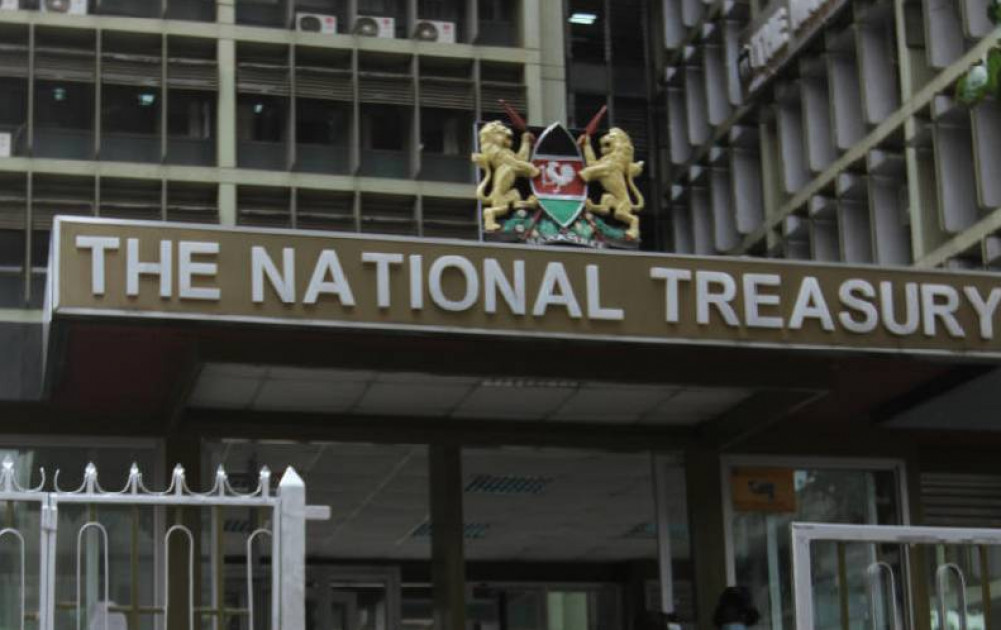
OPINION: Treasury's public participation signals policy shift towards citizen involvement

Audio By Vocalize
Ongoing public participation consultations by the Ministry of Finance, are very welcome. As part of a team with the Okoa Uchumi Coalition (OUC), I took part in discussions with Kenya Revenue Authority (KRA) plus National Treasury and Planning officials on 1 February 2023.
Though the conversations focused on the development of a new National Tax Policy, they are truly a culmination of various forms of engagement in public finance management (PFM) advocacy.
Namely, these range from legal drafting, policy submissions, separate strategic -somewhat secretive- meetings, and court cases in the public interest. It was therefore nice to just talk face-to-face for a change.
Courteous in their reception of our proposals, and insightful in their critique of our perspectives, my colleagues and I left the meeting with a greater understanding of the government's needs in actualizing an improved domestic revenue mobilization (DRM) regime for Kenya.
The inclusion of citizens in policymaking has two corresponding elements. First, the implication for the government is that it gets to fulfil constitutional obligations by facilitating the rights of citizens to state their priorities within revenue cycles.
Secondly, the government gets to allocate the requisite service delivery responsibilities by subjecting proposed taxation measures to public debate and making linkages to existing economic realities such as debt repayment.
For citizens, the consequence of attending policy forums, presenting revenue collection concerns, and scrutiny of strategies, legislations, or regulations, shape new citizenship in the face of existing tax burdens.
New skills and practices develop towards creating a more empowered Kenyan citizen who can constructively influence decision-making processes. It creates the required fiscal democracy and responsibility entrenched by human rights-based approaches.
Be it the current tax policy, the recently published budget policy statement, or the forthcoming Finance Bill 2023, Kenyans should be encouraged to take part a lot more in such processes even in their individual capacity.
That would be the only way to begin addressing the causes of emerging issues, explaining the patterns of existing practices, and contemplating troubling capacity gaps. Identifying causes determine the hierarchy of problems, their immediate sources, and systemic manifestation of taxes burden to Kenyans.
Establishing patterns of tax injustice defines linkages between bearers of responsibilities and beneficiaries of rights. This clarifies the duty of the government in ensuring taxpayer registration, enforcement of tax return filings, the accuracy of data, and consistent disclosures as required by law.
Accordingly, the impact of taxpayer rights such as freedoms related to accessing information, protection of privacy, determination of confidentiality, representation, due process, are measured on a scale of presumed honesty, impartiality, simplified effectiveness, and reasonable treatment, that dignifies Kenyans.
Lastly, locating capacity gaps makes linkages between the ability of citizens to claim their rights and the roles of decision-makers to fulfil their responsibilities. This clarifies the duties, authority in terms of processes, available resources for implementation, powers, and means of public communication.
Going through such a process entrenches importance, develops the necessary consensus, confirms the feasibility, and urgency of actions taken. This essentially prepares the country in a fiscally responsible way towards annual revenue cycles and preparation for the next emergency or other inadvertent events.
Ultimately, the Kenyan tax policy-making process will become more enhanced and legitimized through following the rule of law by activating rights of citizens while holding the country’s leadership accountable.
It will make communities more empowered when they get to understand tax administration processes, practices, and partnerships. Government agencies will also become more responsive to a point of eroding elitist perceptions of the Ministry or punitive characterization of KRA.
Revenue rights and obligations can then emerge as a new civic consciousness to power sustainable development in making Kenya plus the East African Community (EAC) a more productive economy that is beneficial for all its people.
The author is Regional Coordinator for the East African Tax and Government Network (EATGN). Follow on Twitter @lennwanyama.
Join the Discussion
Share your perspective with the Citizen Digital community.
No comments yet
This discussion is waiting for your voice. Be the first to share your thoughts!