

'My Life Was in Danger': AJEA award winner Evans Asiba on the dark trade of donkey skins

Audio By Vocalize
It’s a quarter to 8, Friday evening, at the Edge Convention Center, South C, Nairobi. The best of the journalists from different media houses are all gathered under one roof for the Annual Journalism Excellence Awards (AJEA).
Most, if not all, of the finalists have their fingers crossed, i could see them. For some, this could be their debut award. I’m seated in front of some, others behind me. The ones I saw crossing fingers were on my left… well, another on the right.
It’s a trade I once plied for a short stint before I stepped away. This time, I was here simply to witness the excellence. My eyes were on the Animal Welfare category, home to an exposé I had watched in a gripping two-part series, “Punda Ngombe,” which uncovered the dark trade in donkey skins.
Then came the moment of reckoning.
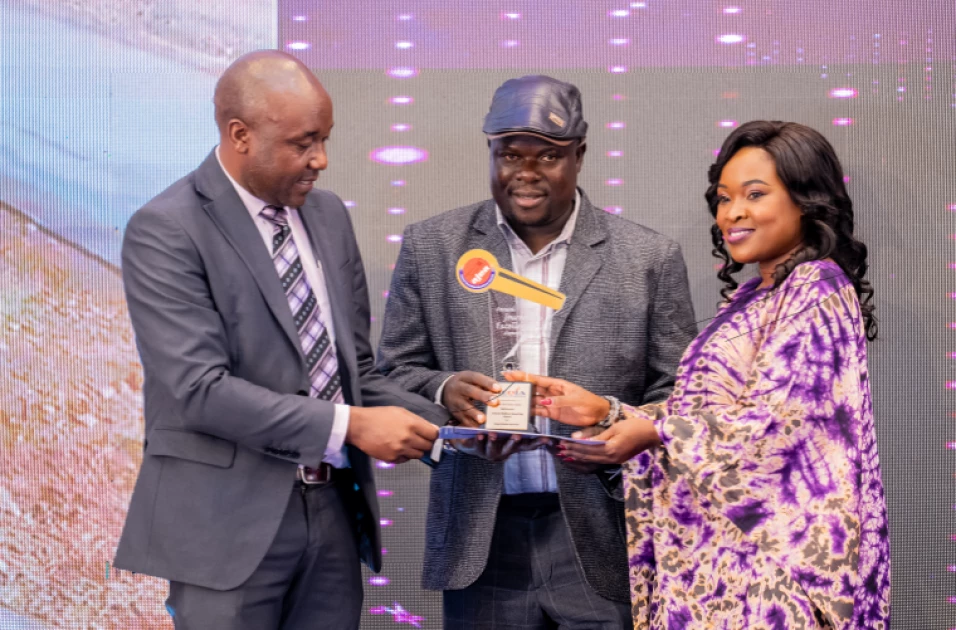
“…And the winner is…” Brooke East Africa Regional Director, Dr. Raphael Kinoti, began. “Hajj Kibwanga and Evans Asiba, both from Royal Media Services.”
It was Evans Asiba, the journalist behind the donkey skin trade exposé.
Donning a black Kangol cap, Asiba stepped up to receive the award, minutes after Hajj picked his. Later, I caught up with Asiba for a quick interview. He shared that this was his third award, but it was the first time he genuinely feared for his life while working on a story.
It was also the first time I met Asiba. Journalists always tell us the story, but rarely do we hear their story, of the risks they face and the sacrifices they make to tell these truths.
“That’s When I Knew My Life Was in Danger”
When Asiba set out to expose the brutal donkey skin trade in Kenya, he knew the risks. But nothing could have prepared him for the moment he realized his life was on the line.
“I remember when we were shooting the last bit in Machakos, at Kithyoko shopping center, that’s when I saw that maybe my life was in danger,” Asiba recalls, just moments after winning the prestigious AJEA award for his report.
The trade, driven by demand for skins used to make traditional medicine and beauty products, has left a trail of carcasses across Kenya. Farmers have watched helplessly as their livelihoods, their donkeys are stolen, slaughtered, and skinned in clandestine slaughterhouses.
But exposing this underworld came at a cost.
Bribes, Threats, and Midnight Escapes
On his way back to Nairobi from Machakos, Asiba received an offer he couldn’t accept. “I called one of my editors and told her I’d been offered cash to drop the story,” he says.
The bribe came from a foreigner allegedly involved in the trade. His editor’s response was firm: “Bring the footage to the office. Keep it safe. And for your safety, hang up, drop your phone somewhere else, and go sleep somewhere else.”
For weeks, Asiba and his team worked in the shadows, dodging hostility from persons’ benefiting from the trade. “One day, we were almost attacked by people who didn’t want the story told,” he says.
Why This Story Matters
The donkey skin trade isn’t just about animal cruelty, it’s about economic sabotage. Donkeys are vital to rural families, used for transport, water fetching, and farming. Their theft leaves already struggling Kenyans even more destitute.
Despite the closure of donkey abattoirs in 2020, the black market thrives. Asiba’s relentless investigation exposed smuggling networks, illegal slaughterhouses, and the complicity of those meant to enforce the law.
Beyond threatening livelihoods, the trade also puts public health at risk. Donkeys are slaughtered in unsanitary locations, without veterinary inspection, and the meat is passed off as beef, creating a breeding ground for zoonotic diseases.
A Hard-Won Victory
For Asiba, this award is more than recognition, it’s validation.
“In my 12 years as a journalist, this is my third trophy,” he says. “In 2023 I won for innovation in ICT. In 2024, I was a finalist under the category of Development reporting And now, this.”
He thanked the Media Council of Kenya and Brooke East Africa for standing by journalists who pursue difficult and often dangerous stories.
But the fight isn’t over. Investigative journalism in Kenya remains a dangerous pursuit, from threats and bribes to physical attacks. Yet, as Asiba proves, the truth is worth the risk.
The writer is an animal welfare enthusiast and digital communications specialist.
Leave a Comment