

OPINION: Budget 2025: Relief to Local Manufacturers
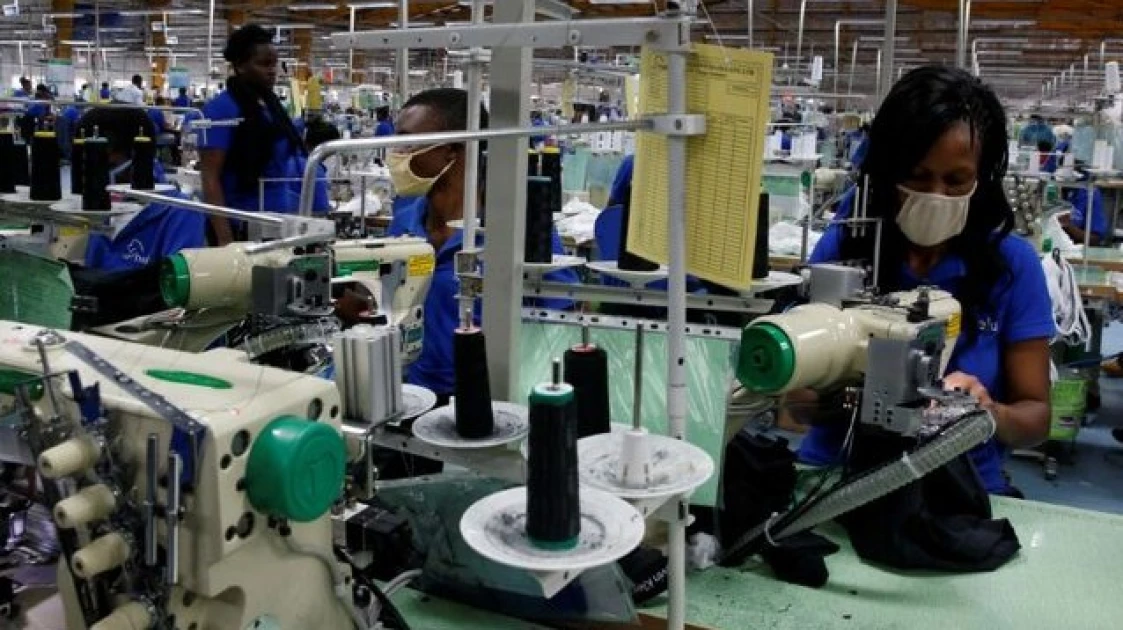
Workers at an export processing zone (EPZ) factory in Athi River, Kenya. (Photo: File/REUTERS)

Audio By Vocalize
The 2025/2026 Budget, which will be presented in Parliament this Thursday, introduces a range of tax relief measures through the Finance Bill 2025 and policy interventions that could lead to a decrease in the cost of essential commodities in the near future.
These measures targeting the manufacturing sector are aimed at stimulating domestic production as well as boosting the country's economic resilience by helping local companies that produce mobile phones, spirits, electronics, and other household items.
Smartphones for rural inclusion
The bill proposes that locally assembled phones and electronics be exempted from VAT, a move that may boost production of local gadgets.
Assemblers, however, want VAT on imported raw materials removed, arguing the move might increase costs and hinder Kenya's digital transformation agenda.
The agenda under President William Ruto seeks to ensure more Kenyans, especially in rural areas, access smartphones and join the digital economy.
Boost for Distilleries
By cutting excise taxes and simplifying licensing procedures for local distillers, the government levels the playing ground, hence empowering local distillers to compete with imported brands, thus reducing the price.
The proposal for a remission of 80% excise duty for spirit manufacturers using local raw materials will potentially reduce the cost of production and support local farmers who will supply the ingredients.
Support for small enterprises
To support business growth and cushion small and micro enterprises from the cost and complexity of VAT compliance, the Finance Bill proposes to raise the VAT threshold from Ksh.3 million.
Apart from the tax proposals, the government has also come up with policy interventions to support the manufacturing sector, as spelt out in the budget policy statement.
First the government recognises that it must support value chain development to revamp and improve the competitiveness of local industries.
They include;
Agro-processing, leather and leather products; building and construction materials; textiles and apparel; dairy products; edible and crop oils; tea and coffee, and sugar, among others.
Agro-Processing
Apart from building integrated fresh produce markets (200), the government is also constructing 18 County Aggregation and Industrial Parks (CAIPs) that will provide value addition centres and storage facilities for agricultural products.
These centres are expected to increase employment, exports, and farmers' incomes, while promoting economic growth and industrialisation.
Leather and leather products
To enhance leather value addition, the Government is planning to construct Kenya Leather Industrial Park – Kenanie; establish Common Effluent Treatment Plants and tanneries in Eldoret, Isiolo and Mombasa, establish leather processing clusters in Isiolo, Uasin Gishu, Narok, Kisumu and Mombasa, construct 10 common manufacturing facilities and optimise Ewaso Ng’iro South Development Authority tannery to produce finished leather products..
Building and Construction Materials
To support the building and Construction sector, the government will among other policy intervention measures support establishment of industrial park for construction materials; enhance local manufacturing of construction materials like clinker, cement, cabros, prefabs and electrical and electronics fittings, cables and products; and ring-fence certain components of the low cost housing project for MSMEs.
Support Apparel industry
To revitalise and enhance the competitiveness and sustainability of the Cotton, Textile and Apparel sector in Kenya, the government plans to establish textile value addition centres in Nyando and Kieni, establish seven modern cooperative society ginneries in Homa Bay, Siaya, Meru, Lamu, Kwale, Kirinyaga and Bungoma counties, as well as modernise existing ginneries.
To attract investors in apparel processing industrial warehouses with associated basic infrastructure will be constructed across the country.
Other interventions include:
Dairy sector
A total of 230 coolers will be provided to dairy cooperative societies in 40 counties, supporting local milk producers. This initiative is designed to improve milk aggregation, value addition, and market access, thereby increasing the competitiveness of the dairy value chain and reducing post-harvest milk losses, and boosting the volume of milk collected and processed.
Tea and Coffee Sub-sectors
As per the tax and policy proposals, tea and coffee farmers are likely to benefit from interventions that will boost the value chains, hence increase incomes and create jobs.
The Finance Bill 2025 specifically proposes to exempt packaging materials used for tea and coffee from Value addition, a move that could spur value addition for export.
Sugar Sub-Sector
Government statistics show that the sugar sector produced 84,000 metric tonnes of sugar, exceeding the national demand of 40,000 metric tonnes.
To boost production, 50,000 acres of land have been added for sugarcane cultivation, ensuring sustainable growth and meeting future demand.
The Government has also restored operations in all 17 sugar factories across the country, while four new sugar factories are under construction.
To further support the sub-sector, the government has allocated Ksh.2 billion in this year's budget to boost sugar production and protect farmers.
A new law to regulate, develop, and promote the sugar industry, as well as a Research Institute, has been established.
Blue Economy
The Blue Economy presents immense opportunities for the empowerment of coastal communities and economic growth.
Government statistics show that currently, the sub-sector contributes Ksh.20 billion to the economy annually, with a potential to increase to over Ksh.80 billion in five years.
To harness this potential, the government is investing in the rehabilitation of fish landing sites, markets with cold chain storage, supporting thousands of farmers with aquaculture inputs, as well as fast-tracking the completion of LiwaroninFiah Processing Plant and the first ever dedicated Fish Port and Shimoni.
The port, once complete, will increase fish handling capacity by 50,000 metric tons annually.
In the 2025/26 fiscal year, the government has allocated Ksh. 8.2b shillings to support the finalisation of outstanding fish landing sites, fish markets, and fish ports, as well as the establishment of Kabonyo fisheries and aquaculture training centres.
This will also fund the strategic development and coordination of the Blue Economy. It will also acquire deep-sea fishing vessels for offshore fishing, with a total budget of Ksh.600 million allocated for this purpose.
The government has spent over Ksh.23 billion to support the Blue Economy, having allocated Ksh.7 billion in the 21/22 fiscal year, Ksh.6.5 billion in 22/23 and Ksh.10 billion in 23/24 financial year.
Other notable intervention include the support for value addition in the edible and crop oils value chain through the promotion of cottage industries; providing small industries with processing machineries at Kenya Industrial Estate (KIE), Constituency Industrial Development Centres (CIDCs), Rural Technology Development Centre; providing cooperatives with edible oil processing infrastructure; incubate, train, and facilitate oil crops SMEs with equipment for value addition at the Ward level.
All that means is that there will be more jobs since businesses will have the capacity to grow and hire more people, local goods will become more affordable, and the economy will grow and transform the living standards of many Kenyans.
The policy and relief measures by the government are welcome as they portend the creation of more economic opportunities and jobs since businesses will have the capacity to grow and hire more people, local goods will become more affordable, increasing economic growth, thereby transforming the living standards of many Kenyans.
In the same vein, the government needs to address the perennial challenges facing investors like high electricity and fuel costs, poor roads, expensive loans and insufficient skilled labour to accelerate the transformation of Kenya into a manufacturing nation.
Leave a Comment