
OPINION: Charting a fair future: Electoral reforms for Kenya's 2027 elections
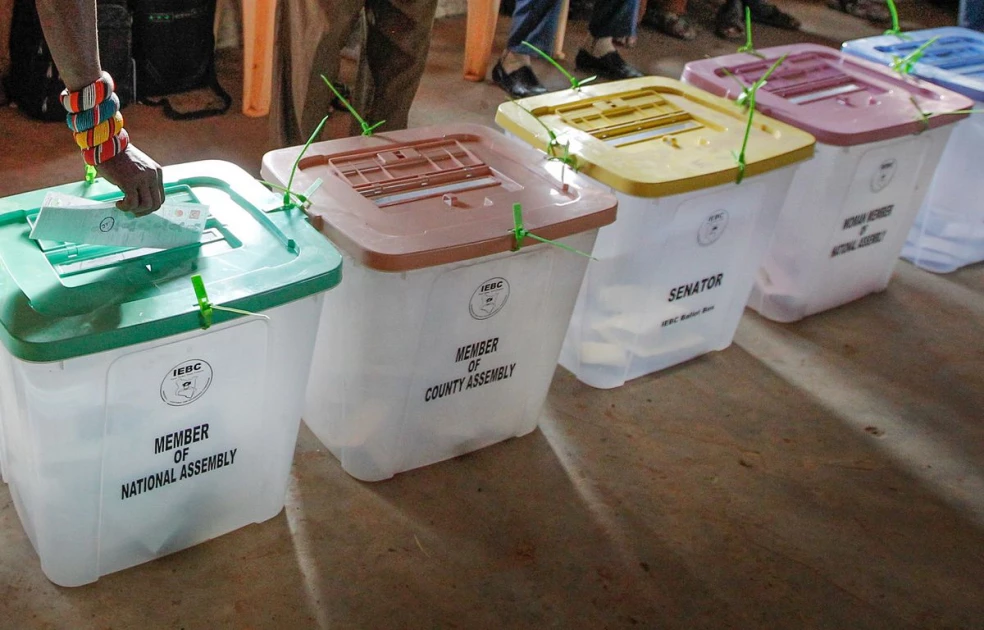
An image of ballot boxes lined up at a polling station. A voter casting his vote (far left). Image: Courtesy.

Audio By Vocalize
In the heart of Nairobi, at the Bomas of Kenya, a committee of dedicated policymakers, politicians, and experts is diligently working to shape the nation's destiny. Their mission: to ensure that Kenya overcomes the perennial post-election differences stemming of lack of trust in electoral systems to stand out as a shining beacon of democracy, fairness, and transparency.
As the Bipartisan Talks committee undertakes the arduous task of resolving pertinent issues arising from the election of 2022, electoral reforms must command key focus.
This opinion piece explores the comprehensive suggestions that could reshape the electoral landscape, giving Kenyan voters the confidence that their voices will be heard and their vote will matter in subsequent elections.
The cornerstone of the reform proposals in this piece is the exigent need to disband the Independent Electoral and Boundaries Commission (IEBC) as we know it. In its place, a lean National Secretariat is envisioned.
This restructuring would definitely cure the current centralized power structure by decentralizing the electoral process through establishment of 47 IEBCs, one for each county. The objectives are clear: bring the electoral process closer to the people, mitigate the influence of an all-powerful IEBC Chairman susceptible to manipulation and bribery, expedite result declaration, and reduce the cost of elections.
As it were, the constitution holds that the presidential election outcome at the polling station is final – therefore, which better place to tally it than the county obtains?
Under these reforms, every county will establish a County IEBC Secretariat. These local bodies will be responsible for voter registration, voter education, and the administration of elections at the county level.
This visionary approach is not only about decentralization but also about improving efficiency and reducing the financial burden on the electoral process, as it is a well-known fact that our elections is one of the most expensive for no good earthly reason!
A critical component of these reforms is the strict vetting and appointment process for vital electoral officials.
The 47 County Returning Officers (County ROs) and 290 Constituency Returning Officers will undergo a rigorous selection process. Parliament will oversee this transparent, competitive, and consultative procedure, with a steadfast focus on integrity and neutrality.
The goal is to ensure that electoral officers remain impartial and committed to upholding the integrity of the electoral process.
To enhance transparency and credibility, the African Union (AU) Observer Mission will be invited to play a pivotal role. They will conduct the final tally of presidential results from the 47 counties and announce the outcome. This additional layer of international oversight underscores the commitment to fair and free elections.
These reforms introduce strict timelines to ensure efficiency. County ROs will have just three days to tally and announce results, while the Head of the AU Observer Mission will announce presidential results within five days after polls close.
Additionally, the proposed seven-day window for filing petitions at designated High Courts and a 14-day window for determination will expedite dispute resolution, instilling public confidence in the electoral process.
As the Bipartisan Talks committee convenes at the Bomas of Kenya, the nation awaits the outcome of their deliberations with bated breath. The proposed electoral reforms in this piece, if they catch the attention of the delegates at Bomas, hold the potential to reshape Kenya's democracy, ensuring that the 2027 elections stand as a testament to fairness, transparency, and the will of the people.
The commitment to devolution, transparency, and efficiency in the electoral process underscores Kenya's dedication to fostering a vibrant democracy where every voice counts.
The fate of these reforms lies in the hands of the committee members, but their impact will be felt by every Kenyan. As the world watches, Kenya stands at a crossroads, ready to pave the way for a brighter and more equitable electoral future.
Join the Discussion
Share your perspective with the Citizen Digital community.
No comments yet
This discussion is waiting for your voice. Be the first to share your thoughts!