
OPINION: Economic Diplomacy should embrace African justice movements
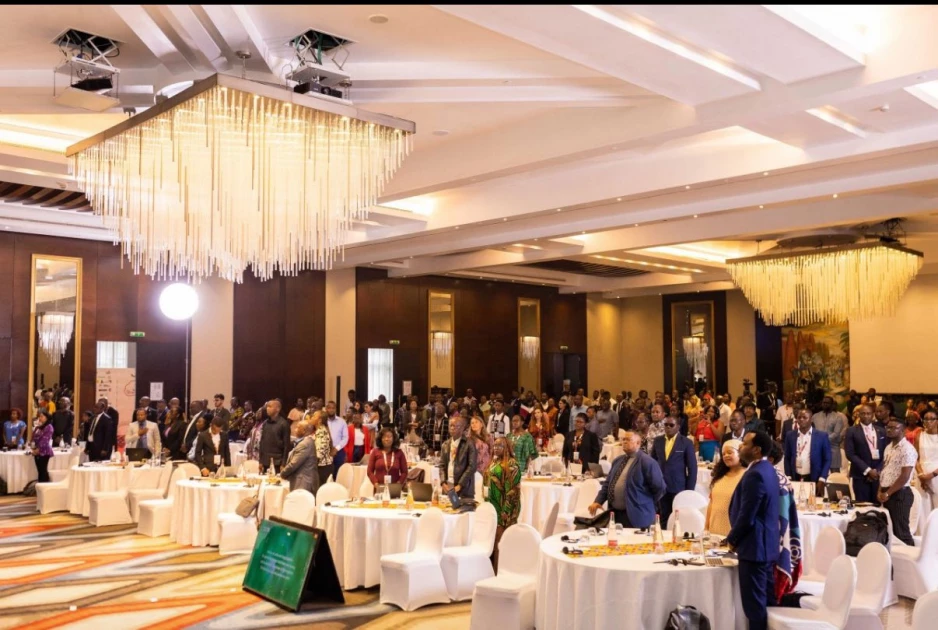
Attendees at the 5th African Conference on Debt and Development in Accra, Ghana. PHOTO| COURTESY

Audio By Vocalize
Whenever debates about economic diplomacy
arise, immediate definitions point to the conduct of international relations
aimed at securing national interests—strategies that promote exports, attract
foreign investment, facilitate market access, and shape international rules for
countries.
Governments,
the private sector, civil society, and religious organisations are generally
expected to work in unison to champion the prosperity and global influence of
their respective countries.
This
understanding, however, does not take into account the numerous other
experiences that could inform the practice of economic diplomacy.
For example,
legitimate African experiences in terms of the logic, law, and language of
dignified economic independence in relation to the global financial and
economic architecture are markedly different from those of the Global North.
This is due to
the persistent institutional legacy of exploitative economic systems such as
slavery and colonialism.
The African
policy decision-making superstructure, therefore, requires a broader
conceptualization in determining fairness in trade, investment, standards
setting, financial instruments, and partnerships. Such an approach should not
only address past grievances but also allow Africa to leapfrog into the digital
future on its own terms.
Consequently,
social and economic justice movements on the continent can provide fresh
perspectives on navigating the debilitating effects of existing development
models, particularly on issues such as pernicious debt, tax sovereignty, and
climate resolution, among other global challenges.
Worldwide
interactions demand a challenge to dominant Eurocentric models and the
championing of a collective continental imagination within economic diplomacy.
This will
allow for original thought and contextualization that can unshackle Africa from
systemic challenges hindering the transformation of lives for millions of
people on the continent.
It is
therefore refreshing to follow the fifth African Conference on Debt and
Development (AFCODD) in Accra, Ghana, which seeks to tackle the African debt
crisis by exploring a framework for reparative justice. The continent has
faced—and continues to face—various forms of harm in its economic interactions
that demand restorative action.
Over the
course of three days, from 27–29 August 2025, the conference convened 57
organizations and brought together more than 250 participants from Anglophone,
Francophone, and Lusophone countries. AFCODD is a showcase of how non-state actors
can mobilize to confront existing challenges in developmental thought and
debate.
Technocratic
negotiations and research approaches are bolstered by real-life,
people-to-people experiences that are needed to develop common African
positions for a political economy of liberation.
This should
address existing injustices by establishing domestic and international
accountability in economic relations.
Justice
movements are therefore providing continental leadership by pushing Afrocentric
perspectives that stand for plurality, interdependence, alternative
methodologies, and values to ensure a more prosperous continent—particularly
one aligned with the ambitions of its increasingly youthful population.
By
introducing a “justice quotient” in the foreign policy, external relations, and
international affairs of African states, citizens, commercial actors, and
faith-based entities on the continent can begin constructing the necessary
elements of solidarity needed for Africa’s economic integration.
New ideas,
such as feminist foreign policy, which are already being discussed in these
non-state actor spaces, are well ahead of state exploration and inclusion in
determining outcomes on issues such as gender-based violence within traditional
diplomatic interests like war.
Rapid African
responses to current policy uncertainty, the need for resilience amid
geopolitical shifts, the emerging influence of expanding digital universes, and
sustainable development are therefore crucial.
Movements
championing greater fairness are consequently at the vanguard of restructuring
the existing global framework as part of their development finance campaigns,
working to prevent illicit financial flows and engaging parliamentarians
through African roll calls on key issues—thereby paving pathways to
self-sufficiency.
This will unleash structural changes and provide the sectoral shifts, labor movements, capital transitions, increased productivity, and demographic adaptations necessary in the era of the fourth industrial revolution.
Join the Discussion
Share your perspective with the Citizen Digital community.
No comments yet
This discussion is waiting for your voice. Be the first to share your thoughts!