

OPINION: Ports have a huge role in trade growth

Audio By Vocalize
Ports operations have global importance due to how they
complement other modes of transports.
As the industry continues to grow, the numbers and capacities of the ships and ports also increase. There are approximately 400 liner services; 5,222 ships, with a combined capacity of 21.5 million in operation today.
Ports are catalysts for economic development as they enable trade and support supply chains. Port investments have economic benefits that can be direct, indirect or induced.
A port generally offers a value proposition to its region since it confers economic and social benefits but is also prone to environmental constraints. Significant increases in port operations, particularly in the containerized sector, have put pressure on developing new port infrastructures in existing facilities and for entirely new developments when additional capacity cannot be developed on existing sites.
Ports are capital-intensive infrastructures that are associated with a wide array of economic impacts, thus enhance trade. This is particularly apparent because port development and world trade are closely interrelated.
Port operations facilitate economic changes: Seaborne trade has increased substantially, in part because of the massive redistribution of manufacturing to low-cost locations (outsourcing) and in part because of ongoing economic growth.
This underlines the growing importance of logistics for organizing the resulting complex distribution system. The global evolution of container ports, particularly their differential growth rates, is indicative of the driving force of off shoring and regional economic development.
The rise of globalization and the growing number of free trade agreements has fueled the growth of international trade between countries. This has created the need for efficient means of transportation of goods through seaways, which, in turn, has increased the use of containers.
With the growing global container traffic, port operators are exhibiting high demand for efficient port and terminal operation solutions that ensure the safety of goods during transit.
Thus, the growth in containerization is expected to fuel the growth of the global ports and terminal operations market in the world, which in turn, open avenues for trade across continents.
The ports operations market is forecasted to hit a 4.64 billion dollars growth between 2020 and 2024. Amid pandemic, the ports and terminal operations market registered a growth of 2.19% in 2020 and is expected to accelerate at the rate of over 2% during the forecast period.
Seaports are critical components in spurring trade in the world. Therefore, seaports are a fundamental part of global trade. In 2017, seaports in the United States handled roughly 42 percent of all trade in goods, worth a total of 1.6 trillion dollars. Ports not only enable exporters to expand their sales to markets overseas but provide domestic consumers with access to competitive foreign goods or items otherwise unavailable domestically.
Beyond facilitating trade, ports also employ tens of millions of people in the United States and provide local and national economic benefits. More cargo moving into and out of ports requires additional employees at the port and throughout the supply chains that exporters and importers rely on.
The American Association of Port Authorities (AAPA) estimates that 15,000 jobs in the United States are created for every 1 billion dollars worth of exports shipped through domestic seaports.
In 2014, seaports in the United States generated almost 4.6 trillion dollars in economic activity and over 321 billion dollars in taxes, according to the AAPA. Seaport activity has only grown since then.
Water transport forms a central part of transport system in Africa. They help in seamless movement of goods and services across countries.
Many countries in Africa benefit from port operations. For instance, the South African Government views the country’s ports and terminals as key engines for trade, therefore, economic growth. South Africa is situated on one of the busiest international sea routes‚ critical to international maritime transportation‚ and its geographical location presents a huge opportunity for investing in a diversified maritime market.
Transnet National Ports Authority (TNPA) which is one of five operating divisions of SOE Transnet is responsible for the safe, effective, and economically efficient functioning of the national ports system, encompassing eight commercial seaports, which it manages in a ‘landlord’ capacity.
Statistics indicate that 90% of imports and exports in Africa are driven by sea. With a global middle class set to reach 5 billion people by 2030, global trade is set to continue to grow at an unprecedented rate. Reports suggest that global freighter fleet is expected to double over the next decade due to the growing consumption demands of the ever-increasing middle class.
Beyond fulfilling their respective countries’ trade needs, ports act as gateways to land-locked countries such as Ethiopia and Chad, that have significant agrarian and raw materials export potential, and great need for imports of finished and processed goods from the East and West. Without these gateways, land locked countries that have much to offer in world trade are figuratively closed for shop.
If Africa is to play a meaningful role in world trade and benefit from the rapid global growth, its sea ports will be fundamental to ensuring that success. However, African ports face the primary challenges of under-developed infrastructure and inefficient operations, leading to significant losses in potential revenue.
According to PWC, of the 72% of world container throughput commanded by developing countries, Africa collectively only sees 1%. A hypothetical improvement from 1% to 3% would increase the economic value of trade by sea by a magnitude equivalent to the GDP of certain African countries.
There is clearly a need to drive improved performance at African ports if we are to take advantage of the economic promise that the future holds.
Over several decades, waterway transport persists as the most used mode for commodities transport globally. The coastal ports facilitate business amalgamation, and for East Africa countries, mainly Tanzania and Kenya principally depend on ports for their nation GDP.
Tanzania, Somaliland and Mozambique are investing heavily in expanding and rehabilitating existing ports as they roll out newer facilities in a race to become the most preferred trade gateways in East Africa.
Ports operations are therefore essential for the East African economy. By providing transportation routes across land-locked countries in East Africa, the ports improve trade throughout the region that has struggled to transport goods to global markets.
Ports are gateways for 80 percent of global merchandise trade by volume and 70 percent by value. As an emerging market region endowed with vast natural resources and a young and growing population, East Africa must accelerate its market access and trade both across the region and with the rest of the world.
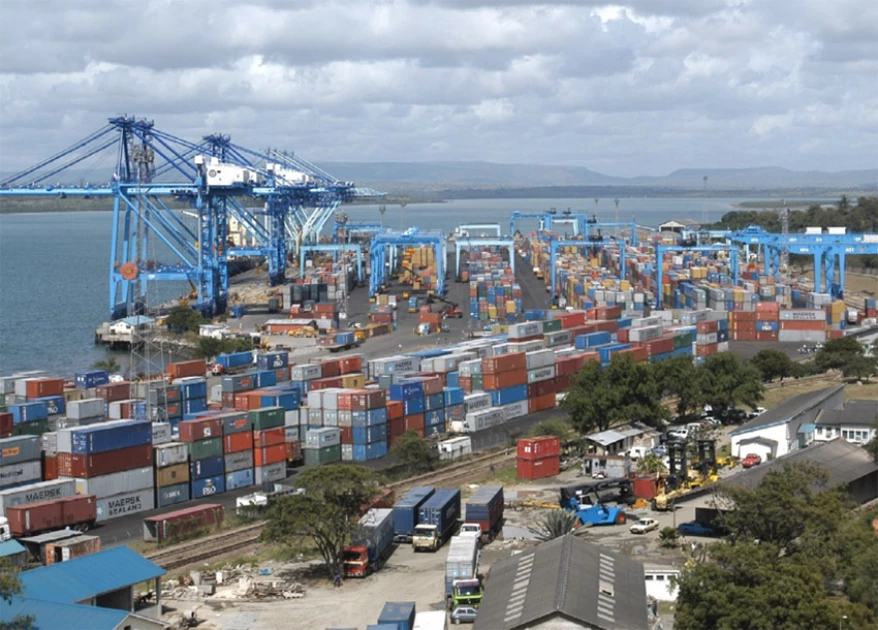
Port operations are significant for economic growth in Kenya. Kenya is among the countries in East Africa that use water ways as means of transport. The operations are managed by the Kenya Ports Authority, which is one of the most fundamental parastatals in Kenya.
As the name suggests, it is mandated to operate all port operations in the country. These functions cover inland waterways and inland container depots in various regions in the country.
The ports in Kenya help in supporting growth of agricultural exports such as tea and coffee, domestic movement of other produce. The Kenyan ports operations increase the efficiency of movement of raw materials to industries in different parts of the world.
Moreover, it helps in the transportation of finished goods from the factory to the markets, thus enhance trade activities between Kenya and the rest of the world.
Ports need trade to justify the investment, governance to ensure effective operation, capital to be built and maintained.
That ports are part of a larger process that can be described as developmentand does not make them unimportant, therefore, Kenya and other port cities, must heavily invest in the development of ports to ensure improved trade, employment , entrepreneurship, partnerships ,tourism , investments etc , which facilitates great economic development.
Chris Diaz
Leave a Comment