

OPINION: Why Kenya’s sporting excellence is a strategic national asset
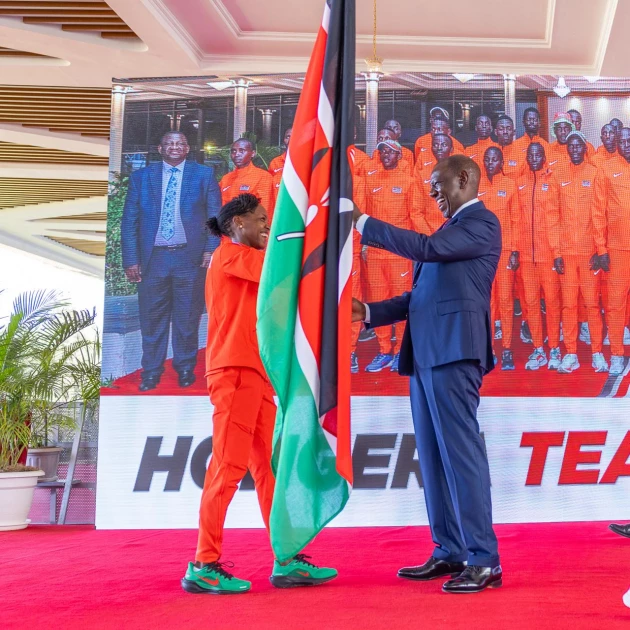
Faith Kipyegon hands the flag back to President Ruto after Team Kenya conquered Tokyo Worlds.

Audio By Vocalize

Globally, names like Kipchoge Keino, Hellen Obiri, Tegla Loroupe, Paul Tergat, and Ferdinand Omanyala are instantly recognisable—not just as athletes, but as symbols of national pride. This is no coincidence. Year after year, lap after lap, medal after medal, Kenya continues to produce global stars.
From local tracks to international podiums, the country has earned its place as a sporting powerhouse. Towns like Iten have become magnets for elite athletes worldwide, eager to train at the home of champions.
In 2019, Eliud Kipchoge made history as the first human to run a marathon in under two hours, crossing the finish line in 1:59:40. His achievement placed Kenya firmly on the global map and delivered a powerful message: No Human Is Limited. That moment underscored a profound truth—that sports are not just about competition, but also vehicles for nation branding and unity.
As Kenya prepares to co-host the prestigious Africa Cup of Nations (AFCON) in 2027 alongside Tanzania and Uganda, the stakes for the national brand have doubled. AFCON offers a rare opportunity to showcase Kenya as a sports infrastructure hub capable of hosting continental and global events.
A 2024 study by Moroccan scholar Mouad Benouzekri argues that sports are among the most powerful instruments of reputation-building. Once a tool for internal unity, sports today communicate values such as competence, resilience, reliability, opportunity, and ambition to the world. In an era where perception drives tourism, investment, diplomacy, and talent attraction, these indicators matter.
Kenya’s consistent sporting excellence shapes how the world views the nation. For brands, sports provide a powerful platform to connect with fans and stakeholders, showcasing their values in an authentic way. Athletes who succeed embody discipline, resilience, and ambition—qualities that naturally reinforce and elevate brand narratives.
Globally, nations have perfected the art of using sports to enhance identity. Brazil is synonymous with football excellence through Pelé and Neymar. Jamaica, through Usain Bolt, embodies speed. Qatar’s hosting of the 2022 FIFA World Cup positioned it as a leader in global sporting infrastructure.
Corporates have followed suit. Nike invests approximately $1.6 billion annually in sports sponsorships, including lifetime endorsement contracts worth over $1 billion for Cristiano Ronaldo and Michael Jordan. These investments go beyond marketing; they associate brands with victory and human achievement.
Closer to home, among others, Absa Bank Kenya has invested nearly Ksh.2 billion in sports over the past decade, supporting flagship initiatives such as the Magical Kenya Open, the Absa Sirikwa Classic, and the Absa Kip Keino Classic.
These events bring competitive sport into everyday neighbourhoods, reinforcing Kenya’s sporting culture. This support is deliberate, because at the heart of sports are stories of excellence and potential, lived through athletes like Faith Kipyegon and Agnes Jebet Ngetich, whose journeys inspire communities and elevate Brand Kenya.
While athletics remains Kenya’s flagship discipline, a strong national brand requires multiple narratives. Julius Yego, nicknamed “Mr. YouTube,” became the first Kenyan to win World Championship gold in javelin after largely self-coaching through online videos. More recently, David Munyua made history as the first Kenyan to qualify for—and win—a PDC World Darts Championship event in London.
Excelling in multiple sports strengthens Kenya’s versatility and broadens opportunities for our talented sportsmen and women, partnerships, and investment.
Currently, sports contribute less than one percent to Kenya’s GDP. Yet, according to the Ministry of Tourism, deliberate investments could see the sector rival tourism’s 10.4 percent contribution, growing by 9–10 percent annually.
Sports tourism alone could generate up to $2.14 billion annually by 2035. With a median age of 19 and youth unemployment at 67 percent, Kenya’s demographic profile underscores the urgency of expanding opportunity, positioning sport as a credible engine of economic growth, inclusion, and national competitiveness.
Kenya already possesses what many nations spend billions to create. AFCON 2027 presents another strategic platform to amplify this further, demonstrating Kenya’s infrastructure readiness and organisational capacity.
For many institutions, supporting sport is an investment in people, communities, and Brand Kenya—a reflection of Absa’s purpose of empowering Africa’s tomorrow, together, one story at a time. When Kenyan athletes succeed, the country’s story is carried onto global platforms. The imperative now is to sustain that momentum, broaden the focus, and harness sport as a deliberate pillar of national branding and economic growth.
The finish lines are being crossed, medals are being won. The task now is to channel that momentum into sustained economic value—a reminder that no human is limited.
Mwihaki Wachira is the Marketing and Corporate Affairs Director at Absa Bank Kenya.
Leave a Comment