

OPINION: Will Kenyan musicians navigate ethnopolitical cancel culture?
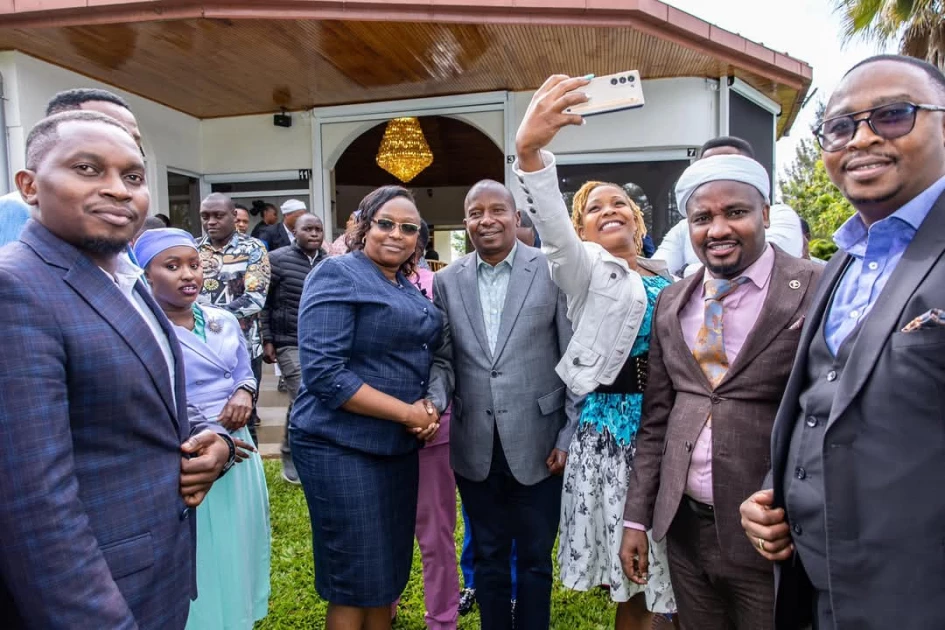
Deputy President Kithure Kindiki hosts a section of Mt Kenya musicians at his official Karen residence in Nairobi. PHOTO| COURTESY

Audio By Vocalize
Deputy President Professor Kithure Kindiki with a section of musicians from the Mt. Kenya region after a meeting at his official residence in Karen last week. DP Kindiki pledged to support the creative industry and provide long-term solutions to the challenges facing the sector.
A seemingly innocuous courtesy call by a group of musicians to Deputy President Professor Kithure Kindiki's residence in Karen, Nairobi, has ignited a firestorm of public debate, both online and offline.
What might have passed as a routine
engagement has now become the epicenter of a heated conversation about
political loyalty, freedom of association, and the creeping influence of
ethnopolitical cancel culture in Kenya’s creative industry.
The controversy escalated sharply on May 25th when former Deputy President Rigathi Gachagua, speaking during a church service in Kangema, Murang’a County, publicly called on Kenyans to deplatform the musicians—urging people to massively unfollow them, snub their shows, shun their music, and even block them from events—for meeting with Deputy President Kithure Kindiki.
He claimed
his comments were based on a meeting and directive from community elders, who
allegedly viewed the artists’ visit to the Deputy President as an act of
betrayal.
The backlash
was swift. Social media platforms lit up with criticism, debate, and concern
over whether the musicians were being punished for engaging with a political
leader outside of their perceived ethnic or political fold. A broader question
quickly emerged: is this simply political posturing, or does it signal a more
dangerous trend of cancel culture driven by ethnicity and political affiliation?
In a
statement to newsrooms, Dennis Itumbi, Head of Presidential Special Projects
and Creative Economy Coordination, condemned Gachagua’s remarks.
“Your
statements are not just insulting. They are economically reckless, politically
desperate, and spiritually dishonest,” he stated.
Itumbi
further emphasized that, for the first time in Kenya’s history, the creative
economy is supported by a fully-fledged State Department, structured policy,
and government programmes designed to protect artists’ rights, improve their
earnings, and integrate the sector into national development.
“Do not bow.
Do not flinch. Your gift is your power, and your platform is your purpose,” he
urged the musicians.
The
controversy has triggered widespread anxiety within the creative industry.
Beyond reputational damage, the affected musicians now face the real risk of
economic loss. Already, there are claims on social media of artists likely to
face declining online engagement, fewer bookings, and fears of being
blacklisted from key events or community functions. Others worry about losing
endorsements, partnerships, and even loyal fans who feel pressured to choose
political or ethnic sides.
The incident
has struck a nerve. Music fans, commentators, and industry insiders are
divided. Some view the backlash as a reaction to political alignment, while
others see deeper ethnic undertones at play—especially given the artists'
language and the regional political dynamics.
This latest
episode highlights an unsettling trend: cancel culture by association, where
creatives are ostracized not for their art, but for their perceived political
or ethnic affiliations. The implications are profound—artists may begin to
self-censor, avoid public engagements, or decline opportunities for fear of
backlash.
In a country as diverse and politically active as Kenya, there is a need to confront the cost of ethnopolitical cancel culture. Such dynamics, creatives say, pose a serious threat to creative freedom, artistic integrity, and sustainable livelihoods.
Leave a Comment