

Biggest ever Women's World Cup set for lift-off in Australia and New Zealand
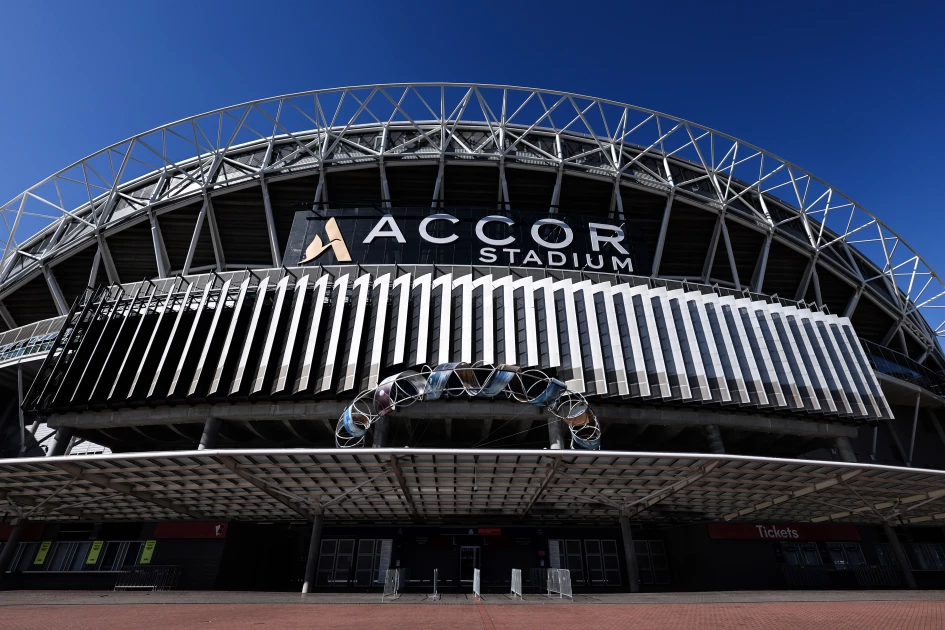
A general view shows Stadium Australia, also known as Accor Stadium, which will host matches during the 2023 Women's World Cup football tournament at Homebush Bay in western Sydney on May 16, 2023. (Photo by DAVID GRAY / AFP)

Audio By Vocalize
The first-ever 32-team Women's World Cup begins in
Australia and New Zealand on July 20, with the United States aiming to win a
third consecutive title in a landmark month for the women's game.
It has been a rapid expansion for a tournament
that featured just 16 teams in 2011 in Germany and 24 sides in France four
years ago, when the USA retained the trophy.
That reflects a dramatic rise in interest in
women's football over the last decade, beyond its traditional heartland of the
United States, and a swarm of European sides will be aiming to snatch their
title this year.
Meanwhile Australia, led by the brilliant Sam
Kerr, will hope to make the most of home advantage and go all the way to the
final in Sydney on August 20.
This World Cup is not just bigger in terms of the
number of competing nations.
FIFA has tripled the prize money on offer compared
to 2019, and the total pot which also covers compensation for clubs releasing
players is up from $50 million four years ago to $152 million now.
It is a huge rise on the $15 million offered in
2015, and confirmation that it is boom time for women's football, as huge
crowds at club and international matches in Europe in particular recently
attest.
-
TV blackout averted -
Nevertheless, the prize pot still pales in
comparison to the $440 million dished out at the 2022 men's World Cup in Qatar.
Meanwhile, a stand-off over the sale of broadcast
rights in the biggest European countries -– Germany, the UK, France, Italy and
Spain –- was only resolved last month.
The threat of a TV blackout was averted late in
the day after FIFA president Gianni Infantino had openly criticised the amount
of money being offered by broadcasters.
"FIFA is stepping up not just with words but
with actions. Unfortunately, this is not the case of everyone across the
industry. Broadcasters and sponsors have to do more in this respect,"
insisted Infantino in March, as he claimed world football's governing body was
receiving offers amounting to just one percent of what was being paid for the
men's tournament.
One obvious stumbling block for Europe,
admittedly, is the time difference, with London and Paris nine and eight hours
respectively behind Sydney.
"It is actually terrible business if you are
not tuning in," said Megan Rapinoe, the veteran superstar of the United
States team, a cultural icon who transcends the sport.
"You are missing out on a large cultural
moment. This is the premier women's sporting event in the world bar none and
this is a paradigm shift globally, not just in the US."
-
Injury plague -
Rapinoe was one of the USA stars who led their
fight for equal pay, resulting in a landmark collective bargaining deal last
year meaning the country's men and women would evenly share World Cup prize
money paid by FIFA.
The build-up to this tournament has also seen
Canada's national team, the Olympic champions, threaten to strike in a row over
pay, funding and contractual issues.
Meanwhile France players rebelled over conditions
in their national team set-up and a change of coach followed.
That prevented some of France's top names from
refusing to go to the tournament, but the World Cup will be marred by the
absence of numerous leading players due to a worrying plague of serious knee
injuries.
England captain Leah Williamson and star striker
Beth Mead have been ruled out, as have prolific Dutch forward Vivianne Miedema,
French forwards Delphine Cascarino and Marie-Antoinette Katoto, and USA duo
Catarina Macario and Mallory Swanson.
At least Spain's Alexia Putellas, the reigning
Ballon d'Or, will be there, fit again after spending nine months out with an
ACL injury suffered before last year's Euro.
-
England lead European charge -
"The best of Alexia is still to come, and
we'll do everything on our side to make that happen," said Spain coach
Jorge Vilda recently.
Spain are among the armada of hopefuls heading
from Europe into the southern hemisphere winter, led by European champions
England and also featuring Germany, Olympic silver medallists Sweden and 2019
runners-up the Netherlands.
"The expectations are really high and yes, we
have a dream," said England coach Sarina Wiegman.
England play their first game against Haiti –- one
of a raft of World Cup debutants –- in Brisbane on July 22, while the USA begin
their trophy defence the same day against Vietnam.
The tournament kicks off two days before that when
New Zealand face the Norway of 2018 Ballon d'Or winner Ada Hegerberg in
Auckland and Australia play the Republic of Ireland in Sydney.
Leave a Comment