

Black Lives Matter moves from protest to action for athletes
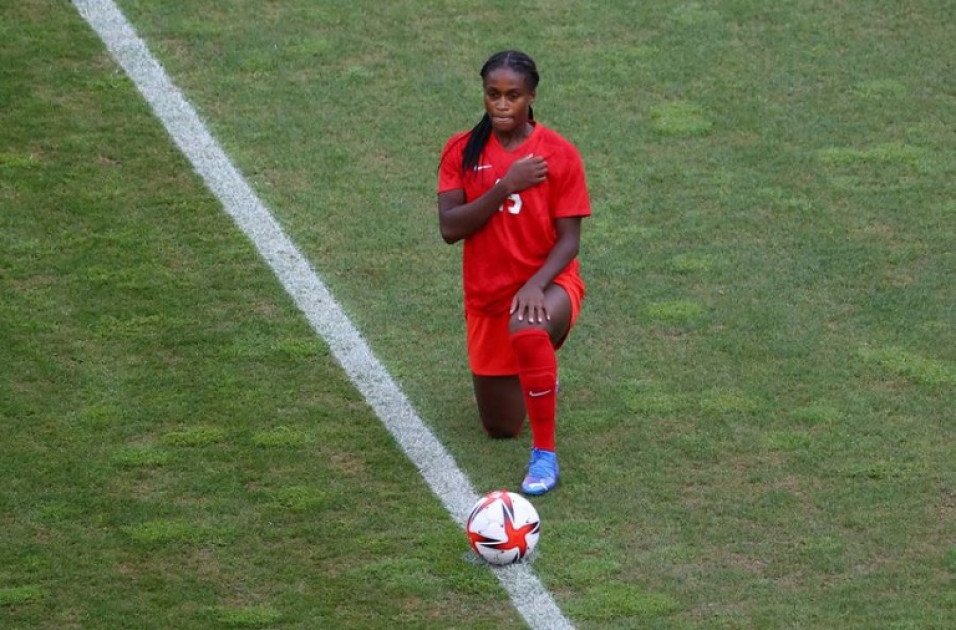
Tokyo 2020 Olympics - Soccer Football - Women - Semifinal - United States v Canada - Ibaraki Kashima Stadium, Ibaraki, Japan - August 2, 2021. Nichelle Prince of Canada takes a knee before the match REUTERS/Mike Segar

Audio By Vocalize
The Black Lives Matter (BLM) movement marched on in 2021 but to the beat of a quieter drum as sport moved from protest to action by implementing some of the change athletes helped put in the spotlight.
From tennis courts to soccer pitches and Formula One starting grids athletes took their protests into the living rooms of sports fans around the world in 2020 but this year it was away from the arenas and stadiums and in the boardrooms where BLM attempted to have an impact.
If any league or team in North America did not have a
diversity and inclusion department last year most did in 2021, pressured by
athletes and fans to come up with plans to address social justice issues.
"What we are trying to do is position our league
as a league for the new America," said Major League Soccer commissioner
Don Garber, making diversity a central plank in his annual state-of-league
address. "We all have to have an awakening of what happened over the last
year and ensure we are doing our part.
"Our diversity hiring initiative is bold, it's
not going to be easy but it is our attempt at making a difference."
Athletes around the world rose up in 2020 by joining
together to show their outrage over racial injustice triggered by the death of
George Floyd, a Black man gasping for air and calling for his mother as a white
police officer knelt on his neck for nearly nine minutes.
Floyd’s death forced a reckoning about racial
injustice and gave a global profile to the BLM movement that has emerged in
recent years to protest the deaths of African Americans in police custody.
Athletes in much smaller numbers and with less
frequency continued to take a knee or raise fists this year.
Leave a Comment