
Mixed reactions over KRU's decision to restrict ESS Cup to U-20s
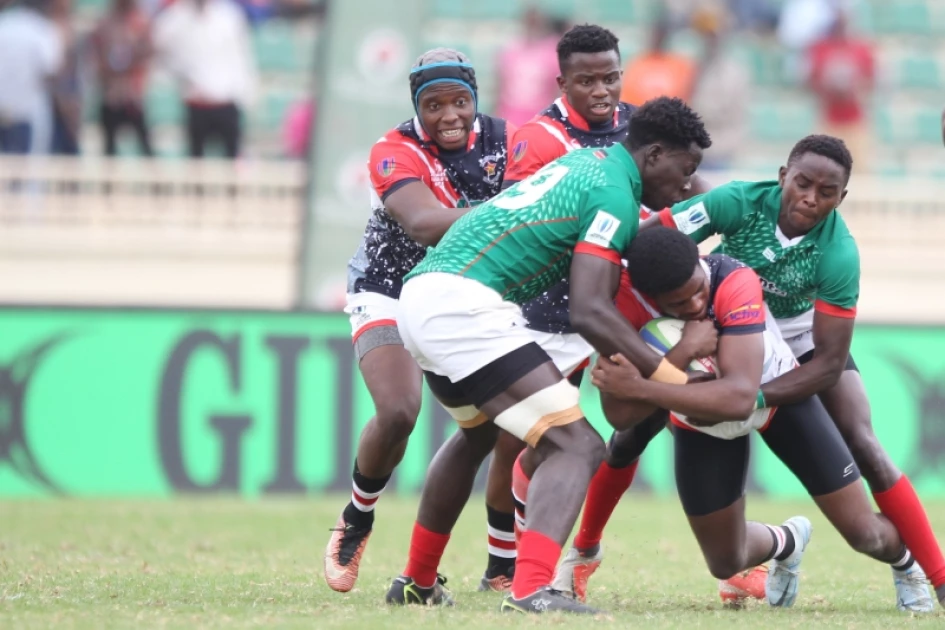
FILE: Kenya U20 Chipu and Zimbabwe fight for third position during the scramble for World Rugby U20 trophy at the Nyayo national stadium on July 30, 2023. Photo/Sportpicha

Audio By Vocalize
The decision to
restructure the Erick Shirley Shield (ESS) into an Under-20 tournament has
sparked debate across Kenya’s rugby community with reactions from club
officials and fans.
The ESS Cup,
traditionally a second-tier competition for senior players affiliated with
Kenya Cup sides, will now be reserved exclusively for Under-20 teams starting
next season.
Kenya Cup side
coaches have voiced concerns over the sudden shift in structure. Menengai
Oilers Head Coach Gibson Weru welcomed the idea of trying to develop new
talents but criticised the decision, stating that it risks sidelining senior
players who depend on the ESS for game time and development.
“I think it’s a good idea trying to develop the Under 20, but the idea of restricting the age limit is simply not practical with this proposal. Most of our players who play ESS are between 21-25 years. ESS is our development pathway before the player’s transition to the Kenya Cup.
“Our Kenya Cup
players average 23 to mid-30’s, what happens to our players between 21- 25yrs
who do not make the Kenya Cup cut?” he paused.
He noted that the
new changes if implemented will have a huge financial cost which the club is
not prepared for since they lacked quality players in that age group to make a
squad.
”We don’t have enough quality
players to make an Under-20 squad. We will have to get players for this purpose
and it will come at a huge cost.”
Kenya Harlequins
Head Coach Patrice Agunda while also cautioned the reforms and emphasised on
the need of a phased approach rather than an abrupt transition.
“I think the
changes should be done progressively, otherwise we will be locking out a large
pool of players out of the game. Players hit their peak playing potential at
different times.”
Dennis Mutiso who
is the chairman of nationwide side Murang’a Trojans has expressed satisfaction
with the reforms stating that it’s a good way to strengthen and develop Under-20
and noted that South Africa has excelled through South Africa Rugby Under-20 Cup.
“Just like South
Africa, it’s a good platform to build our U-20 team and also make it easy for U-20
coaches to select teams for national duty.”
Mutiso also
acknowledged the new format will hugely affect Kenya Cup teams who use ESS as
feeder routes for their players to the Kenya Cup.
“It will be a
blow to the Kenya Cup teams who use the tier to build their players.”
Online, reactions
have been split. Some rugby fans praised the move as a bold step toward
revitalising the sport at the youth level and funding will be key to make it a
success while others saw the move will be beneficial to lower leagues.
“It’s a brilliant
idea, now we work on funding because the u20 are usually students who need funding
more than anything else,” posted Maigua Ratemo.
“This can
also strengthen the championship as another proper tournament,” commented
Powell Ragot.
Others however
were against the reforms saying that ESS is essential to Kenya Cup teams and
makes the top tier competition more competitive.
“Eric Shirley
Shield is a reserve league; a competitive Kenya Cup must have a reserve league.
This is a forum for blooding new players, structured return to action for
injured players and an active rest forum for players on lighter duty rotation,”
James Absaloms commented on Facebook.
“Is it even practical when most Under-20 boys are in boarding schools?” asked Kevin Maguto.
Join the Discussion
Share your perspective with the Citizen Digital community.
No comments yet
This discussion is waiting for your voice. Be the first to share your thoughts!