

Novak Djokovic stands by Kosovo comments at the French Open
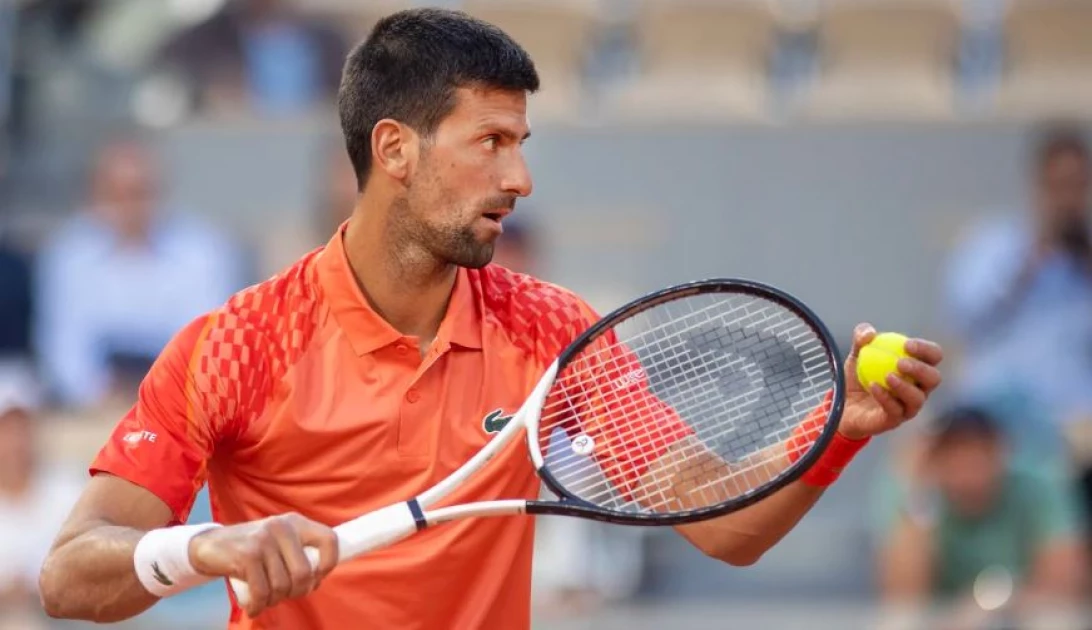
Djokovic prepares to serve against Márton Fucsovics in the French Open second round. PHOTO/COURTESY: CNN

Audio By Vocalize
Serbian tennis star Novak
Djokovic has stood by his decision to send a political message about Kosovo at
the French Open.
After
his first-round victory on Monday, Djokovic wrote “Kosovo is the [heart symbol]
of Serbia. Stop the violence” on a TV camera lens in response to violent
clashes in Kosovo.
Tensions have
been rising in the past week in Kosovo, which declared independence from Serbia
in 2008.
There were clashes with
protesters on Monday over the installation of ethnically Albanian mayors in a
disputed election.
Dozens
of NATO peacekeepers were injured on Monday after clashes erupted with Serbian
demonstrators trying to block the newly elected mayors from taking office in
the northern municipality of Zvecan.
Djokovic,
whose father was born in Kosovo, said this week that he felt obliged to “give
my support to our people and to the entirety of Serbia.”
His
reference to the “entirety of Serbia” reflects the policy of the Serbian
government, which still considers Kosovo to be an integral part of its
territory and has not recognized the country’s independence.
CNN earlier this week sought
clarification from Djokovic’s representation to see if he wants Kosovo to be
part of Serbia but did not receive a response.
“Of
course, I’m aware that a lot of people would disagree, but it is what it is,”
Djokovic said on Wednesday after his second-round victory against Hungary’s
Márton Fucsovics. “It’s something that I stand for. So that’s all.”
He
added that he had not spoken to French Open tournament director Amélie Mauresmo
about the incident.
On
Tuesday, the Kosovan Olympic Committee (KOC) called for the
International Olympic Committee (IOC) and International Tennis Federation (ITF)
to take disciplinary action against Djokovic.
The KOC claimed that the
22-time grand slam champion had “yet again promoted the Serbian nationalist
propaganda and used the sport platform to do so,” thereby raising “the level of
tension and violence between the two countries, Kosovo and Serbia.”
However,
the ITF said that players’ conduct at a grand slam is governed by the grand
slam rulebook of the relevant organizer, in which there is “no provision … that
prohibits political statements.”
The
IOC said that athletes only fall under its authority during the Olympic Games.
Djokovic
is no stranger to controversy at grand slam tournaments.
At the Australian Open in
January, he said that his father, Srdjan, didn’t intend to support
“any kind of war initiatives,” having been filmed with a group of
Russian supporters at the Australian Open.
Then
at the 2022 Australian Open, the 36-year-old was deported from the
country after arriving in Melbourne unvaccinated against Covid-19.
“A
drama-free grand slam, I don’t think it can happen for me,” he said on
Wednesday. “You know, I guess that drives me as well.”
Djokovic
faces Spain’s Alejandro Davidovich Fokina in the third round of the French Open
on Friday as he continues his bid to win a 23rd grand slam title – one more
than Rafael Nadal at the top of the men’s all-time list.
Leave a Comment