
Saudi Arabia is trying to disrupt soccer’s world order. The reasons why might surprise you

Audio By Vocalize
When Saudi Arabian club Al-Hilal reportedly planned a $1.1 billion (Ksh.163.8 billion) bid to sign French soccer superstar Kylian Mbappé – including $332 million (Ksh.49 billion) to his club, Paris Saint-Germain (PSG), and an eye-watering $775 million (Ksh.115 billion) salary packet to the World Cup winner for just one year – it was slammed by critics as sportswashing.
Mbappé might have said no to the
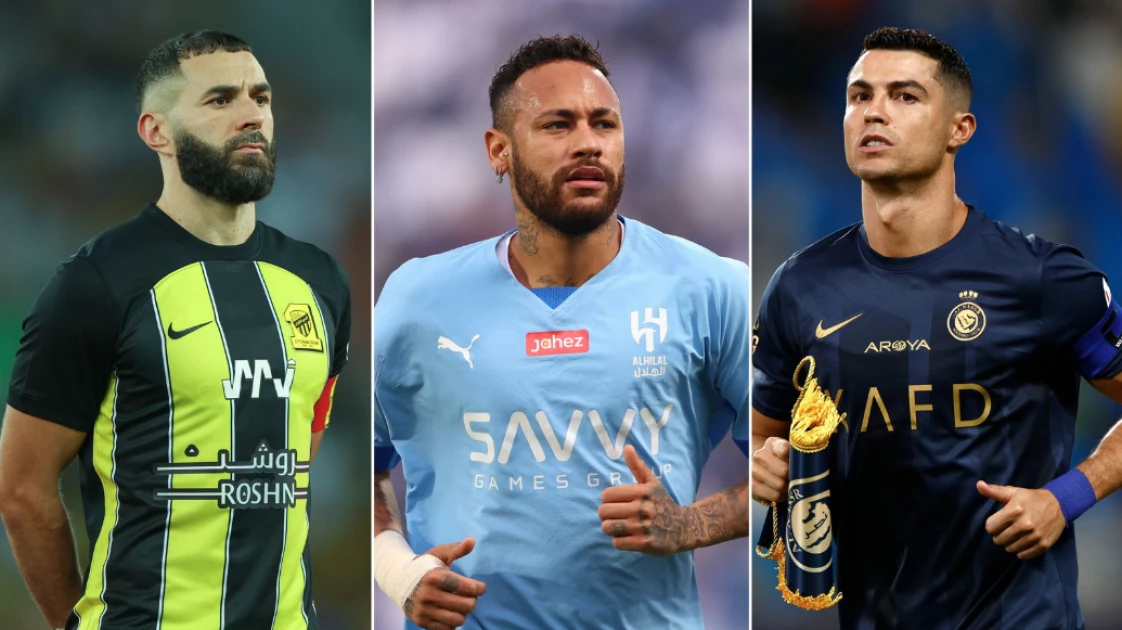
offer in July, but a month later, Neymar Jr. said yes to Al-Hilal, as
the Brazil star moved from PSG for a transfer fee of around $98.5 million
(approx. Ksh.14.7 billion) plus add-ons, according to multiple reports.
In a record-breaking transfer
window, Saudi Pro League (SPL) clubs spent close to $1 billion (Ksh.148
billion), acquiring 94 overseas players from Europe’s major leagues – France’s
Ligue 1, Spain’s La Liga, Italy’s Serie A, Germany’s Bundesliga and the English
Premier League – according to Deloitte.
Despite the Arab nation’s poor
human rights record, Saudi Arabia’s spending spree to turn
its domestic soccer league into a star-studded, bona fide competition shows the
seriousness of its ambition.
Saudi Crown Prince Mohammed bin
Salman says he doesn’t “care” about the country’s investment in sport being
described as sportswashing.
“Well if sportswashing is going
to increase my GDP by one percent, then I will continue doing sportswashing,”
MBS said in an interview with Fox News which aired
Wednesday.
Pressed on
if he was bothered by the use of the term, MBS continued: “I don’t care. I have
one percent GDP growth from sport, and I am aiming for another one and a half
percent. Call it whatever you want, we’re going to get that one and a half
percent.”
Saudi clubs, several of which
have been taken over by the nation’s sovereign Public Investment Fund (PIF),
have already attracted some of the biggest names in the sport.
By attracting some of the world’s biggest stars to the Gulf states, the SPL
wants “to drive competitiveness on and off the pitch,” though it’s keen to
emphasize that these overseas players will help develop “young Saudi talent.”
During this summer transfer window, the government-controlled PIF
increased the cumulative value of these four clubs nearly five times, making
them the most valuable in the country, according to estimates by the sports
website Transfermarkt.
Plenty of
other leading stars have eagerly said yes to the SPL, notably 2022 Ballon D’Or
winner Karim Benzema joining Al-Ittihad at the end of his contract with Spanish
soccer giant Real Madrid.
As the European transfer window
came to a close, the four PIF-owned teams have spent nearly $900 million
(€835.1 million) on buying elite international players, Transfermarkt data
shows, which ranked them in the top 20 clubs in the world by transfer
expenditure, alongside soccer giants from England, France, Germany, Spain, and
Italy.
Al Hilal alone paid more than $378 million (Ksh.56.3 billion),
more than PSG and Arsenal, making it the second-largest spender this year.
The newly
acquired players join five-time Ballon d’Or winner Cristiano Ronaldo, who has a
two-year contract with Al-Nassr where he will earn a staggering estimated $200
million (Ksh.29.7 billion) a year, according to Saudi state-owned
media, currently making him the world’s highest paid soccer player.
As of today, 21 of the most
expensive soccer players in Saudi Arabia by transfer fees – all international
stars – play for one of the PIF-owned clubs.
Despite the financial outlay, the
SPL is remaining deliberately tight-lipped about the specifics of its financial
gamble, with chief operating officer Carlo Nohra confirming to CNN Sport that
it was “not in [the SPL’s] competitive advantage” to report the salaries
offered to players and coaches.
The PIF has $777 billion (Ksh.115.7 trillion) in assets under management, according to its most recent
filing, with ambitions to top $1 trillion within a few years. In 2021, it
acquired English soccer club Newcastle United, before focusing on investments
at home. The club is now also among top spenders on players.
Saudi clubs
not owned by the PIF are also splurging on big-ticket players, with former
Liverpool captain Jordan Henderson, 33, offered an eye-watering salary of
$870,000 (Ksh.129.6 million) per week, according to multiple reports, in an
estimated $15 million (Ksh.2.2 billion) transfer from Liverpool to Saudi team
Al-Ettifaq.
In a recent interview with The
Athletic, Henderson said those numbers “just aren’t true.”
“Essentially, the signal is ‘We
mean business,’” Simon Chadwick, a professor of sport and geopolitical economy
at SKEMA Business School, told CNN.
“We’ve got so much money that for a player who is … coming towards the end of
his career, we can afford to pay him 700,000 [GB pounds a week], or whatever it
is that he’s being paid, and still have Cristiano Ronaldo and still be in the
market for other players as well,” Chadwick said, describing Saudi’s approach
to becoming a sporting superpower, adding that the sky is the limit in terms of
cost.
Saudi Arabia follows in the footsteps of several other countries –
including China and Qatar in investing large sums of money to try and turn
themselves into soccer powerhouses.
It remains to be seen whether Saudi’s turbocharged investment will have
a lasting impact or resemble something like a costly rebranding effort.
The Saudi national team has been to multiple World Cups, and the
country’s clubs have won multiple Asian titles. Saudi’s victory over Argentina
during last year’s men’s World Cup was hailed as one of the greatest upsets in
tournament history, with the country’s King Salman bin Abdulaziz Al Saud
granting a national public holiday in recognition of the win.
Club games
can attract huge crowds in the Middle Eastern nation. “For example, Al-Ittihad
against Al-Hilal, you’re talking about drawing crowds of 40, 50, 60,000 people,
these are games that are comparable in size to Chelsea vs. Arsenal, Manchester
United vs. Manchester City,” Chadwick said.
Buying star players, some
arguably past their prime, also provides an easy win for Saudi teams, according
to Kieran Maguire, co-host of “The Price of Football” podcast.
“From the
Saudi authorities’ point of view, they’re getting a ready-made product.
Everybody’s heard of Benzema. Everybody’s heard of Cristiano Ronaldo and so
on,” Maguire said.
Saudi Arabia’s lofty sporting
ambitions don’t end with the SPL or Newcastle United. The country is hosting
the 2023 FIFA Club World Cup and is bidding to host the 2027 AFC Asian Cup.
Several media reports also
indicated that the Gulf kingdom was considering launching a bid for the 2030
FIFA men’s World Cup alongside Greece and Egypt – although it is reportedly
mulling pulling its candidacy.
Meanwhile, the Royal Spanish
Football Federation (RFEF) has agreed to a contract that will see the Spanish
Super Cup played in Saudi Arabia until 2029, a deal that will earn the Spanish
governing body between €35-45 million (Ksh.5.5 – 7.1 billion) a year.
Appealing
to the youth
Saudi Arabia has a very young
population: the country’s most recent census revealed 32.2 million people live
in the country, nearly 42% of whom are foreign nationals – and 51% of the Saudi
population are under the age of 30. Of this populace, Saudi authorities say
that over 80% play, attend or follow soccer, the national sport.
Chadwick
explains that Saudi Arabia’s government is concerned with the prospect of its
younger members of society becoming radicalized or an anti-government sentiment
bubbling up like that of the Arab Spring – and looks to offer its population a
thriving soccer industry to keep it placated.
Though the soccer industry
generates employment, revenues, export earnings and inward investment, “what is
just as significant is the security of the royal family,” Chadwick adds.
The Arab Spring, a wave of
pro-democracy protests that washed over the Middle East and North Africa in
2011, achieved mixed results. Four Arab dictators in Libya, Yemen, Egypt and
Tunisia were toppled, offering a brief sense of victory for protesters, but,
since then, new wars have prompted a retreat of popular movements in the
region.
Meanwhile, failed uprisings in
Bahrain and eastern Saudi Arabia were followed by years-long crackdowns and a
continuing civil war in Syria.
“What we’re beginning to see in
Saudi Arabia right now is the emergence of a new social contract. And the
social contract essentially is catering for the needs of the Gen Z population,”
Chadwick said.
“You want Ronaldo? You got him.
You want some of the best football teams in the world? You got them. You want
the World Cup to come to Saudi Arabia? You got it … But don’t question us,”
Chadwick explained.
Maguire agrees, noting that
investing in soccer “can be seen as part of a much broader socio-economic plan,
run by the Saudi authorities.”
At the same time, there has been
“a significant increase in the number of Saudi Arabians detained by the
authorities, for example, for posting adverse comments on social media about
the country” this year, Chadwick told CNN.
Human rights group Amnesty
International told CNN that it has documented a rollback in human rights in
Saudi Arabia, including an escalating crackdown on freedom of expression and an
increased use of counterterrorism and cybercrime laws to silence dissent. Between
2022 and 2023, the organization said it has documented an increase in criminal
prosecutions compared to previous years.
In 2022, Amnesty reported the
highest number of annual executions in the country in 30 years, with 196 people
killed.
“Reputation is important in terms
of attracting foreign investment, and … Mohammed bin Salman, as much as he has
significant financial muscle, needs foreign investing for the realization of
his diversification,” James Dorsey, the author of the syndicated column and
blog, “The Turbulent World of Middle East Soccer,” explains.
Saudi Arabia is the world’s
biggest exporter of crude oil, and nearly two-thirds of its income still comes
from selling fossil fuels. But with oil prices regularly dipping below what the
Gulf state needs to balance its budget, it has focused efforts on trying to
bring in investment from abroad along with its efforts to raise oil prices.
Projections indicate the kingdom
has around 20 years to diversify its economy to ensure it is more resilient,
according to Chadwick – not least to fund its Vision 2030 projects, including
the $500 billion Neom city, a 106 mile-long linear city called The Line and a
futuristic plan to revamp the capital.
“Part of the grand vision of
Mohammed bin Salman, looking forward to 2030, he does have his desire to make
Saudi Arabia less dependent on natural resources to look at a post-fuel economy
[involving] tourism, entertainment. If Saudi Arabia can become a hub for major
sporting events, then that’s a way of attracting interest to the country,” said
Maguire.
CNN has reached out to the Saudi
Ministry of Sport for comment on allegations that the kingdom has been rolling
back human rights, and investing in soccer as a way of “sportswashing” its
image.
In response to previous criticism
about Saudi Arabia’s purported “sportswashing,” the kingdom’s sports minister
Prince Abdulaziz bin Turki Al-Faisal said: “People that don’t know Saudi
Arabia, have never been to Saudi Arabia, go out and talk about it as if they’ve
lived there for 30 years, 40 years. So I always tell people, come to Saudi.
Come and see Saudi.
“See what it is, see the people,
meet the people. Look at what the country is doing for the future of the people
in Saudi, then you can criticize as much as you like,” he added.
Lack
of transparency: Saudi threatens new systems of governance in sports
Saudi Arabia has already
disrupted the golf industry and, with soccer, Maguire told CNN, “they feel that
they can do that probably on a smaller scale, but perhaps, ultimately, to
generate more interest in terms of eyeballs if they go down the same route.”
In 2021, the Saudi
government-controlled PIF bankrolled LIV Golf, reportedly at a cost of $2
billion, attracting many of the sport’s top players away from the US-based PGA
Tour and Europe-based DP World Tour by offering big dollar prize money, with
PGA Tour board member Jimmy Dunne raising fears that they might end up “owning
golf.”
Earlier this year, the US-based PGA Tour announced it was set
to partner with the Saudi-backed breakaway LIV Golf, ending a feud that has
dogged the men’s professional game for the past year, with Dunne warning that
sport’s governing body had no choice but to reach the truce to retain some
measure of control.
“They have an unlimited horizon
and an unlimited amount of money,” he said at a contentious Senate hearing on
the truce between the two tours.
When it comes to soccer,
Aleksander Ceferin, president of European football’s governing body UEFA, has
dismissed the competitive threat that the SPL could pose.
“As far as I know, Mbappe and
[Erling] Haaland don’t dream of Saudi Arabia. I don’t believe that the best
players at the pinnacle of their careers would go to Saudi Arabia,” he said
last month.
“When people talk to me about the
players who went there, nobody knows where they’re playing.”
Liverpool manager Jurgen Klopp
took a different view, referring to the fact that the Saudi summer transfer
window stays open after European clubs see theirs close: “I don’t know how
stable it is and I think the next two weeks will show how much of a challenge
it is because whatever happens there, no one can react anymore.
“I don’t know where it will lead
to but it feels rather like a threat or a concern than not because I can’t see
how we really deny it in these moments, what can we do?” he added.
Still, the new SPL director of
football, Michael Emenalo, says what Saudi soccer is doing is “no different
from what the Premier League have done.”
“There was a time when it was all
about Italy. There was a time when it was all about Spain. What we’re looking
for in the industry is an opportunity to compete, and to compete on an even
scale and to improve upon whatever exists in the industry,” said Emenalo in a
press release sent to CNN.
New Saudi
Pro League Chief Operating Officer Carlo Nohra told CNN that there is logic
behind the league’s strategy of money is no object to lure international stars.
“We can’t expect to be paying
market value to entice people to come here at this early stage in our
development.”
But analysts say that the difference lies in the level of transparency, which
“simply doesn’t exist in Saudi Arabia,” Chadwick explained to CNN.
European soccer governing body
UEFA has financial fair play (FFP) rules on teams’ spending, while Major League
Soccer in the US has a salary cap for its clubs.
Nohra told CNN that, eventually,
the country wants 0.3% of its GDP to be from soccer to make it similar to that
of the Premier League on the UK economy – up from its current value of “0.000
something.”
“They’ve got no chance to get
into that figure at present,” Maguire explained, but added that the SPL could
perhaps move into the top 10 of the world’s domestic leagues.
“That is feasible given the
amount of money that they’re spending.”
“I think they’re realistic. They
don’t say that they’re going to overtake La Liga or the Premier League or the
major European leagues,” Maguire said.
When the Peterson Institute for International Economics compared
the world’s sovereign wealth funds on criteria including governance,
transparency and accountability in 2019, the PIF scored well below average on a
measure combining these criteria, and ranked in the bottom 10 out of 64 funds,
just above Russian Direct Investment Fund.
CNN has reached out to the PIF
for further comment about its investments in sport, particularly soccer and
golf, and criticisms about its lack of transparency.
Chadwick raised concerns over how
a lack of financial rules affecting Saudi clubs might dilute UEFA’s FFP
regulations, as well as those of the Premier League, or impact world soccer
governing body FIFA’s systems of governance.
The lack of transparency in Saudi
Arabia’s wealth fund has already raised suspicions in the US golfing and
political spheres. Earlier this summer, the Senate Permanent Subcommittee on
Investigations launched an inquiry about the PGA Tour’s agreement with the
PIF-controlled LIV Golf.
Chadwick told CNN that, so long
as there is no independent organization that monitors the reporting of every
league’s financial endeavors, “nobody really knows for sure what the accurate
financial information is.”
“This vacuum [of information],
this uncertainty is wrapped in a veneer of lobbying, which is intended to
either overinflate or underinflate player transfer values and salary
information because it serves a political purpose,” Chadwick says, adding that
this purpose is “signaling.”
“It is almost as though football
players are becoming kind of geopolitical pawns in some ways.”
Join the Discussion
Share your perspective with the Citizen Digital community.
No comments yet
This discussion is waiting for your voice. Be the first to share your thoughts!