
Sports CS Mvurya rallies Africa to adopt unified anti-doping action
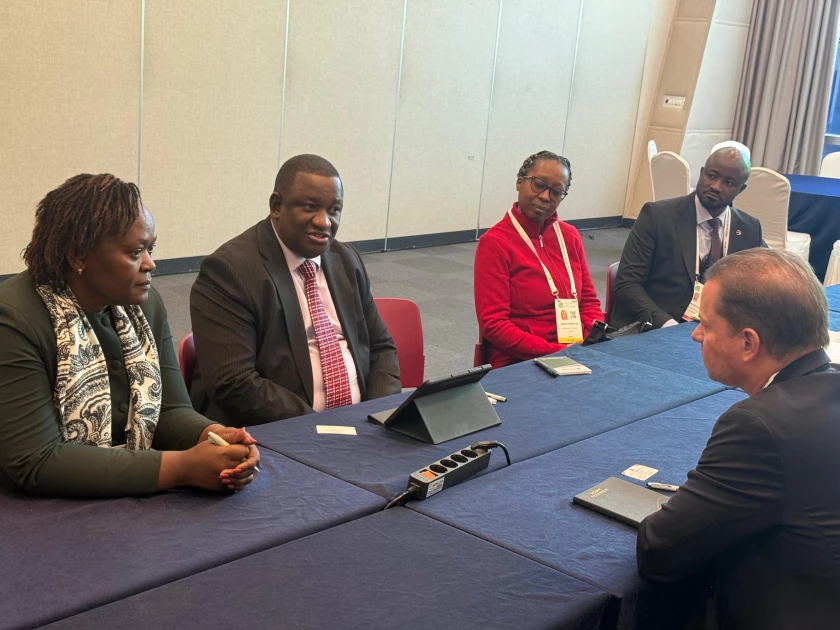
Sports CS Salim Mvurya holds high-level engagements with WADA leadership, including Director General Olivier Niggli and Africa Regional Director Rodney Swigelaar in Busan. PHOTO| COURTESY

Audio By Vocalize
Cabinet Secretary for Youth Affairs, Creative Economy, and
Sports Salim Mvurya has urged African nations to adopt a unified and
forward-looking strategy to strengthen the continent’s anti-doping systems, as
preparations advance toward the implementation of the revised 2027 World
Anti-Doping Code.
Addressing delegates at the World Anti-Doping Conference on
Sport in Busan, the Cabinet Secretary emphasized that Africa’s expanding global
sporting dominance must be matched with stronger institutional preparedness and
harmonized anti-doping frameworks.
“As African athletes continue to dominate world arenas, our
continent must match this excellence with credible, harmonized anti-doping
programs that protect fairness and the future of clean sport,” he said.
CS Mvurya cautioned against fragmented progress, noting that
sustainable success requires collaboration among nations with differing levels
of institutional capacity but shared compliance priorities. He reiterated
Kenya’s interest in hosting the 2028 Regional Conference on
Intelligence and Investigations, positioning the
country as a strategic partner in continental capacity
strengthening.
“Africa’s strength lies in understanding our diversity and
designing capacity-building models that uplift every nation, big or small. We
must invest in the right structures, the right people, and the right tools if
we are to safeguard the integrity of African sport,” he stated.
On the sidelines of the conference, CS Mvurya held high-level engagements with WADA leadership, including Director General Olivier Niggli and Africa Regional Director Rodney Swigelaar.
During the discussions, he reaffirmed Kenya’s continued
commitment to completing all corrective actions under the WADA Watchlist, in
alignment with the directive of President William Ruto, who has elevated the
protection of clean sport to a national development priority.
The Government of Kenya underscored that the watchlist
period is a strategic opportunity for long-term transformation rather than a
short-term compliance exercise.
“Kenya regards the watchlist period as a transformative
phase that will strengthen national systems, enhance transparency, and ensure
long-term resilience aligned to global best practice,” CS Mvurya affirmed.
Significant progress has already been registered by the
Anti-Doping Agency of Kenya (ADAK) across governance, national testing,
intelligence systems, investigations, education, and prevention.
The country has strengthened institutional mandates,
enhanced oversight systems, expanded testing pools through improved risk-based
planning, improved secure information handling, and scaled up athlete and
support-personnel education using globally aligned standards.
Join the Discussion
Share your perspective with the Citizen Digital community.
No comments yet
This discussion is waiting for your voice. Be the first to share your thoughts!