
SWILA: Sadio Mané – football’s purest specimen and Africa’s greatest son in the Nobel Peace Prize conversation
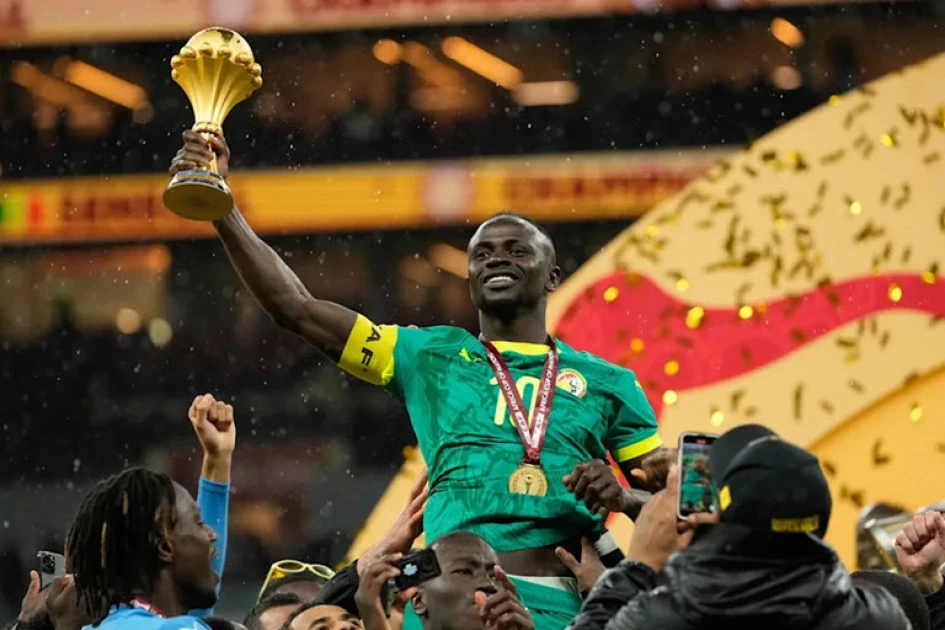
Sadio Mane lifts the AFCON trophy aloft after Senegal beat Morocco 1-0

Audio By Vocalize
Should Senegalese forward Sadio Mané be nominated for the prestigious Nobel Peace Prize [NPP]? To some, it is a far-fetched idea; to others, it is a thought that should have been entertained for eons. But first, what is the Nobel Peace Prize, and what are the criterion for awarding nominees?
The NPP is one of the five original Nobel Prizes established
by the late Swedish scientist and industrialist Alfred Nobel in his 1895 will.
Alfred, who came from a family of scientists, held 355 patents in his lifetime.
He spoke five languages fluently. The Prize is awarded annually to an
individual or organization whose work advances peace through humanitarian
action, human dignity, and the protection of mankind.
This is where and why Sadio – the Senegalese football god –
comes to mind. The talk and link to the Nobel Peace Prize was rekindled by his
act on Sunday night, when the curtains came down on the CAF Africa Cup of
Nations Finals – a tempestuous showdown between two sets of Lions: The Lions of
Teranga, which Sadio led, and the home team, The Atlas Lions.
Senegal, the second-best ranked team in Africa, collided with Morocco, the continent’s top-ranked team, in the most ideal final – Number 1 facing Number 2 – match-ups we don’t see so often. True to expectations, the game delivered. Absorbing and highly tactical, each side paraded a galaxy of technically gifted players. What more could a football purist ask for?
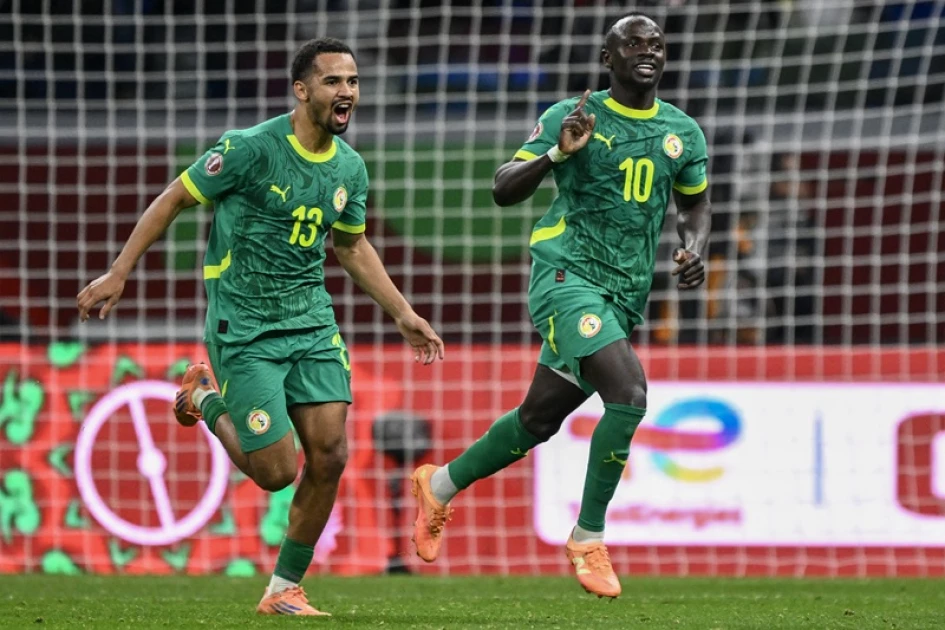
With the match destined for a 0-0 draw after 90 minutes of
gripping contest, substitute Ismaila Sarr gave the West Africans the lead – a
bullet header from a corner – but the center referee disallowed it for alleged
infringement on Achraf Hakimi.
This marked the turning point of the game. Football being a
contact sport, the Senegalese felt otherwise. On the other side of the
goalmouth, Morocco and Real Madrid’s star Brahim Diaz was adjudged to have been
wrested to the ground by El Hadji Malick, as both sets of players tussled over
a corner. Diaz went tumbling down, and the center referee, Jean-Jacques Ndala,
pointed to the spot. Senegal players and technical bench, led by coach Papa
Thiaw, were livid. How do you award such a ‘contentious’ penalty with
practically the last kick of the ball in a grand finale?
They smelled an atrocity, an injustice! To pass forth a
message, Thiaw ordered his players off the pitch. This was Africa’s grandest
football stage. The most important competition on the continent; nothing else
comes close! Billions of viewers, advertisers, CEOs of tech giants, and
football lovers were all glued. The party was at its optimum. But suddenly,
Thiaw ordered his men off the pitch. FIFA boss Gianni Infantino and his CAF
counterpart Patrice Motsepe, in the VVIP box, must have rolled their eyes. Where
would they hide their faces if it ended this way – a football game, a grand
continental final thrown into disarray?
At this moment, when tempers flared – on and off the pitch –
there was just one sober mind left: Sadio Mané, the neat ball carrier. A man
hailed for his impeccable discipline and extreme humility rose to the occasion.
He single-handedly rallied his teammates back to the field. Television cameras
quickly picked him out dashing to the locker room. Seconds later, in his tow,
were his troupes jogging back to the pitch.
From here on, it didn’t matter what would happen – win or lose. He was the man of the moment, the player of the tournament. The resultant spot-kick? Diaz attempted a ‘Panenka,’ landing in the waiting arms of Benjamin Mendy in Senegal’s goal without much trouble. Senegal had won the psychological warfare.
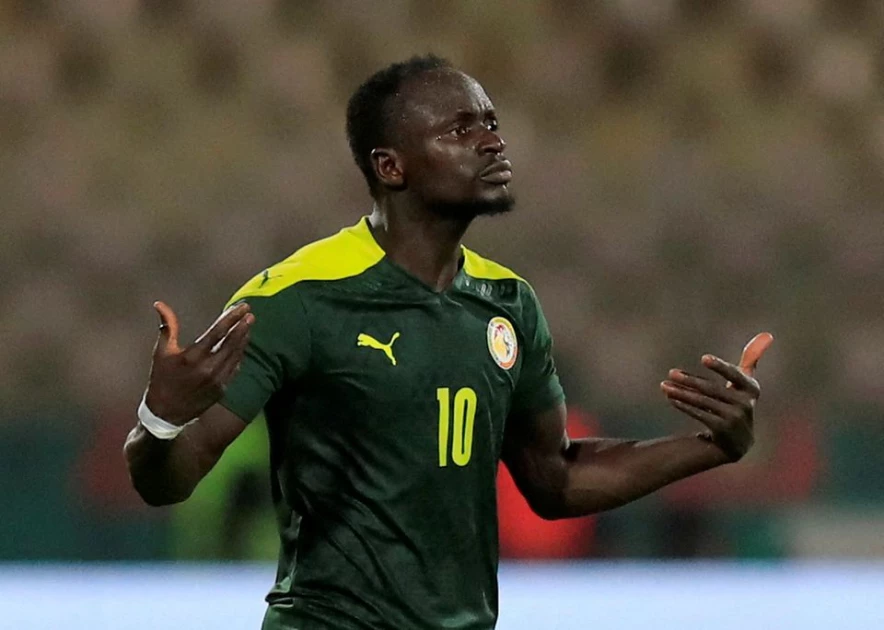
From then on, the extra 30 minutes gave Senegal more
ammunition. Like the Lions they are, their canines got sharper, and the
ferociousness with which they claimed the match winner told it all. Later,
Mané, being the sportsman he is, said: “Yes, it was I who convinced the team to
return to the field. The players and the coach had decided to withdraw, and I
didn’t understand that decision, but finally, I told everyone to return immediately
and to play no matter the cost. I think it would be crazy to not play this game
because what, the referee gave a penalty and we go out of the game? That would
be the worst thing, especially in African football. I'd rather lose than let
this kind of thing happen to our football.”
Infantino and Motsepe, at this point, must have been
relieved men. And poignantly, the long embrace and ear-to-ear talk Mane
commanded from Infantino spoke volumes. He saved face. He saved FIFA. He saved
CAF. He saved the face of African football and the game at large, when it
mattered the most – when chaos was knocking so loud and the terraces witnessed
scuffles from Senegalese fans and law enforcers.
Why the Nobel Peace
Prize?
The talk and link to this highest honour does not just stem
from Sunday night’s intervention. Before football stardom, Mané is first an
incredible human being – deeply religious, deeply down-to-earth, and deeply
rooted in humanity. These are causes he has worn with pride over the years.
Many of his peers, even those raised in extreme poverty, quickly forget their
roots when money comes.
But for a Black kid, born some 33 years ago [10th April 1992] in Bambali village, his football stardom and breaking from the shackles of poverty has been a blessing to hundreds of children from vulnerable backgrounds. In his Bambali village, he has made it a duty to change their fate. He has sunk millions of his hard-earned wages building football academies to give gifted kids, who otherwise had no one to guide them, a path out of poverty. He has fed, clothed, and continues to care for the hungry children. This is humanity in its purest form – one of the key tenets of winning the Nobel Peace Prize.
To underscore his service to humanity,
consider this: he earns millions in wages weekly, yet keeps a remarkably low
profile. No Lamborghinis, no lavish collections, no helicopters flying him here
and there. No drama. Just football, and sharing the windfall Allah has bestowed
upon him with his people, while some of his superstar peers make merry in world
capitals and pristine beaches during vacations. This is what makes Sadio a
truly great human being.
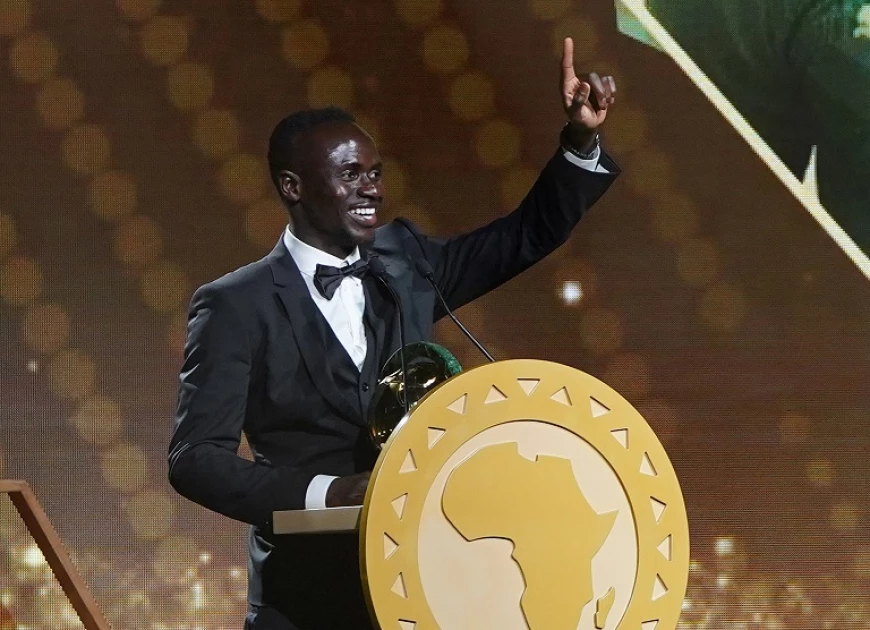
As a humanitarian, Mané’s work speaks to – and aligns with –
human dignity, poverty alleviation, access to health and education, and
reducing inequality, a known driver of conflict – a cause Nobel Peace Prize
committees strongly consider.
He may win the award in his lifetime. He may not. He may be
nominated. He may not. But the overall goal, which cannot be taken away from Sadio,
is his role in changing lives and helping make the world a better place.
Having had the chance to interact with him once – the
opportunity presenting itself in the 2019 Africa Cup of Nations Finals in Cairo,
Egypt – I can’t help but admire, with envy, the reverence he commands from
Senegalese executives, journalists, and ordinary folks. To the Senegalese, he
is simply Sadio! You need to hear them chant his name in reverence and see the
respect and humility with which he returns their greetings.
Should Mané, now or in the future, be considered for such an award, he would walk in the footsteps of Philip Noel-Baker – a respected Briton Olympian, the only athlete to have won the prize. Closer home, the Mathare Youth Sports Association (MYSA), a brainchild of the late Canadian Bob Munro, was twice – in 2003 and 2004 – nominated for the Nobel Peace Prize for using football to promote community development, education, and conflict resolution.
So yes, Sadio as a Nobel Laureate is not far-fetched. It is
a possibility!
For now, the world of football and humanity at large needs
to take a bow for Africa’s greatest football son, a fine football specimen, who
has earned his stripe in football folklore, joining the elite club that
includes, amongst others, George Weah of Liberia. To sum it up, Sadio is, to Senegal, what Lionel Messi is, to Argentina. To whom much is given, much
is expected. Senegal is lucky. Africa is lucky. Football is lucky, and the
world is lucky, to have Sadio Mané, in its wake.
The author is the Head
of RMS Sports Centre and a news editor at Royal Media Services. Engage him at isaac.swila@royalmedia.co.ke
Join the Discussion
Share your perspective with the Citizen Digital community.
No comments yet
This discussion is waiting for your voice. Be the first to share your thoughts!