
Konza Technopolis unveils pneumatic waste collection system

Audio By Vocalize
The €8 million system was implemented through Italian construction firm ICM S.p.A., as part of the Technopolis’s commitment to building a smart, clean, and efficient city.
By integrating Envac’s waste management solution, the smart city aims to elevate the quality of life for residents while demonstrating global best practices in sustainable urban infrastructure.
“The integration of Envac’s pneumatic waste management system at Konza Technopolis enhances sustainable urban living and promotes a modern, eco-conscious city,” said John Paul Okwiri, Chief Executive Officer of Konza Technopolis.
The system is designed to serve residents and commercial users in Phase 1 of developing Konza Technopolis, which will host approximately 30,000 residents.
It has the capacity to manage up to 40 tons of solid waste per day, with the waste separated at source into organic, mixed, plastic, and paper categories.
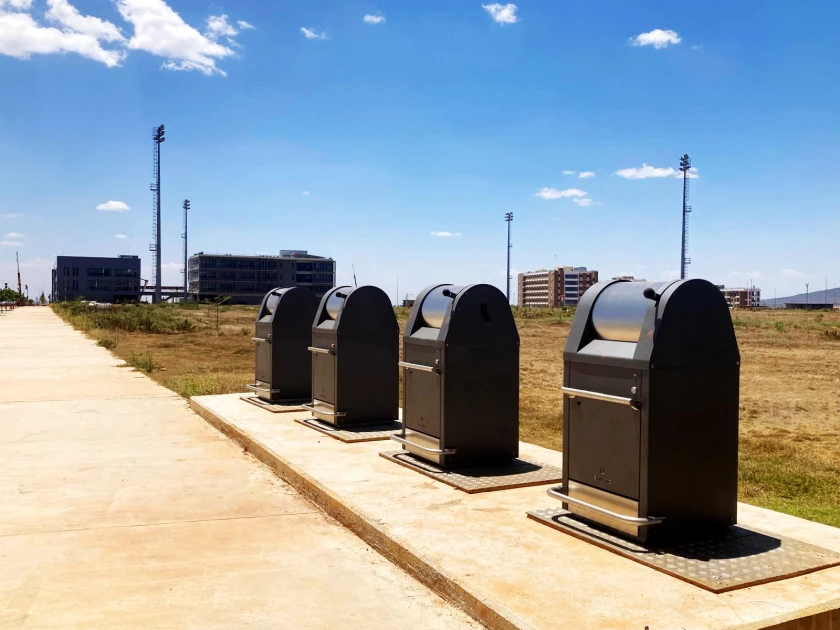
Key features of the automatic waste collection system include 100 waste disposal points, a15-kilometer underground pipe network, 880 automated valves and 220 additional disposal points. It also includes Sensor-activated inlets that trigger a vacuum cycle when full and centralized waste collection station for sorting and dispatch.
Once the inlets reach capacity, the system automatically activates a vacuum process, transporting the waste through underground pipes to a central collection station where it is stored in designated containers before removal.
By eliminating the need for traditional garbage trucks, the system not only reduces carbon emissions and noise pollution, but also ensures a cleaner, more hygienic and organized environment for Konza Technopolis residents.
“We are very proud to contribute to the Konza Technopolis project by incorporating our pneumatic waste collection technology,” said Carlos Bernad, CEO of Envac Iberia and President of Envac EMEA.
“The Envac system will help improve essential services, boost recycling rates, reduce CO₂ emissions, and protect the environment for future generations.”
Join the Discussion
Share your perspective with the Citizen Digital community.
No comments yet
This discussion is waiting for your voice. Be the first to share your thoughts!