

Technologies advancing cancer care in Kenya and the AI future in health
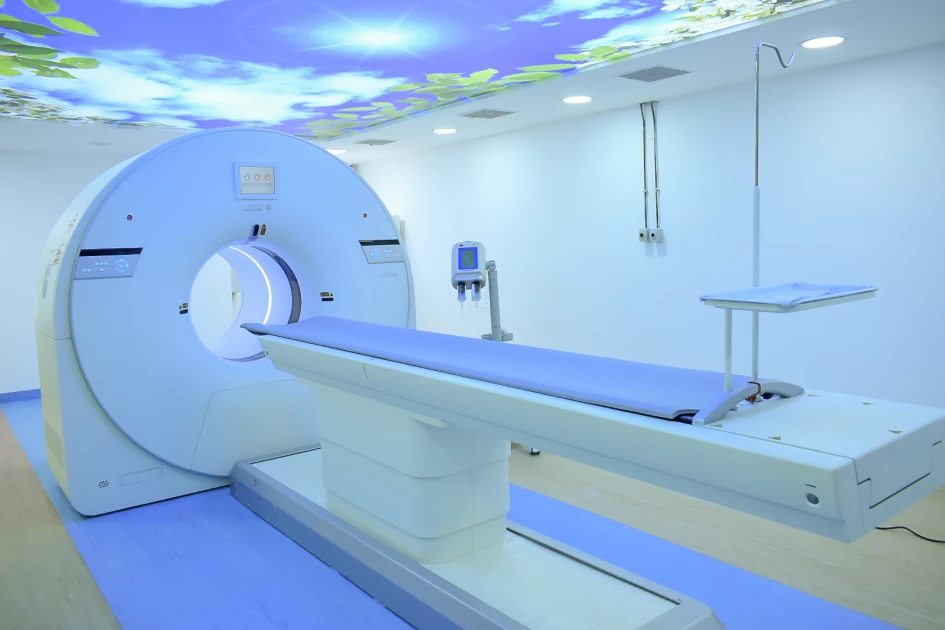
A PET scan machine at the Nairobi West Hospital. Photo/Handout

Audio By Vocalize
According to the World Health Organisation (WHO), cancer is a leading cause of death, accounting for 9.8 million deaths globally in 2018.
A World Bank report on the Economic and Social Consequences of Cancer in Kenya released in May 2020 named cancer as the second-leading cause of Non-communicable Diseases (NCD) mortality in Kenya.
“Most cancer cases are diagnosed at an advanced stage when treatment options are limited, leading to high out-of-pocket (OOP) spending, poor prognosis, and high fatality rates. Households not covered by health insurance are among the most vulnerable to health shocks, often forced to adopt coping strategies like borrowing or selling assets, with potentially long-term ramifications on livelihoods,” the report highlights.
The report found that lack of awareness, difficulties in navigating the health care system, delay in getting accurate and timely diagnosis, inadequate health insurance coverage and sociocultural barriers, including stigma, fear, and myths impede patients from seeking care early.
Kenya’s tech advancements in Cancer treatment
Kenya has been among notable countries in the world’s global south to benefit from biotechnological advancements such as those used in diagnosis and treatment of cancer.
Such technologies include the Cyberknife – which uses stereotactic body radiation therapy and Stereotactic Radiosurgery in cancer treatment.
The technology, which is currently available at the Kenyatta University Teaching, Referral & Research Hospital (KUTRRH), features a linear accelerator (linac) mounted on a robot to deliver the high-energy x-rays or photons used in radiation therapy. The robot in positions to concentrate radiation on the tumour while minimising the dose to surrounding healthy tissue.
Another technology in Kenya is the Positron Emission Tomography (PET) scan which is currently used at the Nairobi West Hospital for cancer diagnosis.
PET scans use a nuclear medicine technique that gauges the metabolic activity of cells in body tissues.
According to Dr. Solomon Mutua, a clinical oncologist at the Nairobi West Hospital, PET scans are a milestone achievement for the facility, which had mainly been employing X-rays, ultrasounds, and CT scans in cancer diagnosis.
When using PET scan technology in diagnosis, a small amount of short-acting radioactive liquid, known as a tracer, is injected into a patient.
“The tracer contains glucose which is taken up by rapidly growing cells. Once the tracer is in the body, it will preferentially be taken by the cancer cells and they will light up. Therefore, localizing areas that have cancer,” Dr Mutua explains.
The technology, Dr Mutua says, also gives insights on the stage of the cancer, and helps to determine the treatment approach that the patient will require.
“Once I get a report from the scan, I synthesize it and relate it with the patient, then come up with a treatment plan,” he says.
Unlike the regular intrusion involved in cancer diagnosis, such as during a biopsy procedure, a PET scan is minimally intrusive.
“In a pet scan, the intrusion is when putting the IV (intravenous line) access for the tracer. The imaging is not intrusive,” he explains.
The oncologist also explains that the technology has the least side effects on a patient since the radiation is out of the body system within a few hours.
The technology also saves patients from long waits to get their test results, as it only takes 15-20 minutes to do the scan and the full results are out within 48 hours.
This means that a patient can begin treatment more soon after diagnosis.
The technology also helps medics find clarity in results that they receive from patient review and staging of the cancer.
“It enables us to accurately target sides that need to be targeted by Radiotherapy. PET scans can also used to solve a problem. If I have done an MRI and it is not conclusive, a PET scan is a tiebreaker. Once we treat patients with chemotherapy or radiotherapy, we can use PET scans to assess response,” he adds.
In addition to the Cyberknife and PET scans, a similar technology that is set to impact cancer care in Kenya is the Cobalt 60 radiotherapy calibration system.
The technology offers precise calibration in administering cancer treatment, hence a positive impact on patient safety and therapeutic efficacy.
The AI future in medicine
As Artificial Intelligence (AI) wave sweeps across various fields, inventions such as the Cyberknife and PET scans are some of the opportunities that AI offers in the medical world.
Predictive AI models have been identified as a major game changer in the medical field, where the technology will largely be used in diagnosing diseases.
Another opportunity that AI offers the medical field is the automation of workflows such as the recording of patient data and other clinical documentation. This technology is already in use in Kenya, where the Aga Khan University Hospital uses AI-enabled talk assistants, where a doctor can dictate prescriptions and other patient records.
Using the Nuance technology, a physician or any other specialist can easily create clinical documentation from patient visits as the AI assistant for automating clinical documentation.
According to Dr Dennis Miskella, the Deputy Secretary General of Kenya Medical Practitioners, Pharmacists and Dentists' Union (KMPDU), AI will in the future impact the field, more so, the radiology practice.
“AI will be handy in digitisation of medical systems throughout the diagnosis to treatment stage. Developed countries are now investing in robotic technologies to enhance healthcare,” Miskella says.
However, the union leader notes that concerns about data safety cannot be ignored in the use of AI in the medical field.
He says some professionals have argued that patient data can be used to train AI models, as long as some details in their biodata are omitted. This, he says, is an impractical solution as any patient data must be complete, as it can be prone to misinterpretation if some details are left out.
Another risk is that of using AI for self-diagnosis and self-medication; “Imagine if a patient can use an AI chatbot to key in their symptoms and get a diagnosis. That is a big risk, it can support self-medication,” Miskella says.
For AI technologies to be effective in Kenya, Miskella says there is a need to consider upskilling medical officers before investing in modern equipment that will lay idle in health centres.
Technology and the UHC dream
KMPDU Secretary General Davji Atellah notes that Kenya, and the African continent at large is still miles away from achieving Universal Healthcare.
“UHC is a pipe dream for Kenya.” This was his response when I asked Atellah how technology will enable Kenya to attain the UHC dream.
Atellah says technologies such as AI will impact healthcare in Kenya, but not until there are guidelines to support them, infrastructure and human resource support.
“You can not go on a digitization drive yet there are no IT resources to support it. Some hospitals in Kenya do not have internet access or even electricity. How will they use such technologies?” he posed.
According to the union boss, technologies such as the Health Management System are taking Kenya a step ahead, but there is a need to invest more in the skilling of the human workforce.
“Some hospitals have equipment that use cutting-edge technology, but lack personnel to use the equipment in serving patients. You find that we have to wait for doctors from abroad to come and conduct the operations using such equipment. There is a need to include these technologies in the university curriculum,” Atellah says.
He further notes, however, that technology can spearhead the UHC dream through reduction enhancing diagnosis, and treatment and largely reducing costs of healthcare.
Leave a Comment