TikTok pledges Ksh.25.8M to boost AI media literacy in Sub-Saharan Africa
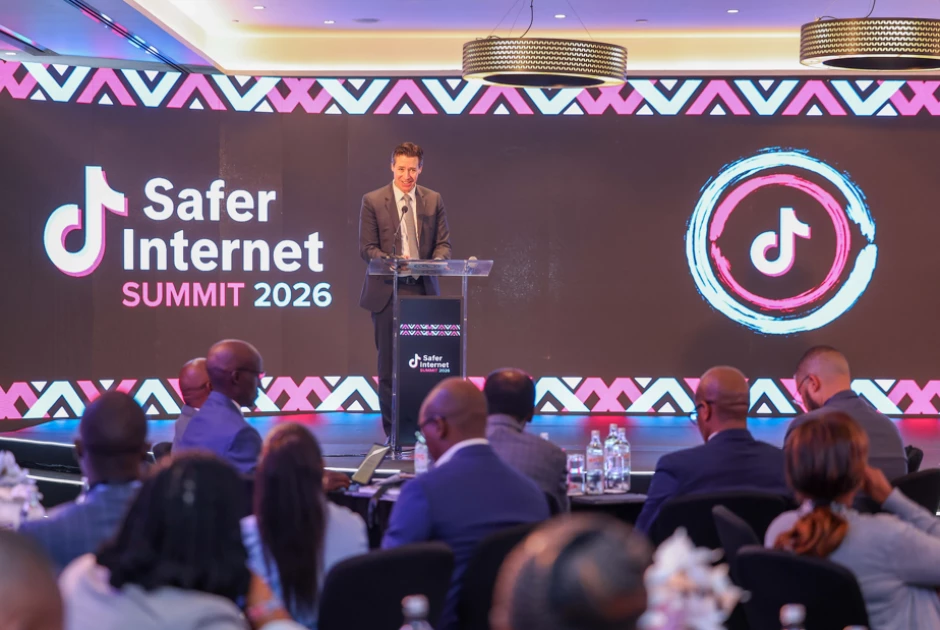
TikTok’s Global Head of Partnerships for Elections and Market Integrity Valiant Richey speaks during the summit. PHOTO | COURTESY

Audio By Vocalize
The announcement was made on Tuesday as the social media platform convened government officials, regulators and technology stakeholders in Nairobi for its third annual Sub-Saharan Africa Safer Internet Summit.
The two-day summit, held under the theme ‘#SaferTogether: Innovation and Safety,’ brought together policymakers, industry leaders and online safety partners to explore collaborative approaches to strengthening digital safety across the region.
The gathering marks an expansion of the summit series, which began in Ghana in 2024 before continuing in Cape Town in 2025, as TikTok deepens its partnerships with governments and regulators to address emerging challenges in the digital space.
Speaking during the opening session, TikTok’s Head of Government Relations and Public Policy for Sub-Saharan Africa Tokunbo Ibrahim said the summit aims to foster cooperation among stakeholders to tackle evolving online safety concerns.
“By bringing together a diverse coalition of policymakers, tech innovators, and creators, we are ensuring that the conversations we have at this Summit are all-inclusive and lead to a more resilient digital landscape,” said Ms. Ibrahim.
Information, Communications and the Digital Economy Cabinet Secretary William Kabogo, who officially opened the summit, said the forum reflects the government’s commitment to collaboration and the creation of a safer online environment as digital technologies continue to expand across the region.
“As we embrace the opportunities of the digital era, we must protect our people by advancing digital innovation, responsible AI governance, and strong regional partnerships for a secure and thriving online ecosystem,” said the CS.
A major highlight of the summit was TikTok’s announcement of the said additional funding in ad credits aimed at helping local organizations expand AI media literacy programs across Sub-Saharan Africa.
The funding builds on the company’s $2 million (Ksh.258 million) global AI Literacy Fund launched in November 2025 to support nonprofit initiatives designed to improve public understanding of artificial intelligence and combat misinformation.
Among the organizations benefiting from TikTok’s support in the region are Kenya-based Mtoto News, which produces educational content for young audiences about responsible engagement with AI technology; Africa Check, which is expanding fact-checking initiatives across Nigeria, South Africa and Kenya to help audiences identify AI-generated misinformation and deepfakes; and the Centre for Journalism Innovation and Development (CJID), whose fact-checking platform DUBAWA focuses on strengthening truth and accountability in public discourse.
TikTok’s Global Head of Partnerships for Elections and Market Integrity Valiant Richey said the investment reflects the company’s broader commitment to equipping users with the knowledge needed to navigate rapidly evolving AI technologies responsibly.
“We are partnering with trusted local organizations that communities already know and rely on, because their expertise and deep local connections are essential to making AI literacy programs truly impactful,” said Richey.
Discussions at the summit also focused on TikTok’s trust and safety systems, including how artificial intelligence supports content moderation and helps the platform manage the large volume of material uploaded daily.
TikTok said it relies on a multi-layered transparency framework that includes requiring creators to label realistic AI-generated content, deploying advanced detection technology and working with initiatives such as the Coalition for Content Provenance and Authenticity to improve identification of AI-generated media.
According to the platform’s Community Guidelines Enforcement report for the third quarter of 2025, more than 14 million videos were removed across Sub-Saharan Africa, with 96.7 percent detected and taken down proactively through automated technology before being reported by users.
TikTok says the system works alongside human moderation teams to identify and remove harmful or violative content more quickly.
Leave a Comment