
Kasarani estate is attracting Nairobi’s young adults in droves
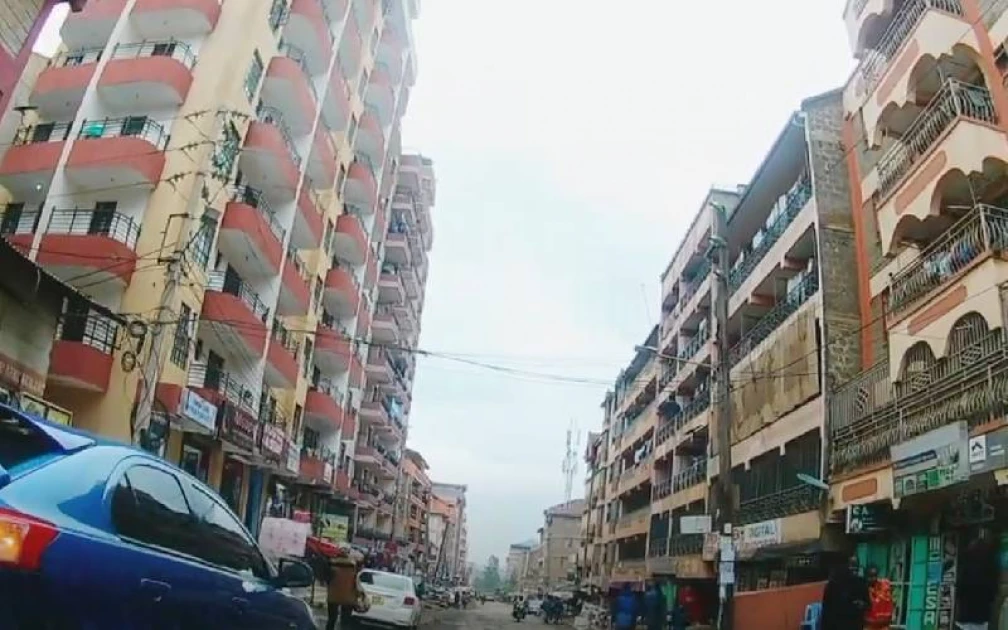
Most young people are trooping to Kasarani estate because life is cheap and fun. [Photo/Courtesy]

Audio By Vocalize
Gatharani, a Kikuyu word, is a type of grass used in traditional weaving.
The adage has it that the area where Kasarani estate sits today had a lot of Gatharani grass.
It is from this that Kasarani reportedly got its name – as mzungu struggled to pronounce the word ‘Gatharani’.
Yet, another school of thought indicates that the area at some point housed the colonial 'Castle Army'. And so – good Kenyans who had trouble pronouncing the word ‘Castle Army’ decided to call it ‘Kasarani’. The jury is still out on the origin of the word.
Many decades later – Kasarani has grown by leaps and bounds. Today it is attracting thousands of Kenya’s young adults.
‘Kasa’, as it is popularly known, sits right on the shoulders of the populous Githurai estates.
Approximately 60 percent of Nairobi population live in informal settlements – that’s according to the 2019 Census.
The current Nairobi’s young adults; Gen Zs born between 1997 and 2012 are just now joining the hunt for good housing.
These young men and women have taken over the city from their grandfathers, who have since left the city and retired to the villages.
This young generation is defining living in a totally different manner – different from what their grandfathers and fathers considered when picking a house to live in Nairobi, like proximity to a hospital, a school or a church.
The young adult in Nairobi is today looking for fun – and more fun. Not those ‘boring’ communal housing schemes.
“Most of us want affordable, quality houses. We just want our space,” says 24-year-old Janet Mweu.
Janet says that the young man and woman in Nairobi is mostly single -- and only looking to have fun while trying to make a living in a tough economic environment.
One such estate that is fast attracting Nairobi’s young is Kasarani.
The early parts of the estate sit on the ribs of the Thika Superhighway – which conveniently links the estate to Nairobi Central Business District.
“I can come here any time because it is very safe. I don’t even have to take a motorbike to move from the bus stop to my house,” says Penninah Njeri.
Njeri just recently relocated to Kasarani from Eastleigh.
“Kasarani estate is very safe, and life is cheaper compared to the neighbouring Roysambu and Mirema, where prices of houses have shot due to arrival of many foreigners and students attending nearby universities,” says Njeri.
A one-bedroom house costs between Ksh12,000 and ksh20,000 in Kasarani. The prices of houses get cheaper as you move deeper towards the direction of Mwiki.
Other estates within Kasarani that are attracting attention are Seasons, Equity, Clay City, Car Wash, and PCEA.
There are also a cocktail of joints and restaurants along Thika Road, where a lot of fun happen during weekends and most nights – something the young generation love.
Most of these young people are into the Digital economy – especially given that jobs are hard to find in this country.
They create content; taking pictures and shooting videos which they upload on their social media platforms. Others are into cryptocurrency and forex trade – while some are into academic writing.
Many say they cannot afford rent and life in a number of estates.
Estates like Kilimani, Kileleshwa, Lang’ata, Thika Road, Kiambu road are home to millennials, people who are now sitting firmly on the middle-class table. These estates are not cheap.
The Gen Z cannot afford rent in such expensive neighbourhoods since they are just now settling down – at a time when jobs are few.
Many say that old estates like Ngomongo, Kayole, Dandora, Kariobangi, Kariadudu and Makadara served their grandfathers well, but this is a new era.
Join the Discussion
Share your perspective with the Citizen Digital community.
No comments yet
This discussion is waiting for your voice. Be the first to share your thoughts!