
Meet William Napei, Samburu’s mobile chief
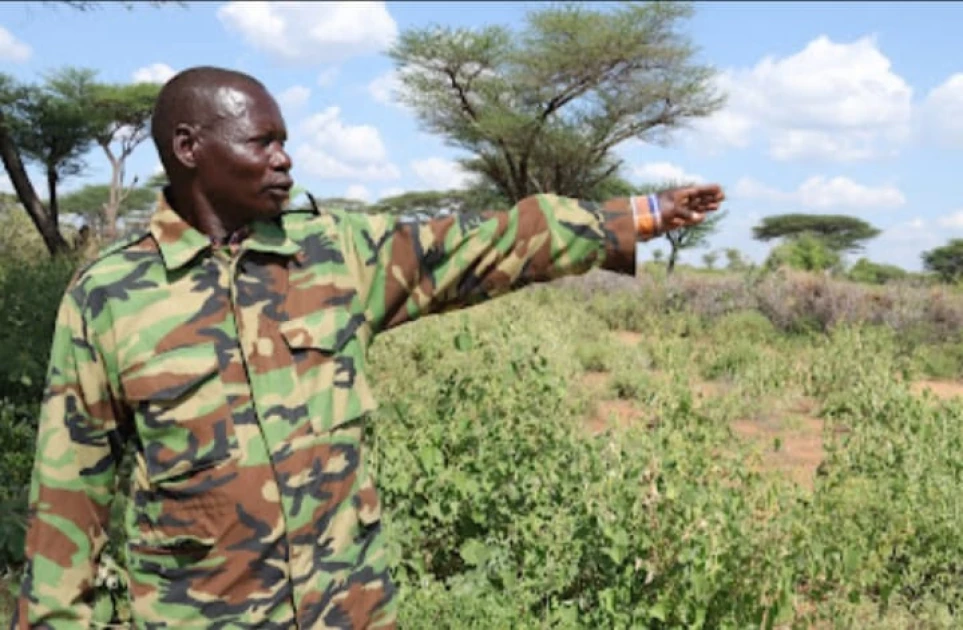
Chief William Napei from Samburu North. Photo/Courtesy

Audio By Vocalize
In the vast semi-arid landscapes of Samburu North, where nomadic traditions and livestock migrations shape life, Chief William Napei has taken an unconventional approach to leadership.
Unlike most chiefs who remain in fixed offices, Napei moves with his community, ensuring they always have access to government services.
In February, he relocated his office from Marti to Lomirok, over 50 kilometers away, to follow his community’s migration in search of grazing land.
This decision allows him to fulfill his duties more effectively, serving the people directly and ensuring vital services like ID processing are accessible despite their constant movement.
Despite the lack of a permanent base, Chief Napei continues to deliver crucial services such as processing identification cards (IDs) and addressing local issues on behalf of the government.
His presence among the community has made accessing vital documents easier, something that would have been nearly impossible due to their constant movement.
To many, Chief Napei is more than an administrator, he is a vital link between their way of life and the distant structures of the government.
However, his work is not without challenges. The rugged terrain, unpredictable weather, and lack of infrastructure, including mobile network, present challenges to his operations. Nevertheless, Chief Napei remains resolute.
“The nomadic lifestyle of my people means I have to be with them wherever they go,” he explains. “It’s the only way to truly understand their needs and serve them effectively.”
One of Chief Napei's most significant achievements has been contributing to the stabilization of Baragoi, a region once infamous for tribal conflicts driven by cattle rustling and competition for scarce resources.
This progress has been made possible through a hybrid committee established as part of a collaborative effort between the Samburu County government, National government and USAID Nawiri, an eight-year USAID program implemented by a consortium of partners led by Mercy Corps.
Through this initiative, peacebuilding efforts have gained
momentum. Chief Napei attributes the success to the partnership’s role
in fostering peace dialogues and cooperation among local communities,
gradually restoring peace to the once volatile area.
His own village has remained peaceful for over two years now, thanks to peace engagement and conflict resolution initiatives supported by USAID Nawiri. The Samburu and Turkana communities, once divided by conflicts over scarce pasture and water, now live in harmony.
Paul Lokidongoi, USAID Nawiri Peace and Natural Resource Management Officer, said, "This progress has been achieved through organized participatory and holistic rangeland and natural resource management, along with strengthened peace and conflict resolution mechanisms and integrated water resources management.
"We have also incorporated nutrition messaging, connecting the health of the land directly to the well-being of the community."
The most impactful intervention has been the enforcement of grazing patterns through hybrid committees composed of key community members.
Elders play a crucial role in enforcing strict measures that dictate rotational grazing patterns, allowing grass and browse to regenerate as livestock move systematically throughout the year.
This structured approach has significantly reduced conflicts between neighboring Samburu and Turkana communities, promoting more organized grazing.
“The progress we’re seeing in Baragoi wouldn’t be possible without the combined efforts of the local administration and our external partners,” says Chief Napei.
“It’s a great example of what can happen when we work together for the benefit of the people.”
Community elders enforce these grazing rules with strict discipline, imposing hefty fines on those who break them. This has been key to maintaining peace and ensuring sustainable land use.
As Chief Napei continues to journey with his community, his deep commitment to his role stands out.
His adaptability and innovative approach have not only brought essential services closer to pastoralists but have also contributed to peace and stability in an area historically marked by conflict.
“My people walk 15 kilometers just to fetch water, and without a mobile network in Lomirok, they must travel another 10 kilometers to Baragoi just to communicate,” Chief Napei shares.
“But despite these challenges, there is peace now—no more fighting with neighboring communities. And thanks to programs like USAID Nawiri, the rate of malnutrition among our children has significantly dropped.”
Join the Discussion
Share your perspective with the Citizen Digital community.
No comments yet
This discussion is waiting for your voice. Be the first to share your thoughts!