

Nairobians living with disability want special footbridges, buses to ease their pain
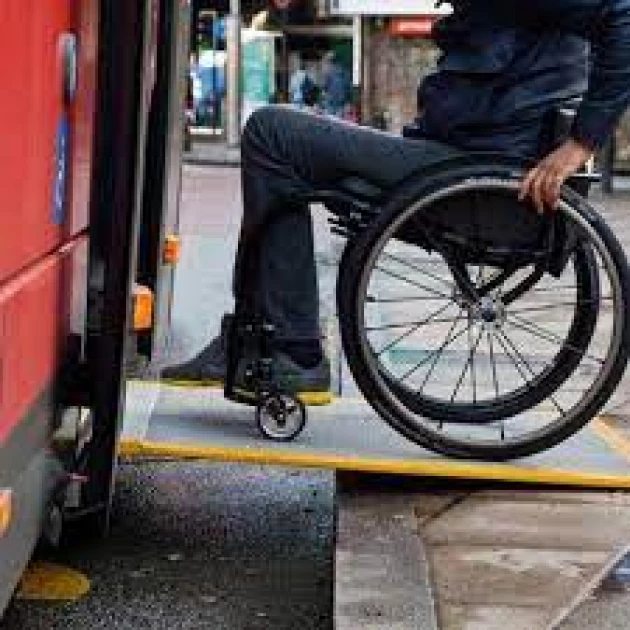
Photo/Courtesy

Audio By Vocalize
A 60-year old man living with disability recently had to be carried in his wheelchair to access the first floor of a bank along the Waiyaki Way.
It was probably not the first time this was happening to him. The man could be heard inquiring about a lift. There was none.
A security guard, a volunteer and someone who looked like a relative of the man laboured to carry him – an adult of good weight – through a string of stairs.
According to residents who spoke to Wananchi Reporting, this is a struggle most Kenyans living with disabilities are grappling with daily as they try to navigate the busy capital.
In 2022, former Nominated Senator representing Persons living with Disabilities Hon Isaac Mwaura, spoke about a plan he had of building a special footbridge for Kenyans living with disabilities.
“I wanted to build a footbridge to help disabled people cross over Waiyaki way, and I was very confident that 20 million will do a simple footbridge…” said Mwaura at the time.
A security guard manning a footbridge along Waiyaki Way said they often volunteer to help pedestrians living with disabilities to climb or go down the steep footbridge.
“Most of the footbridges have steep stairs which sometime make it difficult for people living with physical disabilities to use them,” said Linda*, a resident of Nairobi who lives with disability – and is a beggar in the capital.
She says the problem goes beyond just the footbridges.
“It’s the same problem when it comes to using Matatus. Sometimes you need someone to help you board a Matatu,” she says, noting that some conductors are not very patient,” she says.
She says that the mistreatment gets worse whenever it rains.
“Sometime they don’t allow us to board the matatus and sit on the regular passenger seats because we will make them dirty,” she says, noting that sometime they have to be carried like a baby into the bus.
The disability data in the 2019 census collected for adults and children above five years of age showed that 2.2 percent (0.9 million people) of Kenyans live with some form of disability.
Although there are more people with disabilities living in rural than in urban areas, the census showed that some significant percent of urban populations were living with disability.
The 2019 Census showed that most of those living in Nairobi had Seeing disabilities at 0.5 percent, followed by Mobility difficulties 0.4 percent, Cognition difficulties 0.2 percent, Hearing disabilities, Self-care difficulties, and Communication disabilities each at 0.1 percent.
Some of those who spoke to Wananchi Reporting want their plight taken care of; and friendly lifts, stairs, walkways, parking areas and footbridges installed.
Leave a Comment