

Nairobians reveal interesting ways they get to work

Audio By Vocalize
Wanjala is one of the many residents of Nairobi who have had to develop other ways to get to work because they cannot afford bus fare.
"I live in Dandora with my family and I work at a construction site around Aga Khan hospital. It's an 8am to 4pm job for now," Wanjala says with a smile when asked to speak with him.
Like some of his colleagues at the construction site, Wanjala has been hanging behind moving vehicles to get to and from work. This is dangerous and illegal in Kenya, and he knows it.
Wanjala leaves his house daily to go to work over 16 kilometers away, most of the time without a dime for bus fare, and he still gets to work, in time.
“There are days when I have only a small fraction of what I need to get to work, and back home,” he says.
He says he often picks pickup trucks headed towards his direction of travel.
It's a dangerous endeavor – but one that he says he has no choice but to embrace – at least for the moment.
"I am not proud that I climb onto vehicles. In fact there are days when I have this fear of being seen by friends, relatives hanging on behind pickups, or rucks. That is why I wear a hoodie all the time," he says.
Peter says he often starts his journey by trekking from Aga Khan area down through Wangari Maathai road, towards Pangani centre, then proceeds to Juja Road around Mlango Kubwa, where the wait for the right pick-up truck begins.
“That is where I hike rides because traffic is slower, and nearly all the vehicles are headed to Kariobangi roundabout. I can easily catch another ride to Dandora if I am lucky,” says a smiling Wanjala.
“You don’t get time to ask the driver for a ride, you just pick your target vehicle in the traffic, run after it, and hop onto the back,” he says.
According to Wanjala, and statistics have shown, many people in Nairobi are struggling with bus fare, which is why they come up with ingenious ways, some of them dangerous, to get to work.
On average, Wafula rides three to four vehicles to and from work – besides pounding the ground for several kilometers.
“Some vehicle owners are cruel, and will not entertain strangers climbing at the back of their vehicles especially when they are carrying goods,” Wafula says.
“Other vehicle owners are cautious because in case of an accident, then they are likely to find themselves in trouble with the law,” Wafula says.
Unlike Wafula, Brian who works as a salesman at an electronics shop in the Nairobi Central Business District, skates to work, daily.
You will find him dodging through vehicles, sometimes holding the behinds of vehicles, which is very dangerous, for that extra push as he heads to work in town.
“I know skating in Nairobi can be very challenging especially given the poor nature of our roads, but I have learned the roads, and I am doing just fine,” he told Wananchi Reporting.
Adding: “If I were to spend Sh200 daily on bus fare, I wouldn’t be able to keep this job. So, I had to be creative. I just make sure I wear a reflector jacket to avoid accidents, plus I try to be very careful on the road.”
Many others cycle to work. Take for instance Innocent Simiyu who has been cycling to work daily since moving to Nairobi in 2018.
“Sometime I don’t find my back, and the sole of my feet, but I am happy I am able to get to work,” Simiyu who is paid Sk6,000 per month told Wananchi Reporting.
According to Simiyu who works along Ngong Road and lives in Kibira, he has to daily navigate the busy roads to ensure he arrives at work, and home safely.
“Sometimes it rains, which means you get soaked right to your underpants. So, you have to be clever; carry a polythene bag where you keep your uniform safe and away from rain,” he says with a smile.
“Then there is the ever-present issue of parking challenges for bicycles, and rampart theft,” he says.
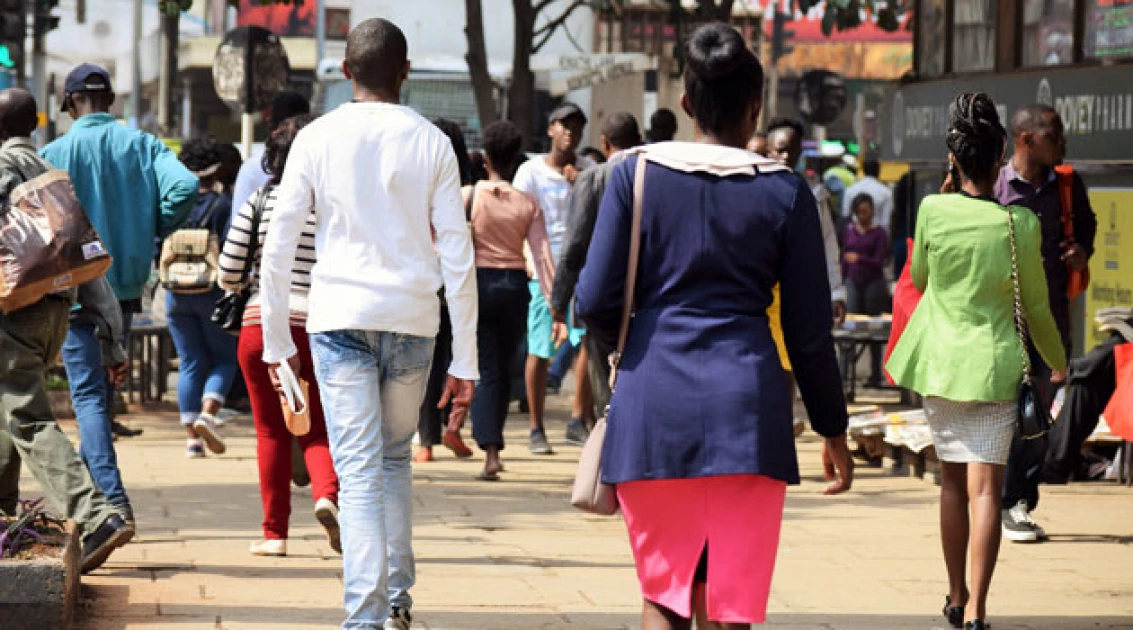
A report by UN Habitat indicated that 46 percent of Kenyans, mostly informal settlers and youth with no gainful employment, walk to work. The walking sometime, indeed most of the time, becomes very tortuous because there are no walkways. The few that exist are often invaded by boda boda riders, matatus looking to overtake and hawkers. This makes walking to work in Nairobi a punishment of sort to most residents.
Leave a Comment