
Thika Superhighway headache: Residents losing precious hours on endless traffic
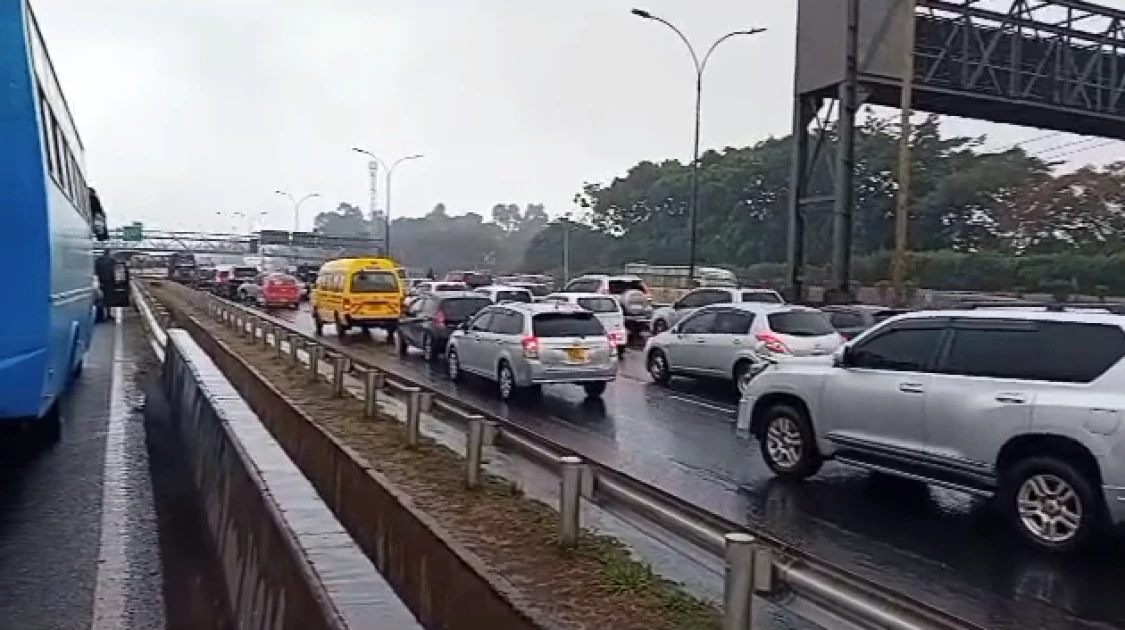
Traffic jam on Thika Road.

Audio By Vocalize
The Thika Superhighway has become a daily test of patience for thousands of commuters who use the road daily.
Standstill traffic, unpredictable delays, frequent accidents and growing public frustration have become part of the furniture of a road that was built to speed up movement between Nairobi and central Kenya.
Many feel that rapid population growth along the Thika Road corridor has outpaced the highway’s capacity – turning it into a constant headache to motorists.
Rise of additional infrastructure like apartments, hostels, malls and businesses in estates like Kasarani, Githurai, Ruiru, Juja and Thika town have drawn tens of thousands of new residents.
These developments have silently led to a surge in private cars, matatus and Boda Bodas, all of which have had squeezing into a road that has not received matching upgrades or coordinated traffic management.
Residents like Thomas Oloo have had to readjust their lives.
“I leave my home at 7:00am or earlier if I am to arrive at work around 10am,” says Oloo who works in Westlands., and has to use Thika Superhighway.
“I spend a lot of time on Thika road, the traffic is crazy.” Similar complaints echo from motorists, matatu operators, and business owners who say the gridlock is affecting productivity and customer movement.
Commuters report that congestion worsened significantly in 2024 and 2025, with some experiencing delays of up to two hours between Ruiru and Muthaiga, trips that once took 20 minutes or less.
Major bottlenecks include Githurai 45, Kahawa Sukari, Roysambu, Garden City, and Pangani. Here, overlapping, sudden lane changes, stalled vehicles, weak enforcement, and slow emergency response often turn small disruptions into hours-long tailbacks.
Peter Njoroge, a matatu driver based in Juja says, “When an accident happens, it can take more than an hour for traffic police or tow trucks to reach the scene. By then, all lanes are blocked and no one moves.”
Experts point to several underlying causes. One is rapid urbanisation without matching transport planning. High-density estates keep rising close to the corridor, but public transport systems remain largely informal and uncoordinated. With no reliable high-capacity mass transit option, many residents opt for private cars, worsening congestion.
Another factor is safety. Thika Road is consistently ranked among the country’s busiest and most accident-prone corridors. When accidents occur, from vehicle pileups to collisions involving boda bodas and matatus which often block traffic for hours due to slow clearance and inadequate incident management. Even minor crashes can paralyse the highway at peak times.
Urban planners have long warned that the original design of Thika Road did not anticipate the rapid population boom along its corridor. They argue that unless the government harmonises land-use planning, transport management, and enforcement, the situation will continue to worsen.
Commuters are calling for immediate remedies. Faster clearance of stalled vehicles and accidents, stricter enforcement of lane discipline, and more officers at known hotspots. Others propose widening service lanes or creating dedicated public transport lanes to improve flow.
Longer-term solutions include establishing a rapid bus transit (BRT) system, regulating and integrating matatus and boda bodas into a more organised public transport network, and requiring new developments to meet transport capacity standards.
For many low- and middle-income families, the daily gridlock is not just an inconvenience but a burden that affects their livelihoods.
Thika Road remains one of Kenya’s most important transport corridors. But unless urgent interventions are put in place, residents fear that the current slow-motion state could become a permanent reality, turning a landmark infrastructure project into one of Nairobi’s most congested arteries.
President William Ruto recently announced plans to build an expressway on Thika road to help tackle traffic congestion.
Join the Discussion
Share your perspective with the Citizen Digital community.
No comments yet
This discussion is waiting for your voice. Be the first to share your thoughts!