
Court cautions litigants against using AI in drafting legal documents

Audio By Vocalize
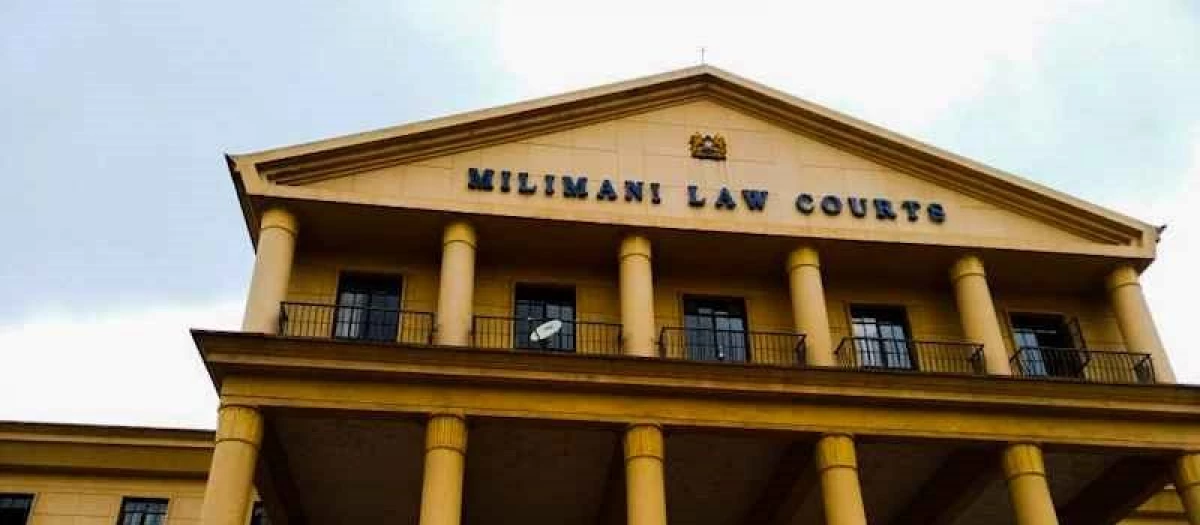
In a ruling delivered at the Milimani High Court, Justice J. Chigiti addressed concerns raised by a self-represented litigant who admitted to using ordinary digital tools, including AI-assisted research, to prepare court documents.
The litigant defended his approach, stating that he personally reviewed, edited, and adopted all pleadings filed in court, and remained fully responsible for the accuracy of the facts and legal citations. He further argued that his documents did not contain fabricated authorities or false quotations.
However, the opposing party had challenged the credibility of the pleadings, alleging without presenting forensic proof that they were generated using artificial intelligence and could therefore be unreliable.
In determining the issue, the court examined the legal framework governing pleadings under Order 2 of the Civil Procedure Rules and emphasized that all pleadings, regardless of how they are prepared, must meet strict requirements on form, clarity, and substance.
Justice Chigiti noted that the rules are designed to create uniformity and fairness in the judicial process, ensuring that all parties operate on an equal footing. He stressed that Kenya’s adversarial system depends on standardized pleadings to enable courts to properly understand disputes and deliver justice.
The judge warned that while technology, including AI tools, may be used to assist in drafting, it does not excuse non-compliance with procedural rules. He further cautioned that self-represented litigants are not exempt from these standards and cannot rely on personalized or unconventional drafting methods that could undermine fairness.
“The duty to comply with the rules of drafting pleadings applies equally to all litigants,” the court observed, adding that allowing deviations based on individual tools or methods would create inequality in the justice system.
At the same time, the court found no evidence to support claims that the litigant’s documents were improperly generated using artificial intelligence or contained fabricated material, noting that such allegations must be backed by concrete proof, such as forensic analysis or identification of false citations.
Join the Discussion
Share your perspective with the Citizen Digital community.
No comments yet
This discussion is waiting for your voice. Be the first to share your thoughts!