
HIFU offers new hope to women with fibroids

Audio By Vocalize
In the procedure, patients do not undergo surgery, have no scars and no hospital admission.
The procedure is done while the patient is fully conscious, and most women are able to resume normal activities shortly afterwards.
At a HIFU hospital in Nairobi, I meet Lucy Muliko, a 42-year-old woman who has battled fibroids since 2016. Dressed elegantly in a green linen dress and black heels, Lucy exudes calm confidence despite the emotional and physical journey she has endured.
Lucy shares how fibroids robbed her of the chance to conceive, despite years of trying.
“I tried IVF treatment, but it was not successful. I was advised to undergo surgery, but I was too scared because of my anaemia,” she recalls.
Before discovering HIFU, Lucy relied on medication to manage her pain and heavy bleeding—common fibroid symptoms—but the drugs only controlled the discomfort; they could not eliminate the fibroids themselves.
By 2022, her situation had become increasingly difficult. The fibroids caused persistently heavy periods, worsening her anaemia and making surgical intervention risky.
Uterine fibroids, although non-cancerous, can cause significant distress—ranging from heavy bleeding and abdominal discomfort to fertility challenges. Many women seek removal when symptoms disrupt daily life.
After unsuccessful IVF treatments, Lucy searched for a safer, non-surgical solution. Her research led her to HIFU technology.
“I still dream of being a mother one day, and I wanted a treatment that would allow me to try again naturally,” she says.
Before undergoing HIFU, Lucy had to go through a medical assessment to determine if she met the treatment criteria. She also received nutrition guidance to prepare her body—focusing on lighter meals and avoiding heavy, oily, or processed foods.
Not Every Patient Qualifies
Reproductive health specialist Dr. Maina Ngoigo explains that suitability for HIFU depends on the size, number, and location of the fibroids.
“HIFU works by precisely targeting the fibroids using concentrated ultrasound waves,” he says. “The heat shrinks the tissue gradually, and the body clears it naturally afterwards without damaging other reproductive organs.”
For Lucy, this meant a solution that avoided blood loss—critical for someone with anaemia.
“There was no blood loss, and that was a huge relief,” she says.
Dr. Ngoigo highlights the major advantages of HIFU:
No surgery
No bleeding
Minimal pain
No scarring
Quick recovery
Improved chances of future conception
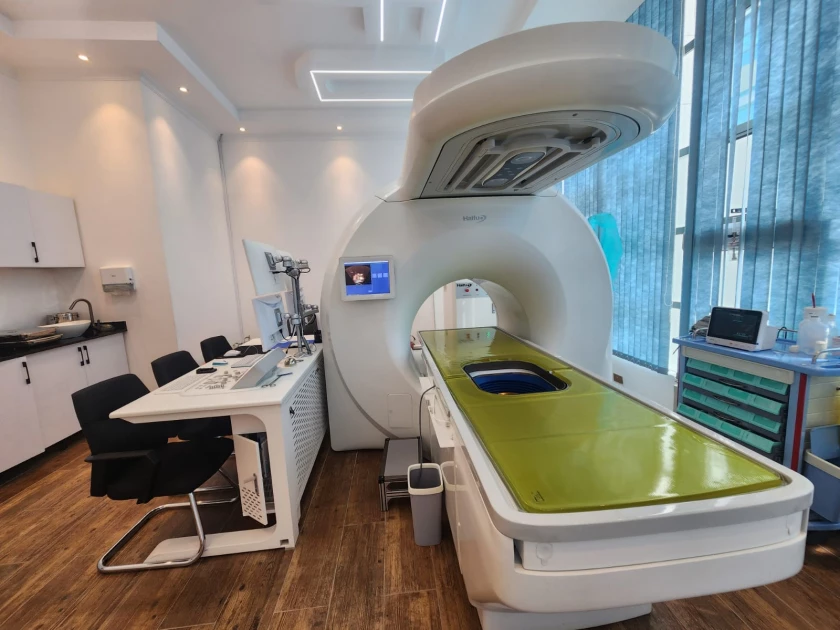
During the procedure, the patient is sedated lightly and monitored closely. The HIFU machine contains a water-filled bowl that acts as a cushion and temperature regulator, protecting the skin from the high heat—between 60°C and 100°C—used to shrink the fibroids.
Need for Non-Surgical Alternatives
Studies show that between 25% and 50% of women experience symptoms caused by fibroids at some point in their lives. According to the World Health Organization, fibroids may be the sole cause of infertility in 1–3% of cases, and between 10–20% of women in Kenya are affected.
With such high prevalence, the availability of modern, non-invasive options is a critical breakthrough in safeguarding women’s reproductive health.
Research by reproductive health specialists confirms that HIFU reduces the risks associated with traditional surgery—such as excessive blood loss, permanent scarring, long hospital stays, and extended recovery periods.
Kenya Joins the List of African Nations Using HIFU
Kenya is among the early adopters of this innovative technology in Africa, following Egypt, South Africa, Nigeria, and Tanzania. While global research on focused ultrasound dates back to the 1950s—with early studies conducted at the University of Illinois and Indiana University—its application in reproductive health has only gained momentum in recent years.
Today, HIFU stands out as an alternative for women seeking safe, effective, and non-invasive treatment for fibroids.
“I feel like I have my life back. And I still believe I will become a mother one day,” Lucy reflects.
Join the Discussion
Share your perspective with the Citizen Digital community.
No comments yet
This discussion is waiting for your voice. Be the first to share your thoughts!