

OPINION: Two Kenyas still walk side by side

Audio By Vocalize
On some mornings in Isiolo, you can watch two Kenyas pass each other on the same road. A government convoy or a tourist’s SUV speeds north, windows closed, air conditioning humming.
On the shoulder of that same road, a woman walks with a yellow jerrycan, dust on her shoes, a child on her back, eyes fixed on the horizon. She has already walked for hours. She will walk for hours more.
Both of these Kenyas appear in Oxfam’s new report on global inequality, launched this week, and covered in media worldwide. One is wealthy, connected, protected. The other is tired, exposed, and expected to survive on patience.
The report makes something clear. This gap is not an accident. It is the outcome of choices made again and again.
Kenya likes to tell itself a story of progress. We talk about innovation hubs, new highways, and growth figures. But the numbers tell a harder truth.
Nearly half of Kenyans live in extreme poverty. Since 2015, seven million more people have fallen into that category.
At the same time, a tiny group at the top has accumulated staggering wealth. The richest 125 people in this country now hold more wealth than over 40 million Kenyans.
Growth has happened. sharing has not.
If you grow up in the Arid and Semi-Arid Lands, this does not come as a surprise. You live with the consequences of this gap every day.
ASAL counties cover most of the country’s land but remain at the edges of its imagination. They are spoken about during drought appeals and forgotten during budget season.
This neglect has a history. After independence, Kenya adopted a development model that concentrated investment in so-called “high potential” areas. The rest of the country was told to wait. That waiting has now lasted six decades.
You can see it in roads that end too early, in health centres without doctors, in schools without teachers. The Constitution promises rights. In practice, geography still decides who enjoys them.
Education is a painful example. Many children in northern Kenya live too far from a secondary school to attend one. Some walk 20 or 30 kilometres.
Many drop out. Oxfam’s research shows that children from poor families receive almost five fewer years of schooling than children from rich families. That is the difference between choice and confinement.
When drought hits, the first sacrifice is often a girl’s education. She stays home to look for water, to care for siblings, or she is married off early in exchange for livestock. None of this is written in law. All of it is produced by pressure.
Health follows the same pattern. Public facilities are underfunded. The wealthy rely on private hospitals and insurance.
Everyone else delays treatment or sells what little they have. Oxfam shows how debt repayments now consume more public money than health and education combined. The bill is paid by the poor.
Inequality is also deeply gendered. Women earn far less than men earn and are far more likely to do unpaid work.
In ASAL areas, women spend hours every day fetching water and firewood. This labour keeps households alive, yet it does not appear in budgets or in economic statistics.
What is called “time poverty” is a stolen opportunity.
Climate change now sits on top of these old wounds. Pastoralists who have done the least to cause the crisis are paying for it with their livelihoods.
When livestock die, savings disappear. Children leave school. Families fracture. Oxfam shows how climate shocks deepen existing gaps. What was already fragile becomes impossible.
Yet when climate money arrives, it often arrives in the language of projects, not justice. Consultants fly in. Workshops are held. Reports are written. People on the ground remain objects of study rather than holders of rights.
Another layer of the story is taxation. Kenya relies heavily on consumption taxes. This means people who spend almost all their income on basic goods pay a higher share of their income in tax than the wealthy.
At the same time, wealth, property, and capital gains are lightly taxed and poorly enforced. The result is a system that takes more from those who have less.
This is why the protests over the Finance Bill in 2024 mattered. People were not only angry about one bill. They were angry about a pattern. They were angry about a state that asks them to sacrifice while protecting privilege.
It does not have to be this way.
Oxfam lays out a different path. Invest in public services. Make education and healthcare truly usable. Shift the tax burden away from the poor and toward the wealthy. Treat social protection as a right. Stop letting debt repayments swallow the future.
None of these ideas is radical. What is radical is accepting a country where you are born decides almost everything about your life.
For those of us from places like Isiolo, Marsabit, Turkana, Mandera, this is not an abstract debate. It is about whether a child can reach a classroom.
Whether a woman can give birth safely. Whether a drought becomes a crisis or a managed season.
People often say the North is “marginalised”. The word sounds passive. The truth is harsher. It has been produced.
The map of Kenya has been drawn and redrawn in budgets and policy choices. Waiting has cost too much.
A country cannot call itself successful when a handful of people own more than tens of millions combined. It cannot call itself fair when a child’s future depends on their postcode. It cannot call itself united when two Kenyas keep passing each other on the same road without meeting.
I think again of that woman walking with a jerrycan. She is not asking for pity. She is asking for what she is owed.
Oxfam’s report does not just describe a crisis. It issues a challenge. Kenya must decide whether inequality is something it regrets or something it chooses.
So far, we have been choosing it.
We can choose differently.
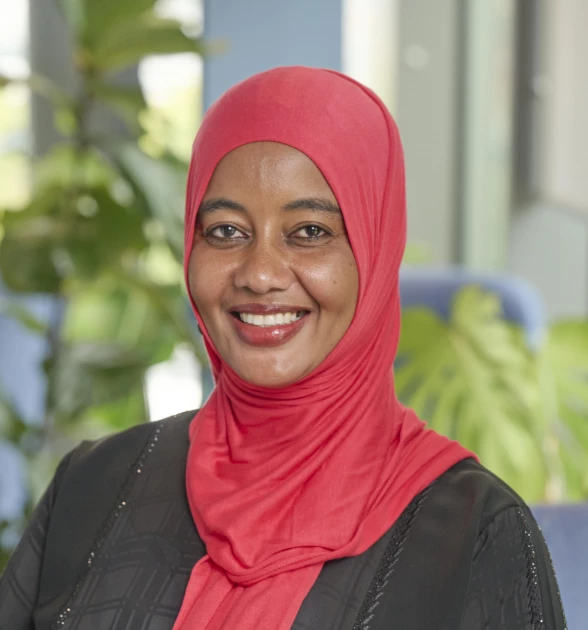
Hadija Bonaya is a development practitioner and an Atlantic Fellow for Social and Economic Equity (AFSEE) based at the London School of Economics, where she is studying an MSc in Inequality and Social Science.
Leave a Comment