
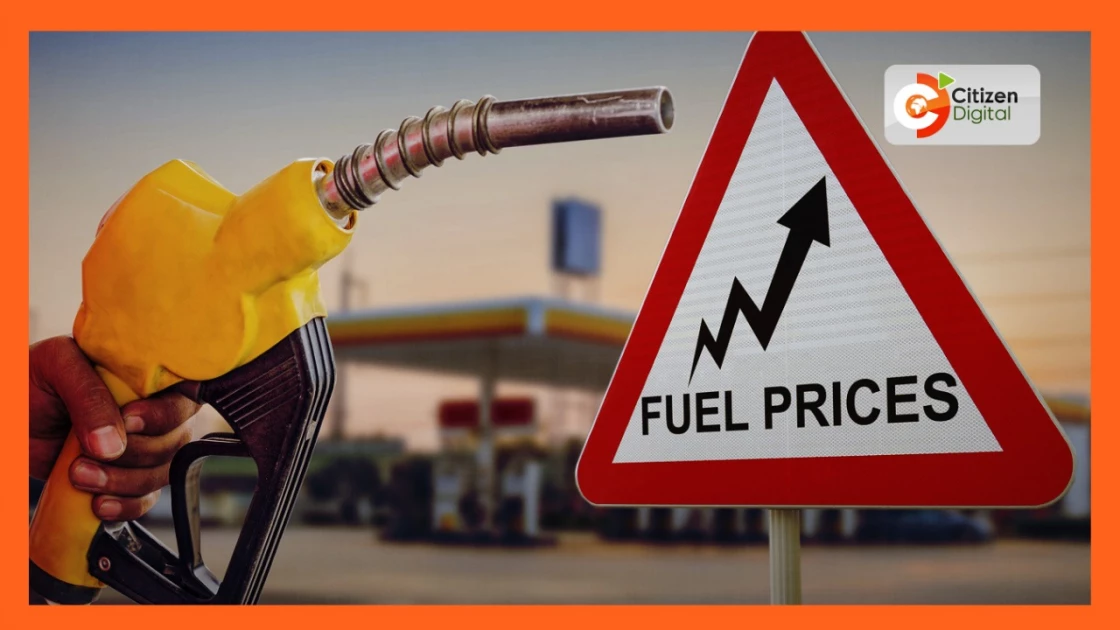
Pain at the pump: Petrol price rises by Ksh.28, Diesel by Ksh.40 in latest EPRA review

Audio By Vocalize
Motorists across
Kenya will pay more for fuel over the next month after the Energy and Petroleum
Regulatory Authority (EPRA) announced an increase in pump prices for the period
between April 15 and May 14, 2026.
In its latest
pricing review announced on Tuesday, EPRA indicated that the cost of Super
Petrol and Diesel has gone up by Ksh.28.69 and Ksh.40.30 per litre
respectively, while the price of Kerosene remains unchanged.
The adjustments,
EPRA said, reflect a rise in international petroleum product prices, coupled
with exchange rate fluctuations and the application of statutory taxes under
the Value Added Tax (VAT) framework.
“Effectively, the
Value Added Tax rate on Super Petrol, Diesel and Kerosene has been reduced from
16% to 13% in order to cushion consumers from the high landed cost of petroleum
products as a result of the escalated prices in the international market,”
acting EPRA Director General Dr. Joseph Oketch said in the statement.
“The Government
will further cushion the consumers through the Petroleum Development Levy (PDL)
Fund by utilizing approximately Ksh.6.2 billion to stabilize the pump prices.”
He added: “We wish
to reiterate that as per the earlier directive from Government, the Super
Petrol delivered by One Petroleum ex MT Paloma has not been included in the
computation of the applicable prices.”
In Nairobi, the
maximum retail price for Super Petrol now stands at Ksh.206.87 per litre, with
Diesel retailing at Ksh.206.84 and Kerosene at Ksh.152.78 per litre.
In Mombasa, Super
Petrol will go for Ksh.203.69, Diesel (Ksh.203.56) and Kerosene (Ksh.149.49),
while in Kisumu it will be Ksh.206.85, Ksh.207.06, and Ksh.153.03 for Super
Petrol, Diesel and Kerosene respectively.
The regulator
attributed the increase largely to a spike in landed costs, the price at which
fuel is imported into the country, between February and March.
Over the review
period, the landed cost of Super Petrol rose sharply by 41.53 per cent, while
Diesel and Kerosene increased by 68.72 per cent and 105.15 per cent.
EPRA further noted
that global fuel prices remain volatile, with petroleum products traded in
United States dollars and influenced by international market dynamics.
The exchange rate,
therefore – it stated - continues to play a critical role in determining local
pump prices.
Despite the
increase, EPRA maintained that the pricing framework is guided by regulations
aimed at ensuring fairness, competition, and consumer protection while allowing
oil marketers to recover costs.
The new prices
take effect from midnight April 14 and will remain in force until May 14, 2026.
Join the Discussion
Share your perspective with the Citizen Digital community.
No comments yet
This discussion is waiting for your voice. Be the first to share your thoughts!