

Saba Saba: Raila wants ‘national conclave’ formed to address grievances
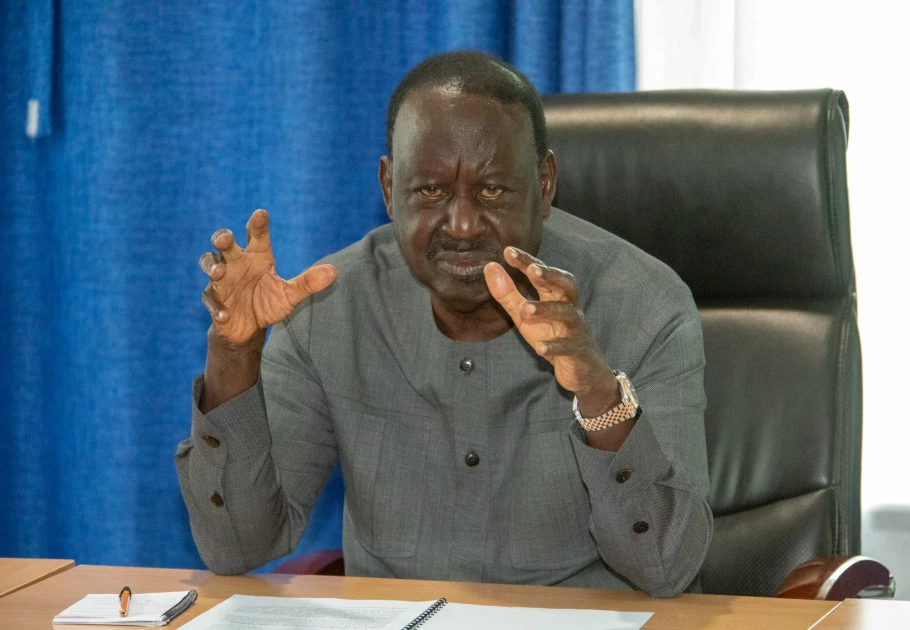
Orange Democratic Movement (ODM) party leader Raila Odinga. | PHOTO: @TheODMparty/X

Audio By Vocalize
Orange Democratic Movement (ODM) party
leader Raila Odinga has
called for an urgent national dialogue to address Kenya's socio-political and
economic crisis that has seen thousands troop to the streets in protests over
recent months.
As Kenyans marked the 35th anniversary of the historic Saba Saba protests on
Monday, Odinga holds that Kenyans are grappling with many of the same issues
that sparked the 1990 demos, including economic hardships and human rights
violations.
He was set to hold a rally in Nairobi’s
Kamukunji grounds but called it off amid a heavy police presence and roadblocks
on major highways into the city.
Instead, the ODM leader held a press conference where he proposed the
establishment of what he called a national conclave to chart a new path for the
country through collective civic engagement and reform.
“The most important
struggle is for good governance and economic opportunities,” Raila, who was
among the vocal young political leaders opposing then-President Daniel Moi's
regime in the 1090s, said.
He urged Kenyans to
choose unity over unrest, saying, “Do we embrace chaos, or a coming
together of minds and a country? As a living architect of the events leading to
Saba Saba, I choose a coming together of minds and a country in the interests
of the country.”
At the centre of his
proposal is a broad-based, intergenerational ‘national conclave’ that would
gather voices from across the political, generational, and regional spectrum.
This forum
must be tasked with crafting “irreducible reforms and changes necessary to take
the country forward,” said Odinga, and should culminate in a referendum to give citizens the
final say.
He outlined four key
pillars for the proposed civic dialogue: deliberation through
the conclave; police reforms;
transparency and a renewed fight against corruption; and youth empowerment and
economic inclusion.
“You know a rogue
police force that shoots people with impunity; this is a force that we
inherited from the colonialists,” Odinga told reporters, calling for urgent reforms to
build public trust in security agencies amid recent cases of police brutality
during the youth-led protests.
The conclave, he added,
should be led by “the most serious and sober minds in our nation.”
The Saba Saba
movement, named after the date July 7, honours the moment in Kenya’s democratic
history when citizens took to the streets for the approval of multiparty
democracy, leading to the repealing of Section 2A of the constitution.
Before then, Kenya was
a one-party state under Moi’s Kenya African National Union (KANU) regime.
The 1990 protests were
violently suppressed, but they eventually helped pave the way for political
reforms and multiparty elections.
This year, the anniversary comes amid growing public discontent
against President William Ruto’s regime over the rising cost of living and a
spate of police crackdowns on government critics and street protests, many of
which have resulted in deaths and injuries.
After losing the 2022
presidential race to Ruto, Odinga became the de facto opposition leader but has
since formed an alliance with Ruto, which has seen
him lose the support of other opposition politicians and Kenyans alike.
Leave a Comment