

Culture in focus: How African photographers are reclaiming the frame

Audio By Vocalize
In a
continent constantly photographed but rarely seen on its own terms, a quiet
revolution is unfolding through the lens. African photographers are moving
beyond the image as artifact; they are using it as testimony, a layered record
of memory, movement, and meaning.
A newly-released
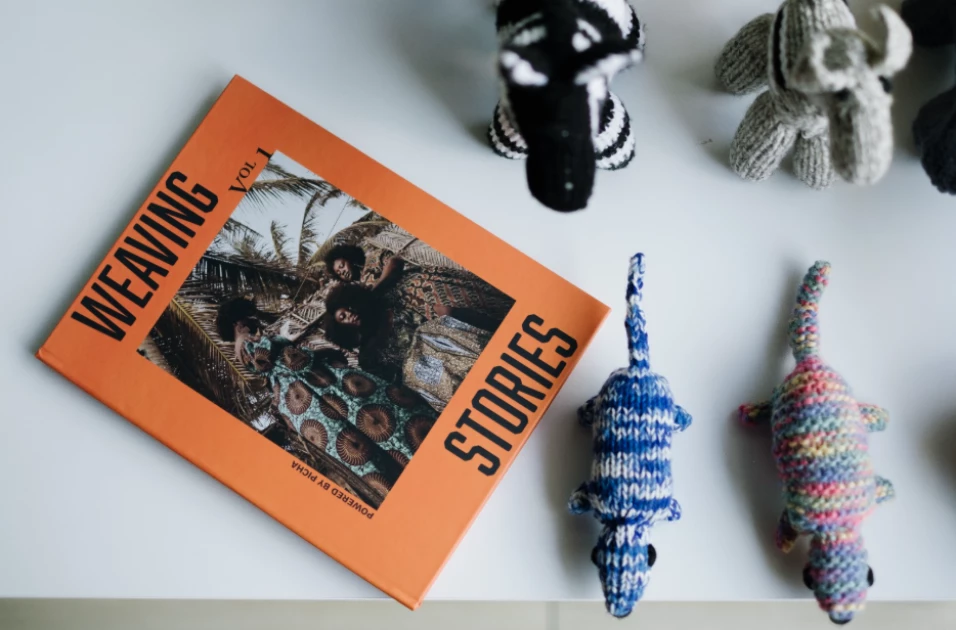
photography book, ‘Weaving Stories’, offers a glimpse into that shift. Compiled
by a collective of Afrocentric visual storytellers, the book threads together
scenes from across the continent and diaspora - not with grand declarations, but
with deliberate intimacy.
No single
narrative dominates. Instead, the collection reflects what life often is:
textured, sometimes quiet, and filled with cultural nuance.
There’s a
woman crouched under the mid-day light, her gaze steady. A boy on a motorbike
with a plastic crown. A family gathered, not for spectacle, but for supper.
These are not images crafted for Western palates or NGO reports, they are made
for and by those who live inside them.
This shift away
from documentation and toward self-definition marks a significant moment in
African visual culture. Where the camera once acted as an outsider’s tool, it
is now becoming a means of cultural memory, wielded by insiders who understand
not just what is in the frame, but what it means to be seen.
Photography
in African contexts has always been more than aesthetic. It has served as
ritual, resistance, archive. Studio photography of the post-independence era from
Malick Sidibé in Mali to James Barnor in Ghana was about more than posing. It
was about presence, about saying: ‘We are here, and we know ourselves.’
Today’s
image-makers inherit that legacy, but their medium has evolved. The rise of
digital photography, social platforms, and community-driven exhibitions has
allowed a younger generation to experiment with what the image can do and what
it can carry.
In Kenya, a
growing number of visual artists are using photography not just to capture
beauty, but to ask questions. What does heritage look like when it’s lived, not
performed? How do we hold onto disappearing traditions without freezing them in
time? What does it mean to photograph a community from within?
The result
is a visual language that’s emotionally grounded and politically aware, one that
does not seek to convince, but to connect.
What stands
out in the photographs featured in ‘Weaving Stories’ and beyond is their
refusal to chase nostalgia. These are not romantic recreations of a distant
past. They are reminders that culture is not a costume worn for tourists, it’s
a living thing.
For Kenyan
cultural worker and curator Nasimango Leilah, ‘Weaving Stories’ represents a
powerful intersection of art forms and a deeply political act of
self-expression.
“PICHA’s
book project ‘Weaving Stories’ appealed to me because it’s a mix of
photography, storytelling, and publishing,” she shares. “Three things that can
be used to tell our own stories, as Kenyans and Africans.”
What stood
out even more, she notes, was the all-women line-up of featured Kenyan
photographers: Barbra Guya, Gloria Mwivanda, Martha Nzisa, and Rading Nyamwaya.
“The topics
they chose were refreshing and defying,” she says, adding; “especially given
the current times in Kenya, when it’s hard to celebrate being a woman due to
the rising femicide and gender-based violence cases.”
This is
where the camera becomes a cultural tool. It captures the rhythm of daily
rituals: hair braiding, cooking, dancing, gathering. These are practices that
carry memories passed down, repeated, adapted. They remind us that heritage is
not always loud. Sometimes it’s the soft clink of utensils at a shared table.
Or a garment passed between generations.
In that
sense, photography becomes a form of quiet witnessing. A way to say: this
matters! Even when the world looks away.
It’s no
accident that this moment coincides with what many are calling the “New African
Aesthetic.” It’s not defined by a single look, there’s no visual rulebook.
Instead, it’s characterized by intentionality. Photographers are asking: who is
this image for? Whose story is it telling? And what truth does it hold?
You can see
this in the works of contemporary Kenyan photographers like Barbra Guya and
Martha Nzisa, who explore femininity, land, and belonging through portraiture
and landscape. Or in the street photography of rising artists in Lagos and
Johannesburg, who frame the chaos of city life with affection rather than
critique. Their work doesn’t explain Africa. It lives in it.
At a time
when so much of African culture is being digitized, exported, and reinterpreted
elsewhere, these photographs stand as anchors. They’re not just about what is
seen, but what is remembered and what we choose to carry forward.
Photography,
in this context, is no longer a luxury or side-art. It’s a form of cultural
authorship. A way of preserving, questioning, and reshaping who we are and how
we’re seen by others, yes, but more importantly, by ourselves.
Leave a Comment