
EMA gives positive opinion for single-dose sleeping sickness medication
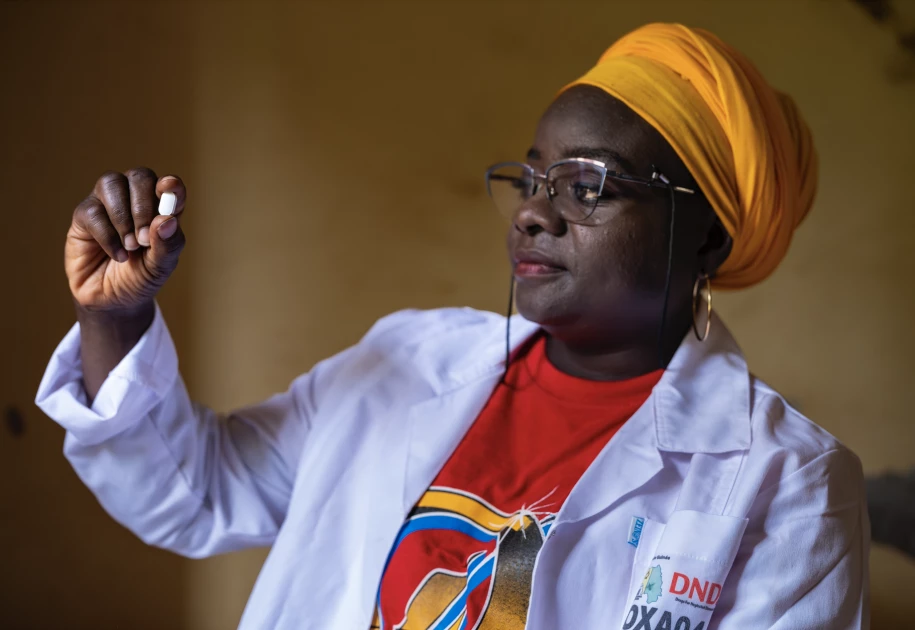
Dr Mariame Camara, DNDi Investigator, National Sleeping Sickness Program, holding an acoziborole pill at the sleeping sickness hospital in Dubreka, Guinea. Photo: Credit: Brent Stirton/Getty Images for DNDi

Audio By Vocalize
A positive CHMP opinion through the EU-M4all procedure provides a strong endorsement that the medicine meets EU standards.
The pathway, which engages WHO disease experts and regulators from endemic countries, is reserved for high-priority medicines addressing diseases with unmet medical needs.
The positive opinion will support regulatory approval of the treatment in the Democratic Republic of Congo (DRC) and lay the groundwork for a revision of the WHO’s sleeping sickness treatment guidelines. This would also broaden access to the medicine across other endemic countries in Central and West Africa.
Once approved in endemic countries, the medicine, co-developed by the Drugs for Neglected Diseases initiative (DNDi) and Sanofi, could provide a significant advance over current therapies.
Existing treatments for sleeping sickness require either a 10-day course of oral medicine or a combination of injections and oral therapy for advanced cases.
“In just 20 years, we have gone from complicated treatments including arsenic derivatives with serious side effects, to today, when a single-dose, one-day therapy could safely cure patients,’ said Dr Luis Pizarro, Executive Director at DNDi.
“This progress is testament to the transformative power of collaborative science and will bring us closer to finally eliminating sleeping sickness, a disease that has killed millions on the African continent in the past century.”
Transmitted by the bite of an infected tsetse fly, human African trypanosomiasis, commonly known as sleeping sickness, is almost always fatal without treatment.
In the early stage of the disease, people experience headaches or fever. In the late stage, the parasite crosses the blood-brain barrier and invades the central nervous system, causing behavioural, cognitive, and neurological symptoms, including seizures, sleep disturbance, aggression, confusion, lethargy, convulsions, and, ultimately, death.
DNDi conducted a pivotal Phase II/III study in the DRC and Guinea in partnership with national sleeping sickness control programmes, while Sanofi carried out the regulatory approval process.
The CHMP positive opinion is based on clinical and non-clinical data provided by the partners, with efficacy and safety supported by the Phase II/III study, published in The Lancet Infectious Diseases medical journal, which demonstrated success rates at 18 months of up to 96 per cent across both stages of the disease with a good safety profile.
“The development of acoziborole and today’s positive scientific opinion is a victory for Africa-led science, made possible thanks to African doctors and researchers who conducted cutting-edge pharmaceutical research in some of the most remote and difficult-to-reach areas on the continent,” said Dr Erick Miaka, Director of the DRC’s national sleeping sickness control programme.
In 1998, nearly 40,000 cases of gambiense sleeping sickness were reported, with an estimated 300,000 undiagnosed. At the time, the only available treatment for those with the late stage of the disease was an injectable arsenic derivative with serious side effects.
More than two decades of investment in new therapeutic tools resulted in increasingly improved treatments, including nifurtimox-eflornithine combination therapy in 2009 and the first oral treatment, fexinidazole, in 2018. In 2024, fewer than 600 cases of the disease were reported.
“For decades, Sanofi has maintained an unwavering commitment to the fight against sleeping sickness, standing alongside DNDi, the World Health Organization, and other partners in one of the most enduring and successful public-private health collaborations,” said Audrey Duval, Executive Vice President, Corporate Affairs at Sanofi.
“Together, we have helped drive cases to historic lows— achieving a remarkable 98% reduction since 2001—by putting patients first and investing in innovation where it is needed most. Acoziborole builds on this legacy and represents a decisive step forward in eliminating gambiense sleeping sickness by 2030.”
Sanofi will donate Acoziborole Winthrop to the WHO through its philanthropic organization, Foundation S – The Sanofi Collective. The medicine will be available free of charge to patients.
Another study underway in the DRC and Guinea is investigating Acoziborole Winthrop for the treatment of children ages 1 to 14.
Join the Discussion
Share your perspective with the Citizen Digital community.
No comments yet
This discussion is waiting for your voice. Be the first to share your thoughts!