

Why are Bloody Marys only for the morning?
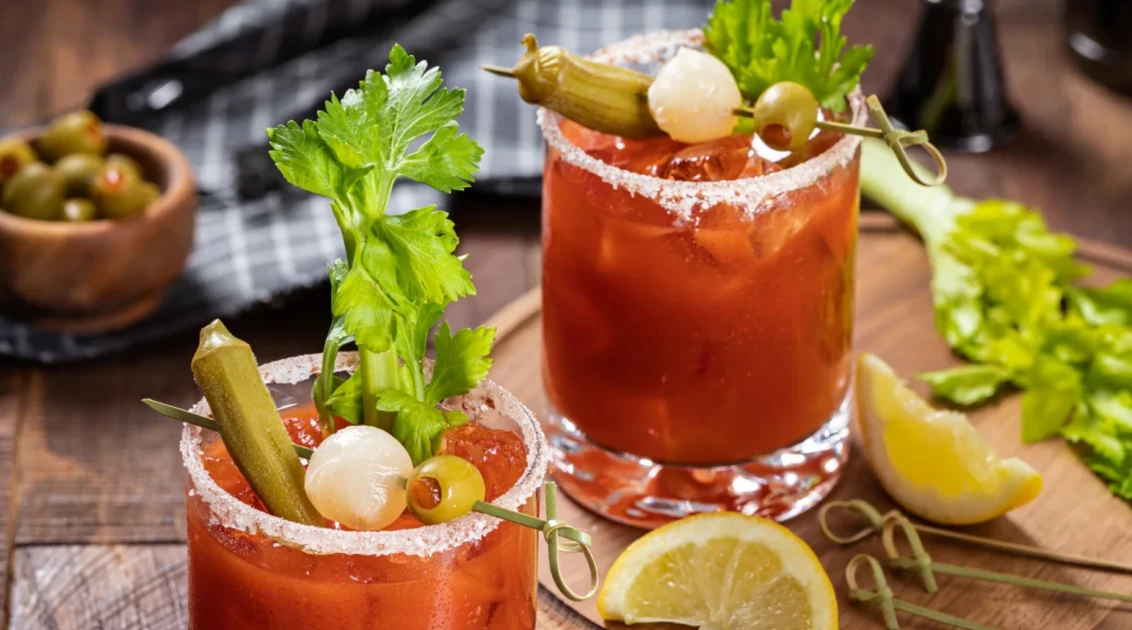
January 1 is National Bloody Mary Day. However, the tomato juice and vodka cocktails are typically consumed before the mid-afternoon.

Audio By Vocalize
January 1 is usually one of the busiest days of the year at
the Hi-Lo Diner here.
Patrons — some still in a state of revelry from
the night before — pack the booths and order up from the menu of American
classics, including the brunch staple: the Hi-Lo Bloody, which comes with a
“snit” (chaser) of a 7-ounce Miller High Life beer.
The Bloody Mary, a viscous, vegetable- and
vodka-filled garnished cocktail, often serves as a refuge for those hoping to
subdue the ringing remnants of
the prior eve’s overindulgences.
“It associates itself with a restorative property,” said Brian
Bartels, restaurateur, longtime bartender and author of “The Bloody Mary: The
Lore and Legend of a Cocktail Classic,” in an interview with CNN.
“I have friends who call it ‘soup’ or ‘cocktail
soup’ sometimes,” he said. “What do we think of when we think of soup? That
usually means we’re sick and we need to have some soup, because it makes us
feel better.”
Fittingly enough, January 1 is National Bloody
Mary Day.
So, come Monday morning, the Bloodys will be flowing heavily
at the Hi-Lo Diner and other breakfast and brunch spots across the United
States.
But come afternoon, the crimson concoctions will
be scant. That’s because the Bloody Mary also comes with an unspoken rule: It
is typically restricted to breakfast and brunch hours.
Plus, bartenders hate making it. (More on that
later.)
The exact genesis of the Bloody Mary is about as hazy
as the events from an adventurous night before.
Popular theory puts the Bloody Mary’s birthplace in
Paris in 1921, where Fernand “Pete” Petiot, bartender at Harry’s New York Bar
(then known as The New York Bar), was credited with creating an alcoholic
tomato juice cocktail spiced with some salt and pepper and a couple of dashes
of Worcestershire sauce.
Another theory was that actor George Jessel, known as the
“Toastmaster General of the United States” for frequently emceeing events,
created the drink in 1927 in Palm Beach, Florida, after a softball game turned
into an all-night-and-next-day bender, according to a Bloody Mary
history published in Difford’s Guide by New York City’s Dead
Rabbit owner Jack McGarry.
To kill the “rotten potatoes” smell of the dusty vodka
bottle they came across, Jessel claimed he tried to cover it by using
Worcestershire sauce, tomato juice and lemon, according to McGarry, citing
Jessel’s “The World I Lived In!” autobiography.
“After we had taken a few quaffs, we all started to feel a
little better,” Jessel wrote, according to McGarry. “The mixture seemed to
knock out the butterflies.”
In a 1964 interview with the “New Yorker”
magazine, Petiot nodded to Jessel’s claim of invention but said his own
additions of salt, pepper, cayenne, Worcestershire sauce and lemon juice made
it a full cocktail.
“To me, this is the most plausible origin story,”
Bartels said in his book. “Jessel takes credit for the combination of vodka,
Worcestershire sauce and tomato juice, and Petiot modernized it with spices and
seasoning.”
Before the Bloody Mary was developed, 19th-century
Americans turned to the oyster cocktail (several small oysters mixed with salt
and hot sauce) as well as the prairie oyster (a raw egg dashed with spices,
Worcestershire and Tabasco) as hangover helpers.
Separately, when tomato juice was launched
commercially in the 1920s, it was touted as a health tonic.
Despite the lore, plenty of official and
unscientific research does ultimately debunk the Bloody Mary as a hangover
cure, according to food
science blog, Serious Eats.
“The non-booze ingredients of a Bloody Mary
deliver up electrolytes, water, Vitamin C and Vitamin B6, all of which might
help with a hangover,” according to the site. “Vodka, not so much.”
In addition to the restorative, “hair of the dog”
elements — which play well with the drink’s origins — other reasons for the
early-day assignment are cultural and, simply, practical.
Something stronger to start … but maybe not end
the day
Crafting a Bloody Mary can be time-consuming and
require multiple “touches” for bartenders, even if there’s a pre-made mix
available.
There’s plenty of spilled digital ink, especially on
bartenders’ Reddit boards, to attest that it’s poor form to order a
Bloody Mary in the evening — and, especially, at night.
“After 9 pm, Bloody Marys should be referred to as
‘Bartenders’ Nightmare’ to discourage the ignorant. End rant,” begins one Reddit thread on
the r/bartenders group.
Still, there’s no hard-and-fast rule that prevents
the drink from being made or enjoyed any time of day.
Many restaurants and bars across the country don’t put any
time restrictions on their Bloodys.
North Carolina-based The Blind Pelican Seafood
House has even made a name for itself by creating massive, meal-sized Bloody
Marys.
“It’s all-day, especially on the weekends,” Rich
Foil, a Blind Pelican manager, told CNN. “Sometimes, some of the last items our
kitchen is sending out for the day is a Bloody Mary.”
The Blind Pelican upped its Bloody Mary game
during Covid, when bar manager Josh Self crafted extravagant, towering versions
of the drink by adding pounds of surf and turf as well as other garnishes such
as grilled cheese.
The “Lobstrocity,” which
includes shrimp, bacon, grilled cheese and lobster tail as garnishes to the
Tito’s vodka Bloody Mary, starts at $40. The popular “Medusa,” starting at
$100, piles on a full pound of crab legs and a 6-ounce filet mignon in addition
to what the Lobstrocity offers.
Some of the build-your-own Bloody Marys can run
over $1,000, Foil said.
For the easier-on-the-wallet option, the
veggie-loaded classic Bloody Mary there starts at $11.50.
The anytime Bloody Mary also can be regional or
cultural, said Shelley Buchanan, founder of the Drunken Tomato, a Bloody
Mary-focused blog and magazine that runs an international Bloody
Mary competition.
“If you go to Wisconsin, it’s totally normal to
have a Bloody Mary any time of the day; same thing if you go to London … it’s
always on the menu,” she said. “If you go somewhere like San Francisco and try
to order a Bloody Mary at 3 pm, they’re going to tell you, ‘No.’”
In addition to regional differences (see the
Minneapolis snit), Bloody Marys also can be heavily customizable, Bartels said,
noting that everyone is unique and often ask for the “tweak.”
Hi-Lo manager Ryan Barott said the diner’s wait staff are
happy to accommodate some requests for tweaks, including swapping vodka for
other alcohol or making it spicier. But by and large, he said, the lion’s share
of those requests come in the early half of the day.
Barott can count on one hand the number of times
during a week that he sees a patron order a Bloody Mary after 3 pm.
“I honestly think it’s more tradition than
anything else,” he said. “I think people are sort of programmed now to think,
‘If you’re going to drink in the morning, mimosa or a Bloody Mary are the
options.’”
Leave a Comment