
Baby Laurine’s fight: How Pumwani’s milk bank is saving preterm babies

Audio By Vocalize
Baby Laurine entered the world far earlier than expected, weighing just two kilograms and fitting into the palms of her caregivers’ hands. Born at seven months, her first days were a delicate balance between life and loss. For months, her survival depended not on her mother’s milk, but on breast milk donated by other women.
Fed through a
thin red tube running into her tiny nose, Laurine gained weight gradually—gram
by gram. Today, five months on, she is healthy, and alert.
“When you look
closely at baby Laurine, it’s hard to believe she was born so prematurely,”
says her mother, Winny Kemunto. “She’s chubby, beautiful, and full of life.”
Kemunto, a
mother of three in her mid-thirties, admits her pregnancy journey was far from
ideal. She never attended antenatal clinics and ignored warning signs when she
began bleeding, believing everything would turn out fine. Instead, her
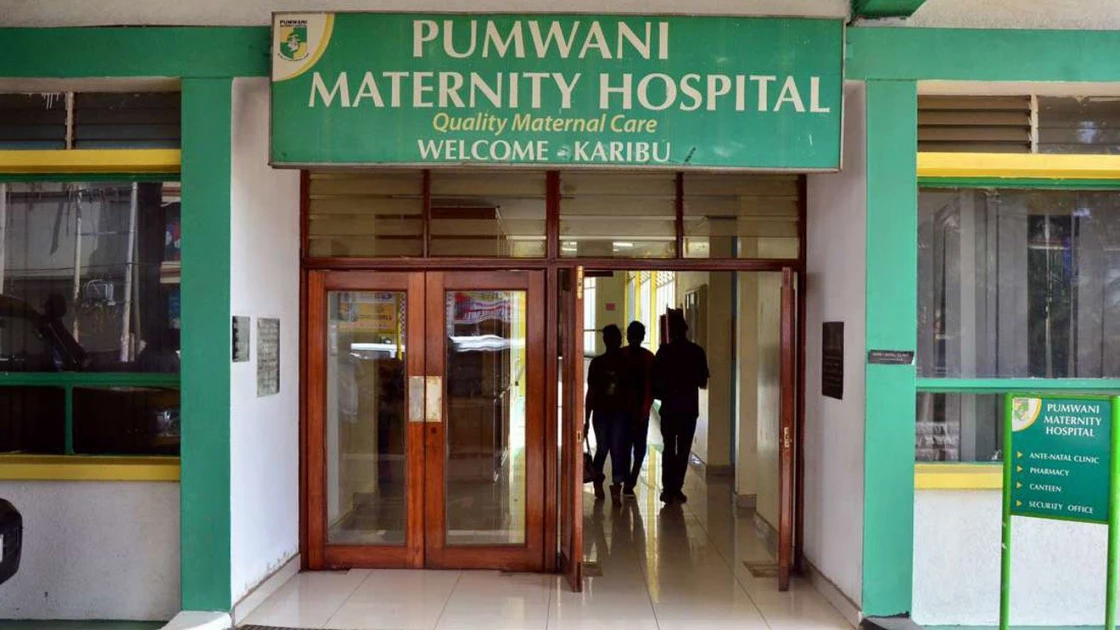
condition deteriorated rapidly. She was fortunate to deliver at Pumwani
Maternity Hospital, Kenya’s largest referral maternity facility. Laurine was
born with underdeveloped lungs and immediately placed in an incubator. Kemunto,
still recovering, could not produce breast milk.
“I felt terrible
because I couldn’t breastfeed my own baby,” she recalls. “But for her
well-being, I accepted milk donated by other women. I had no milk at all, and
that milk saved my child.”
Laurine’s story
is one of many unfolding quietly inside Pumwani’s newborn unit, where the
hospital’s human milk bank has become a lifeline for preterm and critically ill
babies. According to Faith Njeri, a nurse and head of department at the facility,
many mothers of preterm infants struggle to produce milk immediately because
the hormonal processes that trigger lactation are interrupted by early
delivery.
“In such cases,
the alternative is often infant formula,” Njeri explains. “But formula is less
nutritious and increases the risk of infection, especially where water may be
unsafe.”
Pumwani’s breast
milk bank is among only a handful in sub-Saharan Africa and one of just three
facilities on the continent with an operational human milk bank, alongside
South Africa and Mozambique. The concept was first introduced in South Africa,
the pioneer of milk banking in Africa.
The World Health
Organisation (WHO) recommends exclusive breastfeeding for the first six months
of life, describing human milk as complete nutrition packed with antibodies
that protect infants from infections and reduce the risk of obesity and
diabetes later in life. For preterm babies, the benefits are even more
pronounced.
Inside the same
unit where Laurine fought for survival, another mother’s story is marked by
loss. Lydia Auma was transferred to Pumwani from another hospital because her
premature baby required specialised equipment. Her newborn weighed just 1.2
kilograms. Despite medical care, tragedy struck.
Auma recounts
how exhaustion overtook her one night. She overslept, missing a scheduled
feeding and a session of Kangaroo Mother Care—a WHO-recommended method
involving prolonged skin-to-skin contact, exclusive breastfeeding, and close
follow-up.
“I fed my baby
34 millilitres later than instructed,” she says softly. “I placed her beside me
and went back to sleep. When I woke up in the morning, she was gone.”
Grief compounded
by personal hardship, Auma says she had been under immense stress, facing
family challenges and harsh treatment from her husband during pregnancy. Yet
out of her loss emerged an act of generosity. Unlike many mothers of preterm
babies, Auma produced ample breast milk. After counselling, she decided to
donate it to help babies whose mothers could not feed them.
“Before
donating, they tested me for TB, HIV, and hepatitis,” she explains. “I felt
good knowing my milk would help other babies. The first time, I donated 200 millilitres.”
Once donated,
the milk undergoes a rigorous safety process. It is taken to the laboratory,
screened for bacterial growth, pasteurised, and packed in 50ml containers. Each
container is labelled with the donor’s identification and date of donation
before being frozen for up to six months.
“The process is
very strict,” says Njeri. “We must ensure the milk is completely safe. Babies
are given precise amounts depending on their medical needs.”
Established in
2019 with support from British aid, the Pumwani milk bank aims to promote
breastfeeding and reduce newborn deaths. Preterm infants face high mortality
risks, and studies show that breast milk significantly improves survival and
growth compared to formula feeding. WHO emphasises that even small amounts of
breast milk make a major difference for preterm infants, whether it comes from
the biological mother or a screened donor.
Despite its
success, the programme has limitations. Due to strict handling requirements and
limited equipment, only babies admitted to Pumwani’s newborn unit currently
benefit. Expanding the service beyond the hospital remains challenging.
“Many families live
in informal settlements without refrigeration or clean running water,” explains
Pumwani CEO Christine Kiteshio. “We cannot safely support milk storage outside
the facility at the moment.”
Cultural beliefs
also present obstacles. Some communities believe that babies who share breast
milk become siblings, raising concerns among families.
“These beliefs
lead to hesitation,” Njeri says. “But no mother is forced to accept donated
milk. We give families time to consult and provide education about its safety
and importance.”
Between five and
ten babies receive donated milk at Pumwani every day. The hospital delivers
between 70 and 100 babies daily, making it one of the busiest maternity
facilities in Africa. Within its walls, the human milk bank quietly transforms
surplus into survival. Mothers with more milk than they need are encouraged to
donate. In the most painful cases, women who lose their babies are supported to
express milk to prevent infection or complications, and, if they choose, to
donate it.
In this way,
something born of grief is preserved, made safe, and offered to sustain another
fragile beginning—just as it did for baby Laurine, whose life stands as living
proof of the power of shared motherhood.
Join the Discussion
Share your perspective with the Citizen Digital community.
No comments yet
This discussion is waiting for your voice. Be the first to share your thoughts!