

China cancels 23 loans to Africa amid 'debt trap' debate
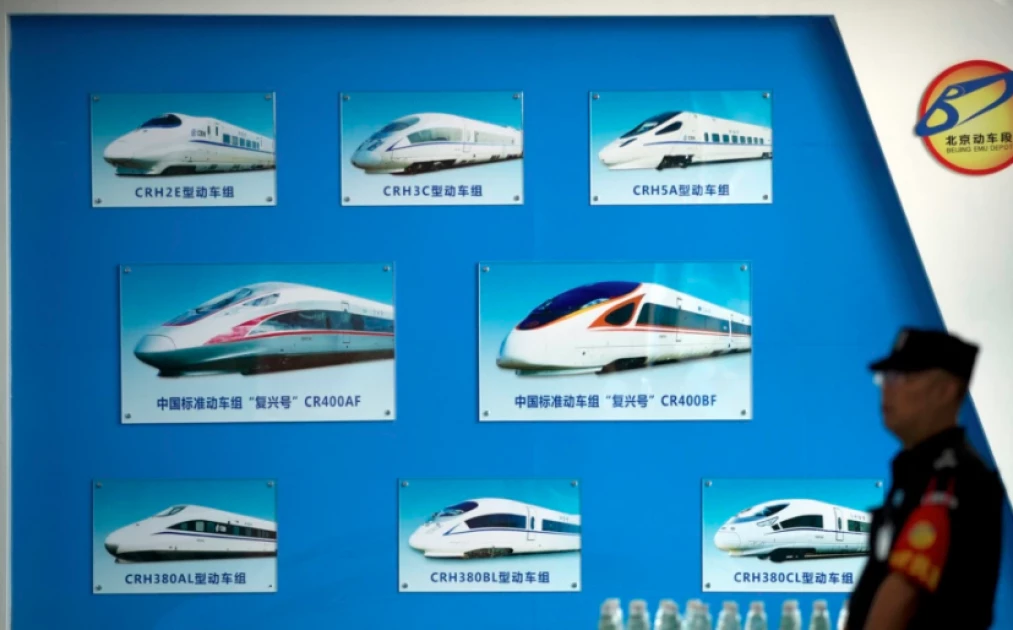
FILE - A security official stands near a display showing different models of Chinese trains ahead of the 2018 Forum on China-Africa Cooperation in Beijing, Aug. 30, 2018. Chinese funds for projects like railroads have flooded into Africa in recent years.

Audio By Vocalize
A recent announcement by China that it is
forgiving 23 loans for 17 African countries may be motivated by accusations of
"debt-trap diplomacy," say some analysts.
Critics have long accused Beijing of
practicing debt-trap diplomacy, suggesting it deliberately lends to countries
that it knows cannot repay the money, thereby increasing its political
leverage. China vehemently rejects this, alleging it's a way for the U.S. to
discredit Beijing, Washington's main challenger in the quest for influence in
Africa.
China's decision to forgive the zero-interest
loans is, in part, aimed at countering the debt-trap narrative, said Harry
Verhoeven, senior research scholar at Columbia University in New York.
"It is not uncommon for China to do something like this [forgive interest-free loans] … now obviously it is connected to the overall debt-trap diplomacy narrative in the sense that clearly there's a felt need on the part of China to push back," Verhoeven told VOA.
China is Zambia's biggest creditor. Lusaka
owes some $6 billion to Chinese entities. In July, Zambia's finance ministry
announced it was canceling $2 billion of undisbursed loans from its external
creditors, $1.6 billion of which are from Chinese banks. The move stopped construction
of infrastructure projects largely funded by a Chinese bank, the South China
Morning Post reported.
Shahar Hameiri, a political economist from
the University of Queensland in Australia, agreed that the latest move by
Beijing in forgiving African nations' interest-free loans was probably just
"a goodwill gesture."
"The bigger loans are likelier to be
restructured, if repayment problems loom, as we saw in Zambia," Hameiri
wrote in an email to VOA.
US 'debt trap'
claim
Senior officials in the U.S. have regularly
warned developing countries, particularly in Africa, about the dangers of
Chinese loans, and a 2020 State Department document, titled "The
Elements of the China Challenge," referred to China's
"predatory development program and debt-trap diplomacy."
On a visit to the continent this month, the U.S.
ambassador to the United Nations, Linda Thomas-Greenfield, touched
on the idea that "the wealthy and powerful have extracted Africa's natural
resources for their own gain. And it continues today through bad deals and debt
traps." She did not mention China by name.
African politicians themselves have had mixed
reactions to the debt-trap theory, with some, such as Ethiopia's
ambassador to China, Teshome Toga Chanaka, refuting the idea,
saying, "A partnership that does not benefit both will not sustain
long."
Others, including Kenya's new
president-elect, William Ruto, and Angolan opposition presidential candidate
Adalberto Costa Jr., have expressed concern over taking Chinese loans.
The debt trap allegations have infuriated
Beijing, which says Western private lenders are responsible for the bulk of
poor countries' debt and charge much higher interest rates.
The U.S. allegation against China "is
simply untenable," Chinese Foreign Minister Wang Yi said this month.
Chinese state
media constantly run articles aiming to debunk the narrative.
Debunking the
narrative
A number of economists and researchers are
also saying the debt-trap narrative against China is unfounded.
"The debt-trap idea is that Chinese
banks had ulterior motives: deliberately lending to countries when they knew
those countries couldn't repay," Brautigam said. "The reality is that
like bondholders, which hold the majority of Africa's debt, Chinese banks lent
to countries that looked quite promising. All of these creditors have belatedly
realized that risk profiles can shift dramatically in a short period of
time."
China restructured or refinanced about $15
billion in African debt between 2000 and 2019, Brautigam's research has found.
She did not find that China had been involved in any "asset
seizures."
Echoing Brautigam, Hameiri wrote in an email
to VOA, "There is scant evidence that China has pursued 'debt-trap
diplomacy' – i.e., the idea that it would on purpose issue loans to ensnare
recipients in unsustainable debt, in order to seize strategic assets or exercise
control over their governments."
Problematic
loans
Chinese lending has at times been
problematic, Hameiri wrote, because "in a frenzy to issue loans, Chinese
lenders often spent little time considering debt sustainability. Hence, Chinese
lending has contributed to debt problems in a number of countries, although it
is not necessarily the only or even the primary cause as in Sri Lanka."
Some critics blamed China for the crisis in
Sri Lanka earlier this year, when the cash-strapped government – which had
defaulted on its debt – was deposed by mass protests. Beijing also is Colombo's
biggest bilateral creditor; however, Sri Lanka's largest foreign lending source
is in sovereign bonds sold in several countries.
Verhoeven said the growth in sovereign bonds
has been an important factor in African nations' debt too and rejected the
Chinese debt-trap narrative.
"When it comes to China, the debt-trap
narrative suggests … this is being done on purpose," to get countries to
vote with China in the U.N. General Assembly and to reduce Western influence,
he said.
There "is little actual evidence that
China's been doing this for political gain," Verhoeven said, "which
is not to in any way say that Chinese lending is all fine, or that it's always
responsible or the best thing for countries to do, far from it."
Since China has now been burned several times
regarding its lending, with several countries defaulting on the loans, plus its
own economic difficulties at home, "there's certainly a sense that the
good old days of 10 or 15 years ago where [it] could sort of give out loans
left and right ... are over," said Verhoeven.
Leave a Comment