
Global Handwashing Day: Ministry of Health, Reckitt advocate for more hygiene collaborations
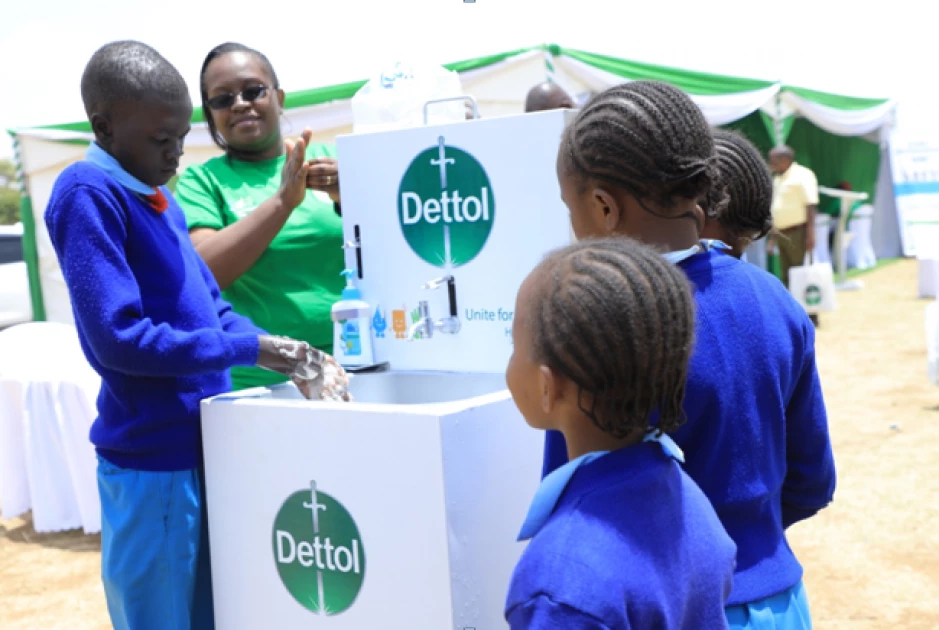
Reckitt Senior Brand Manager Margaret Ngea teaches pupils of Kasarani Primary School on hand washing techniques as world marked Global Handwashing Day.

Audio By Vocalize
Reckitt, manufacturer of Dettol, is calling
for stakeholders and partners to join hands in order to safeguard gains made in
containing the disease burden post-Covid and stay ahead of future pandemics.
This call was made during the Dettol Global
Handwashing Day event held at Kasarani Primary School, Nairobi, on Saturday.
In attendance were school children,
representatives from the Ministry of Health, Ministry of Education, County
WASH, as well as Reckitt partners; Water.Org and Naivas.
October 15 annually is marked as
Global Handwashing Day, with the aim of increasing awareness and understanding
about the importance of handwashing with soap as an effective and affordable
way to prevent diseases and save lives.
Dettol Senior Brand Manager Margaret Ngea
speaking on behalf of the Reckitt Country Manager, Asif Hashimi, noted that the
country has leveraged the lessons from the last two and a half years since the
coronavirus outbreak took a toll on every aspect of life.
“At Reckitt, our purpose is to protect, heal
and nurture in the relentless pursuit of a cleaner, healthier world. We have a
goal to make access to the highest quality hygiene, wellness and nourishment a
right, not a privilege,” she said.
“Through our Dettol brand, we have developed
multiple programs designed to tackle public health and hygiene issues. Our
Dettol School Hygiene Program has so far reached and educated over 2 million
school children in Kenya on hygiene practices.”
She added: “Today, we trained 3 schools - St.
Dominic, Mirema and Chieko Primary with Reckitt staff volunteering to educate
the children on proper handwashing. Altogether, we have trained about 2000
children today. Parallel to this, we are also educating shoppers on the
importance of handwashing in Naivas stores.”
Currently, 9.9 million people in Kenya drink
directly from contaminated surface water sources, an estimated five million
people practice open defecation according to UNICEF.
Data has shown that only 25 per cent of
Kenya’s population have hand-washing facilities with soap and water at home.
Leave a Comment