
Great Lakes leaders split over chemical castration as child protection crisis deepens
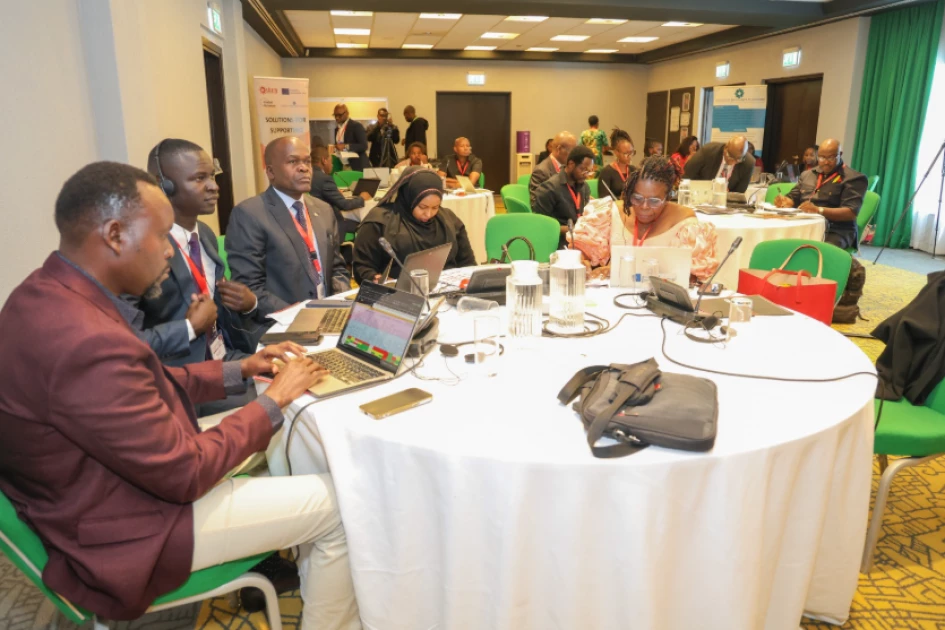
Meeting in Kenya on February 17, 2026, leaders from across the region came under heavy criticism for what civil society groups described as weak legislative frameworks that fail to deter sexual violence or protect children from harmful cultural practices.

Audio By Vocalize
A fierce debate is unfolding in the Great Lakes region as lawmakers grapple with how far governments should go to curb rising cases of rape and early child marriage—two crises increasingly framed as both public health and political failures.
Meeting in Kenya on Tuesday, Members of Parliament from across
the region came under heavy criticism for what civil society groups described
as weak legislative frameworks that fail to deter sexual violence or protect
children from harmful cultural practices.
At the center of the controversy is a proposal contained in
Kenya’s Gender-Based Violence (GBV) taskforce report recommending chemical
castration for convicted rapists.
The proposal by the former Deputy Chief Justice Nancy Baraza-led
team sharply divided lawmakers, exposing deep tensions between human rights,
public health, and criminal justice.
Dr. Katakwe Alex, a Zambian MP, strongly opposed the measure,
warning that chemical castration poses serious health risks.
He cited medical evidence showing that suppressing male sex
hormones can lead to osteoporosis, cardiovascular disease, and long-term
physical deterioration.
“You cannot claim to protect life while endorsing a punishment
that permanently damages the body and violates fundamental human rights,” he
argued.
Kenya’s Nominated MP Suleka Harun echoed the concern, accusing
the Baraza-led taskforce of lacking human sensitivity.
“It is frivolous. We cannot correct one wrong with another
wrong,” she said, insisting that justice must remain humane and constitutional.
However, lawmakers from Tanzania pushed back, emphasizing that
the gravity of rape demands severe punishment.
Advocate Denis Bwana argued that leniency sends the wrong
signal in societies where survivors—especially girls—are already silenced.
“Once you ruin a daughter’s life and the law finds you guilty,
punishment is inevitable. That said, Parliament must still refine the bill to
balance justice, health, and rights,” he said.
Beyond punishment, the meeting—hosted by the Eastern Africa
National Networks of AIDS and Health Service Organizations—shifted focus to
prevention, particularly the alarming rise in early child marriages across
Zambia, Rwanda, Kenya, Uganda, and Tanzania.
According to Kenya’s National Gender and Equality Commission (NGEC),
early marriage remains a major driver of poor health outcomes for girls, including
maternal mortality, school dropout, and lifelong poverty.
Regional MPs agreed that child marriage is not just a cultural
issue but a public health emergency undermining Africa’s future workforce and
development.
They are now drafting a regional bill aimed at protecting both
the girl child and boy child, while calling on the World Health Organization to
urgently fund large-scale campaigns against child marriage.
“We cannot continue losing brilliant African girls to early
marriages,” said Robert Athewa of the Access to Medicines Platform. “Health
funding must prioritize education, prevention, and empowerment—now, not later.”
As the Great Lakes region confronts intersecting crises of
sexual violence, child marriage, and weak enforcement, lawmakers face a
defining question: Will political courage finally match the scale of the health
emergency?
Join the Discussion
Share your perspective with the Citizen Digital community.
No comments yet
This discussion is waiting for your voice. Be the first to share your thoughts!