

India, Bangladesh ink pact on sharing waters of a common river
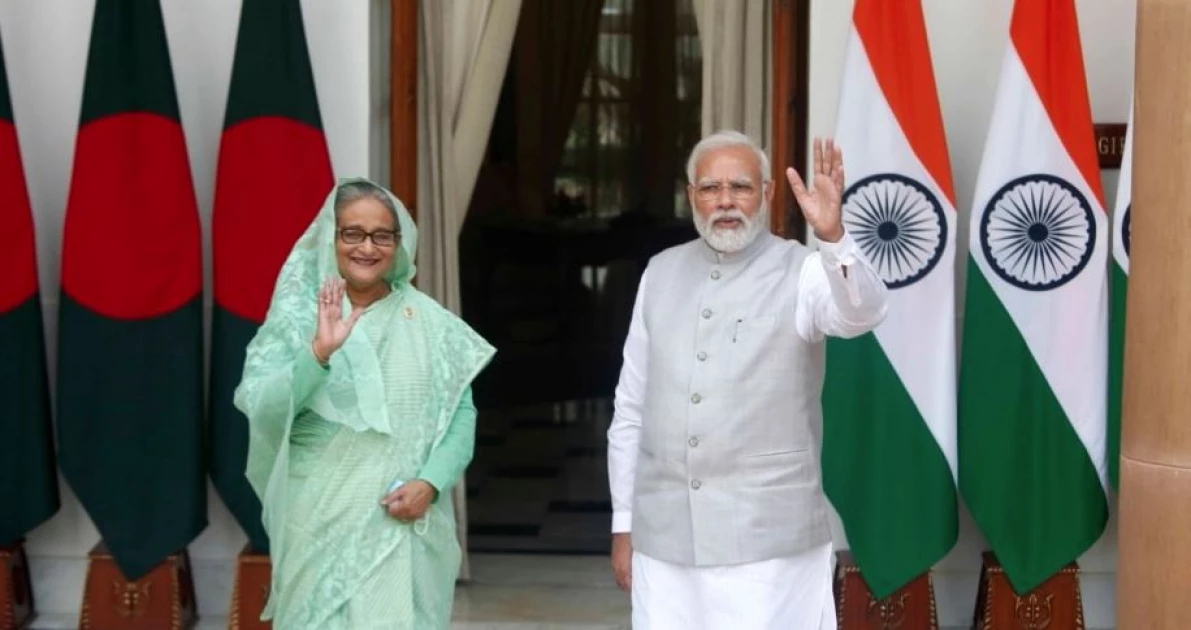
Indian Prime Minister Narendra Modi, right, and his Bangladeshi counterpart Sheikh Hasina wave to the waiting media before their delegation level talks in New Delhi, India, Sept. 6, 2022. PHOTO/COURTESY: VOA

Audio By Vocalize
India and Bangladesh reached an agreement on sharing the
waters of a common river and pledged to boost trade links as they reaffirmed
close ties Tuesday during a visit to India by Bangladesh’s prime minister,
Sheikh Hasina.
Calling Dhaka “our biggest development and trade partner in
the region,” Indian Prime Minister Narendra Modi said both sides will start
talks on a comprehensive economic agreement and expand cooperation in sectors
such as information technology, space and nuclear energy.
Building close ties with Bangladesh is a priority for India,
which is trying to fend off inroads made by China in neighboring South Asian
countries like Nepal and Sri Lanka, with Beijing’s Belt and Road infrastructure
initiative.
In Bangladesh, Sheikh Hasina’s four-day visit to India is
seen as politically significant because it takes place ahead of general
elections next year.
Among the seven pacts signed Tuesday, the one that will be welcomed the most in Dhaka is an agreement to share waters of the Kushiyara River.
It is the first such deal the two countries have inked in more than 25 years and is seen as a breakthrough in addressing an issue that has cast a shadow on their otherwise close ties.
A pact to share water resources from trans-boundary rivers that run downstream from the Himalayas from India into Bangladesh has long been a priority for Bangladesh, a lower riparian state that suffers from crippling water shortages.
The rivers sustain South Asia’s agriculture and meet the needs
of very large cities in a region that is becoming increasingly water-stressed.
But an agreement that Bangladesh has sought for sharing
waters on one of the major transboundary rivers, the Teesta, has eluded the two
countries for more than a decade, largely due to opposition from the West
Bengal government in India, through which the river runs.
“India and Bangladesh have resolved many outstanding issues
and we hope that all outstanding issues, including Teesta water-sharing treaty,
would be concluded at an early date,” Sheikh Hasina said.
Tuesday's pact to share waters of the Kushiyara is expected
to help alleviate some of Dhaka’s concerns.
New Delhi and Dhaka have shared close ties since Sheikh
Hasina took power in 2009. Calling India Bangladesh’s most important neighbor,
she said that “Bangladesh-India bilateral relations are known to be a role
model for neighborhood diplomacy.”
Both countries said they will aim to grow bilateral trade, which doubled in the last five years to reach $18 billion last year.
They also announced the completion of the first phase of a
thermal power project that Prime Minister Modi said would increase the
availability of “affordable electricity” in Bangladesh.
India and Bangladesh are also looking to expand connectivity projects – both countries are working on a raft of road, rail and waterway projects.
The bid to increase links comes as some countries become
increasingly wary of Chinese investments after another South Asian country, Sri
Lanka, spiraled into an economic crisis as Chinese investments there failed to
generate the expected returns and added to a debt burden that has been partly
blamed for its meltdown.
Bangladesh has one of the world’s fastest growing economies. It has boomed on the back of a growing garment export industry.
Bangladesh, however, is among South Asian countries seeking
a loan from the International Monetary Fund as it grapples with depleting
foreign exchange reserves.
Before coming for the visit, Prime Minister Sheikh Hasina told Indian news agency ANI that her country’s economy remains strong despite the impact of the COVID-19 pandemic and higher oil and food prices in the aftermath of Russia’s war in Ukraine.
Leave a Comment