

Indian court sentences Kashmiri leader to life in prison

Audio By Vocalize
An Indian court sentenced a Kashmiri
separatist leader to life in prison on Wednesday after declaring him guilty of
terrorism and sedition, triggering a clash between protesters and police and a
partial shutdown of businesses in the Indian-controlled portion of Kashmir.
Mohammed Yasin Malik, 56, led the banned
Jammu and Kashmir Liberation Front, one of the first armed rebel groups in the
Indian-held area, but later shifted to peaceful means in seeking the end of
Indian rule.
Muslim-majority Kashmir has been divided
between India and Pakistan since British colonialists granted it independence
in 1947. Both countries claim the region in its entirety and have fought two
wars over its control.
Malik was arrested in 2019 and was convicted
last week on charges of committing terrorist acts, illegally raising funds,
belonging to a terrorist organization and criminal conspiracy and sedition.
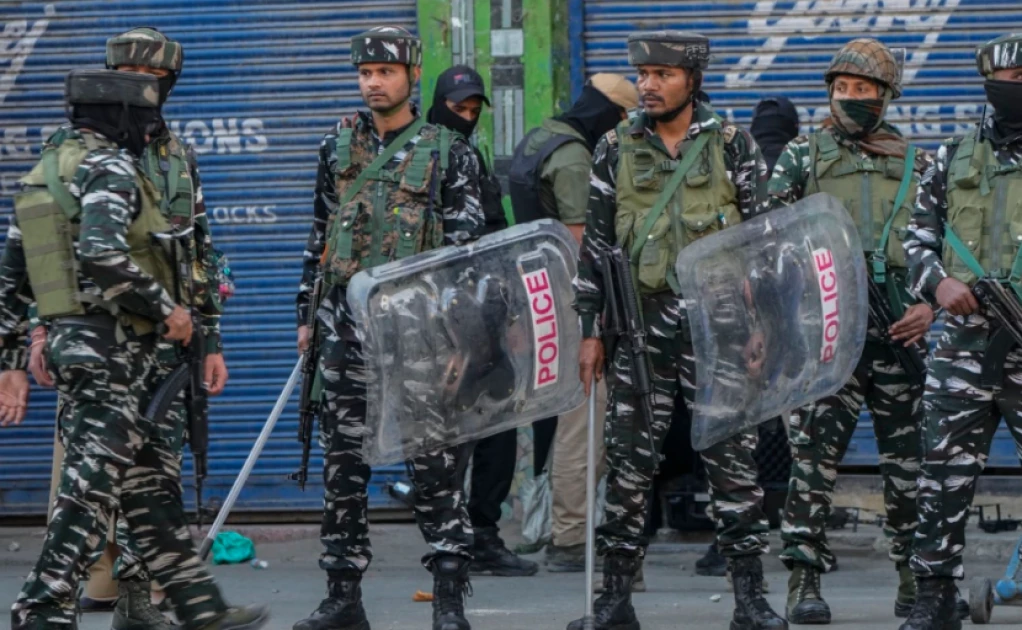
Before Wednesday's sentencing, dozens of
Kashmiris gathered at Malik's home in Srinagar, the largest city in
Indian-controlled Kashmir. Some marched through the streets, chanting "We
want freedom" and "Go back India." Government forces fired tear
gas at the marchers, who threw stones.
Shops and businesses closed in the main
centers of Srinagar.
Prosecutors said the judge rejected their
request for a death sentence.
The government banned Malik's organization in
2019, accusing it of funding terrorism and blaming it for the deaths of
minority Hindus in the Himalayan region.
Malik protested the charges during the trial
and said he was a freedom fighter.
"The terrorism-related charges leveled
against me are concocted, fabricated and politically motivated," he said.
"If seeking azadi (freedom) is a crime,
then I am ready to accept this crime and its consequences," he told the
judge.
Pakistan Prime Minister Shahbaz Sharif
condemned Malik's sentencing, and its Foreign Ministry said it summoned India's
top diplomat in Islamabad.
"Today is a black day for Indian
democracy & its justice system," Sharif tweeted. "India can
imprison Yasin Malik physically but it can never imprison idea of freedom he
symbolizes. Life imprisonment for valiant freedom fighter will provide fresh
impetus to Kashmiris' right to self-determination."
In the late 1980s, Malik joined a group of
young people who traveled to Pakistani-controlled Kashmir for arms training,
seeking independence for all of Kashmir from India and Pakistan.
By 1989, Indian-controlled Kashmir was in the
throes of a full-blown rebellion, with Malik and his comrades conducting
attacks against the Indian security establishment and pro-India Kashmiri
politicians.
India responded with a massive militarization
of Kashmir, saying it was fighting a Pakistan-sponsored proxy war. It unleashed
a brutal counterinsurgency campaign, and soldiers were given broad impunity and
allowed to shoot suspects on sight or detain them indefinitely.
Malik was arrested during a raid by Indian
troops in 1990 and was released in 1994. He took over control of the Jammu and
Kashmir Liberation Front, shifting away from armed rebellion and seeking the
end of Indian rule over the territory through peaceful political means.
In 2003, Malik and his associates began
collecting signatures of Kashmiris seeking the right to self-determination.
They traveled for two years to hundreds of villages and towns, gathering over
1.5 million signatures.
He helped lead an anti-India uprising in 2008
with large-scale protests that marked a shift from armed struggle to
non-violent resistance. He continued to lead large public gatherings in
subsequent years seeking an end of Indian rule.
Malik held several unsuccessful rounds of
talks with the Indian government, including with two prime ministers. He is
married to a Pakistani artist, Mushaal Hussein, and they have a 10-year-old
daughter.
Most Muslim Kashmiris support the rebel goal
of uniting the territory, either under Pakistani rule or as an independent
country. Tens of thousands of civilians, rebels and government forces have been
killed in the conflict since 1989.
The All Parties Hurriyat Conference, a
coalition of anti-Indian Kashmiri political groups, said Malik was "being
punished for his political beliefs" and was "convicted in invented
cases under draconian laws."
The group urged the Indian government to
release all Kashmiri political prisoners and resolve the Kashmir conflict through
dialogue.
Leave a Comment