

North Korean teens punished for watching South Korean dramas, research group claims
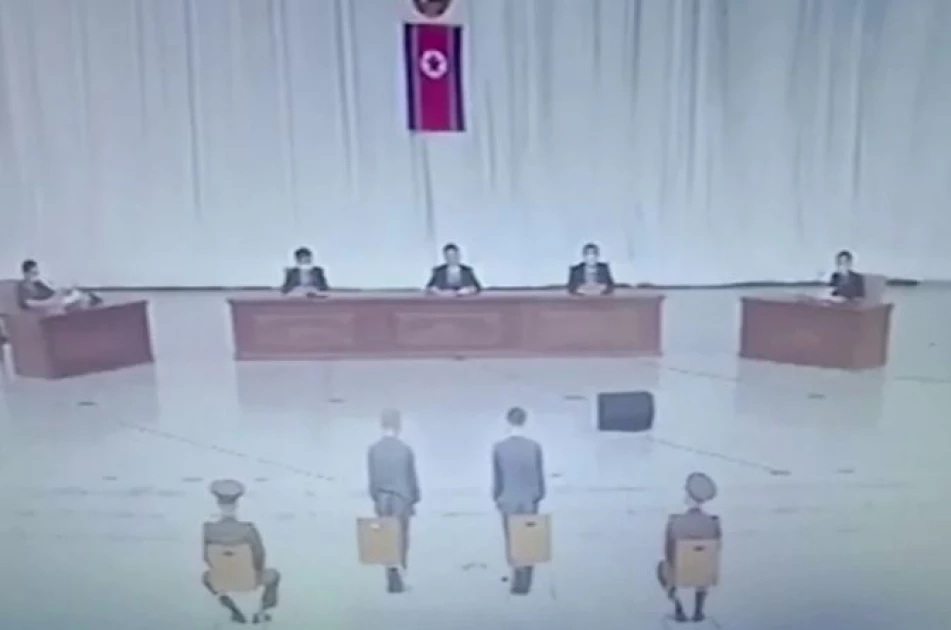
The video shows the teenagers facing a panel on a stage in an ampitheater. PHOTO/COURTESY: CNN

Audio By Vocalize
A
South Korean research group has released rare footage that it claims shows
North Korean teenagers sentenced to hard labor for watching and distributing
K-dramas – which are banned in the hermit nation.
The
narrated footage released last Friday shows the two teens standing on a stage
in an amphitheater filled with hundreds of people wearing white shirts, who
appear to be students.
The
teens, flanked by two adults in military-style uniforms, stand facing six more
adults, all seated at three tables to the rear of the stage.
“Not
long ago, a public trial was held,” the narrator says, naming the two teens and
saying they were caught “watching and distributing puppet regime’s recordings.”
North
Korea often refers to South Korea as a “puppet regime.”
The
narrator says the pair watched and distributed dozens of South Korean movies
and TV shows, and that each was sentenced to 12 years of labor.
“They
were only 16 years old, just at the beginning of their lives. However, they
were seduced by foreign culture, ultimately ruining their future paths,” the
narrator says.
The
names of the teens’ homeroom teachers also appear on the screen.
The
Seoul-based South and North Development Institute (SAND Institute), which works
with North Korean defectors, obtained the recording and distributed it to media
outlets.
The
video, which shows the audience in the amphitheater all wearing masks, is believed
to have been filmed during the Covid-19 pandemic.
For
decades, North Korea has been almost completely closed off from the rest of the
world, with tight control over what information gets in or out.
Foreign
materials including movies and books are banned, with only a few
state-sanctioned exceptions; those caught with foreign contraband often face
severe punishment, defectors say.
Restrictions
softened somewhat in recent decades as North Korea’s relationship with China
expanded, and parts of South Korean pop culture seeped into the country when
relations thawed between the two neighbors.
But
those ties have since fast deteriorated, with strict rules snapping back into
place in the past few years and a crackdown on foreign media.
Under
three generations of rule by the Kim family, North Korea has become one of
Asia’s most impoverished countries, even as the regime pours money into its
military and nuclear weapons programs.
Meanwhile,
living standards are far higher in South Korea, which has become one of world’s
top economies.
Choi
Kyong-hui, the director of the SAND Institute, said the video indicated the
North Korean government is threatened by its population being exposed to
culture from the South.
“You
can see how wary the North Korean regime is about spreading and watching Korean
dramas. By disclosing the names, address and pictures of the violators, you can
see the regime’s will to hold people accountable,” Choi said.
“By
adding people’s names who are indirectly related to this incident, you can tell
the regime is intending to shame and destroy their social reputation by doing
so.”
In
2020, North Korea adopted the “Anti-reactionary Ideology and Culture Act,”
banning its population from distributing, watching or listening to any South
Korean cultural content.
Violations
are punishable by years of hard labor for small quantities of banned material
and even death for larger amounts.
In
one section of the video the text of the act is displayed on the screen,
indicating it was produced sometime after the its adoption in December 2020.
South
Korea’s National Intelligence Service (NIS) told CNN it could not verify if the
video was genuine, but said the agency was “monitoring related movements as
North Korean authorities are strengthening surveillance and punishment for the
inflow of external videos.”
North
Korea’s ban on all things South Korean extends beyond all forms of
entertainment to include mannerisms, vocabulary – and even hairstyles.
In
2021, a South Korean lawmaker who attended a briefing by the country’s spy
agency said Pyongyang was implementing strict rules on how young people dress
and speak.
For
instance, South Korean women often use the term “oppa” for their romantic
partners – it’s now forbidden in the North. Instead, North Korean women must
refer to their lovers as “male comrades.”
Propaganda
videos in the country also denounce behaviors that show “foreign influence”
such as public displays of affection, the lawmaker said, citing South Korea’s
NIS.
Leave a Comment