

SHOFCO holds boat riding competition to address fish-for-sex menace in Rarieda

Audio By Vocalize
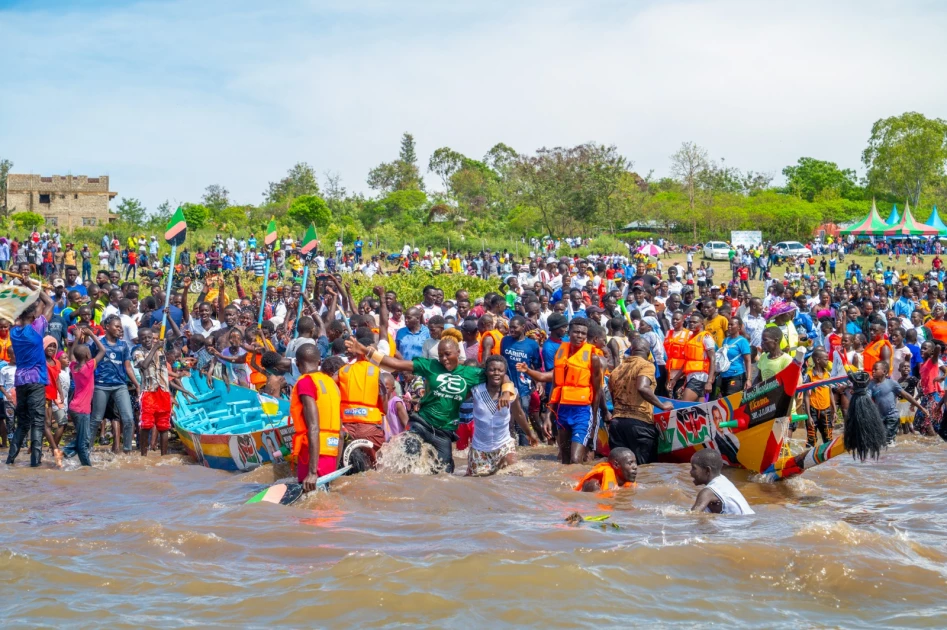
Shining Hope for Communities (SHOFCO) founder and CEO Dr Kennedy Odede on Saturday led a boat-riding competition at Luanda Kotieno Beach in Rarieda, Siaya County, as part of efforts to address the long-standing fish-for-sex practice along Lake Victoria.
The initiative comes amid growing concern that transactional relationships between fishermen and female fish traders, locally known as jaboya, have contributed to economic exploitation and elevated rates of HIV and other sexually transmitted infections in lakeside communities.
“This isn’t just about boats. It’s about dignity, and opportunity. We are supporting women to do their fish business independently without relying on men who exploit them,” Dr Odede said.
“The competition we organised today is just a beginning of others we will roll out next year in all the shores of Lake Victor across Kisumu, Homa Bay and Siaya counties,” he added.
Under the jaboya system, female fishmongers enter sexual relationships with fishermen in exchange for preferential access to fish. While women dominate fish processing and trade, most lack ownership of boats or direct access to catches, leaving them dependent on fishermen for supply.
“We are going to work with women and men to end fish-for-sex vice in the lake side region,” Dr Odede said.
The event drew an estimated 5,000 spectators. Participants were issued with life jackets, while the overall winner received a boat engine to support movement and access on the lake.
Research has linked the practice to increased HIV prevalence in beach communities. Data from the National Syndemic Diseases Control Council (NSDCC) shows HIV incidence in some lakeside areas stands at about 26.2 per cent, significantly higher than national rural and urban averages.
Luanda Kotieno Beach chairman George Ochieng described the initiative as timely, citing both social and economic challenges facing the community.
“We have been grappling with not only declining fish stocks but also the social fallout of jaboya,” he said.
“We are encouraging our women to work hard and avoid being misused by men who are only interested in exploiting their vulnerability.”
Local fish trader Janet Otieno, who took part in the competition, said access to fish remains a major challenge for women traders, particularly during periods of low catch.
“Women here have always jostled for fish stocks, and when catches are low, the pressure increases. Some women feel they have no choice but to comply with demands from fishermen who control the boats,” she said.
SHOFCO says it plans to work with county governments to provide skills training, financial literacy programmes and health education as part of broader efforts to address the economic drivers of the practice.
“We must address the scarcity of fish, the economic marginalisation of women, and the lack of alternative livelihoods that push them into exploitative arrangements,” Dr Odede said.
He also called for increased investment in aquaculture and sustainable fishing technologies to improve fish supply and reduce dependency on informal shore-based arrangements.
Studies indicate that beach communities in Nyanza may account for up to 25 per cent of new HIV infections in the region, partly due to high mobility among fishermen and transactional sexual networks. An estimated 127,000 women in Nyanza are directly or indirectly involved in the fish trade, many facing pressure to engage in jaboya to access fish.
Leave a Comment