

Regenerative Agriculture key in combating land degradation, experts say at inaugural conference
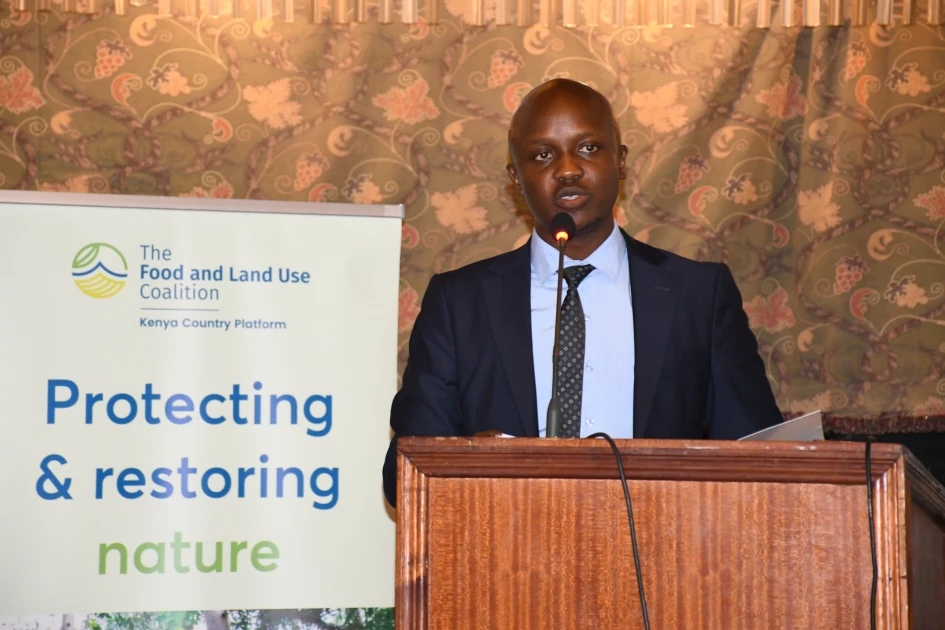
Arnold Kipchumba reads First Lady Rachel Ruto's statement at the Regenerative Agriculture Conference. Photo: AGRA/Twitter.

Audio By Vocalize
During the inaugural Regenerative Agriculture Conference in Kenya, organized by the Food and Land Use Coalition Kenya (FOLU) and the Ministry of Agriculture, stakeholders called for meaningful partnerships and collaborations to accelerate the transformation of Kenya's food systems.
Kenya’s First Lady Rachel Ruto expressed her commitment to finding sustainable solutions to combat drought and build resilience among Kenyans.
“We are all aware that Kenya has been grappling with the devastating effects of drought for far too long. Communities, particularly those in arid and semi-arid areas, bear the brunt of this natural disaster. The prolonged periods of water scarcity have resulted in immense suffering, food insecurity, and loss of livelihoods,” she said in a speech read by her representative Arnold Kipchumba.
“One of the most promising approaches to address this challenge is through the adoption of environmentally friendly agriculture practices,” she added.
On his part, Dr. Seth Cook, the FOLU Asia Coordinator, noted that Regenerative Agriculture is key in combating land degradation, restoring soil health, increasing biodiversity, and promoting sustainable food systems.
“By adopting regenerative practices, Kenya can mitigate the adverse effects of land degradation and desertification while ensuring a more resilient and prosperous future,” said Dr.Cook.
AGRA Kenya Country Manager John Macharia reinstated the significance of context-specific approaches, holistic and inclusive innovations.
“Kenya's food systems face many challenges ranging from their unsustainable nature, a major contribution to national carbon emissions, and detrimental impact on biodiversity. With millions of people suffering from hunger and malnutrition, the COVID-19 pandemic exposed the fragility of these systems and the need for transformative action. Indeed regenerative agriculture is a promising solution,” said Macharia.
During the two-day conference, which ended on Friday, July 17, participants engaged in plenary sessions and panel discussions covering various topics related to Regenerative Agriculture best practices for sustainable development, soil health, biodiversity conservation, climate change resilience, youth employment and entrepreneurship opportunities, drivers for adoption, and cost-benefit analysis.
AGRA president Dr. Agnes Kalibata said the conference was timely, as it came alongside the United Nations' declaration of June 17, as the World Day to Combat Desertification and Drought
“It is in line with the commitment of the Kenyan government, as outlined in the Bottom-Up Economic Transformation Plan, to leverage the role of agriculture, livestock, and small and medium enterprises in driving sustainable development,” added Dr. Kiplimo Arap Lagat.
The experts recognized the potential of Regenerative Agriculture in creating youth employment and entrepreneurship opportunities, and committed to developing a roadmap for promoting Regenerative Agriculture for sustainable development in Kenya.
Leave a Comment