

Sudan looks to gold to boost economy, denies Russian smuggling
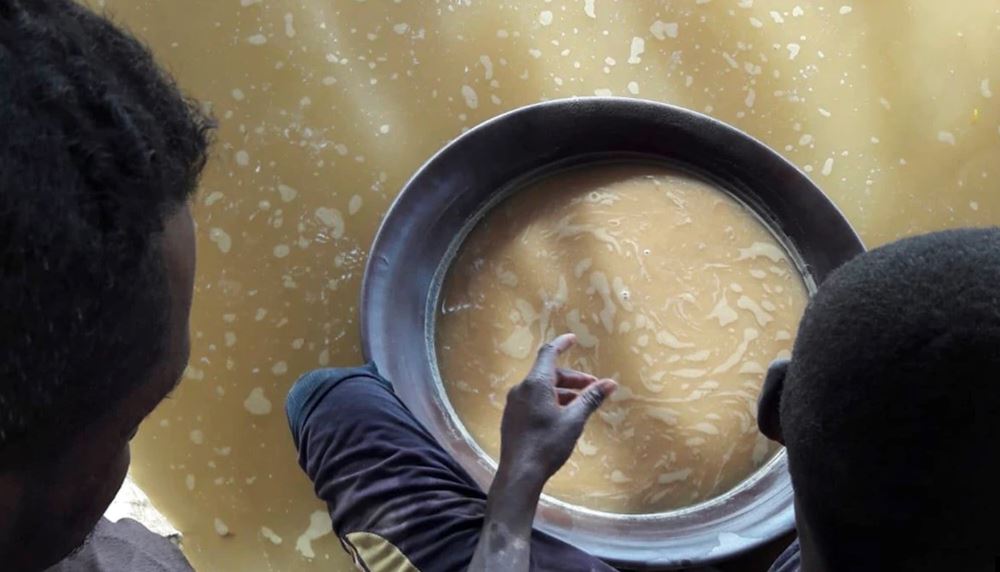
FILE - This handout photo taken on Aug. 31, 2018 in Sudan and provided by Interpol on Sept, 10, 2018, shows a gold mine where children use chemical products like mercury and cyanide, near Khartoum and the city's international airport.

Audio By Vocalize
Sudan’s
military rulers this week announced an emergency committee to address the
country’s collapsing economy and pointed to its gold mining as a possible
boost.
Sudan’s
ambassador to Russia has denied reports that Moscow has been smuggling gold
from Sudan in preparation for sanctions over its invasion of Ukraine. But
Sudanese analysts say gold smuggling is rampant, including to Russia.
State
media on Thursday said the ruling Sovereign Council’s second in command,
General Mohamed Hamdan Dagalo, known as Hemeti, met with gold miners who vowed
to supply the central bank with gold.
The
report came after Hemeti gave a rare press statement this week on efforts to
prevent the country’s economic collapse.
Sudan’s
exports dropped 85% in January and prices for everything are quickly rising —
one of the main sparks for the 2019 uprising that led the military to oust
former president Omar al-Bashir.
In
remarks to media Monday, Hemeti announced an economic emergency committee to
address the issues. Among other measures, he pointed to Sudan’s gold mining,
which amounts to at least 50 tons per year, as a potential solution.
Hemeti
says one of the most important resources that can help boost Sudan’s economy is
the gold. He says security forces have arrested a lot of people smuggling gold,
40 buyers in all. He says the buyers are not the problem and asks, from whom
are they buying this gold? That’s the question, he says, adding, "We will
find out."
Hemeti
gave no details on the nationalities of those arrested, the timing, or who was
suspected of buying how much smuggled gold.
His
comments came just days after a report in
the British Telegraph newspaper said
Russia prepared for sanctions over its Ukraine invasion by buying smuggled
Sudanese gold.
Hemeti
didn’t comment on the allegation in his remarks.
Late
last month, Hemeti began a week-long visit to Moscow as much of the world was
criticizing Russia for preparing to invade its neighbor.
The
Kremlin’s invasion began as Hemeti met with Russian officials to discuss
expanding and strengthening cooperation with Sudan.
Sudan’s
Foreign Ministry spokesman refused to comment on the allegations of Russian
gold smuggling.
But
in a written response to VOA through a messaging application, Sudan’s acting
ambassador to Russia Onor Ahmed Onor dismissed the claims.
“I
have nothing to say other than it is fake news and a story created from the
imagination of the Telegraph reporter,”
read the text.
Hemeti
commands the Rapid Support Forces (RSF), which grew out of the Janjaweed
militias that human rights groups say committed crimes against humanity in
Sudan’s Darfur region.
Analysts
say the RSF is itself involved in gold smuggling.
Salah
AlDoma is dean of political science at Khartoum’s Omdurman Islamic University.
"Russia
surely obtained gold from several sources, not only Sudan," he said.
"But, yes, Sudan is one of the countries that the Russian companies
managed to benefit from with secret agreements with the RSF and other entities
like the former ruling National Congress Party. Russia, like many countries,
benefited from smuggling Sudanese gold."
The
RSF office refused to take a call from VOA seeking comment on the allegations.
A
spokesman at Sudan’s Ministry of Minerals confirmed to VOA that two Russian
gold mining companies are operating in the country — Elianze and Meroe Gold, a
subsidiary of M-Invest.
But
the ministry’s spokesman would not comment on allegations of gold smuggling.
A 2019
report by CNN says M-Invest, a Russian company linked to the
Kremlin and Russian mercenaries, was heavily involved in smuggling gold out of
Sudan.
CNN
reported in 2019 that M-Invest, a mining company the U.S. says is owned by
Russian President Vladimir Putin’s ally, Yevgeny Prigozhin, also advised
Sudanese authorities how to quash public protests.
Authorities
say Prigozhin is behind the Wagner Group of Russian mercenaries that U.N.
experts have accused of human rights abuses from Syria to Libya to the Central
African Republic.
While
it’s not clear to what extent the Russian companies are still involved in
Sudan’s gold mining, analysts say most of it has been off the books.
Sanhori
Eissa, the former head of economics at Sudan’s largest newspaper Al-Rayaam, says exporting Sudan’s
gold to Russia remains a smuggling operation, as is the case with nine other
neighboring countries of Sudan.
"The
export is probably done through the United Arab Emirates [UAE], through
Khartoum international airport. The only outlet is the UAE, where Sudan’s
[smuggled] gold gets refined and stamped as an emirate product then
[re-]exported," he said.
It
was not possible to independently verify Eissa’s claims.
Sudan
was headed for international relief from lenders but was cut off from foreign
assistance after an October military coup overthrew the transitional government
formed after Bashir’s ouster.
Since
the coup, ongoing street protests against military rule have left at least 85
people dead.
Leave a Comment