

Wole Soyinka’s life of writing holds Nigeria up for scrutiny
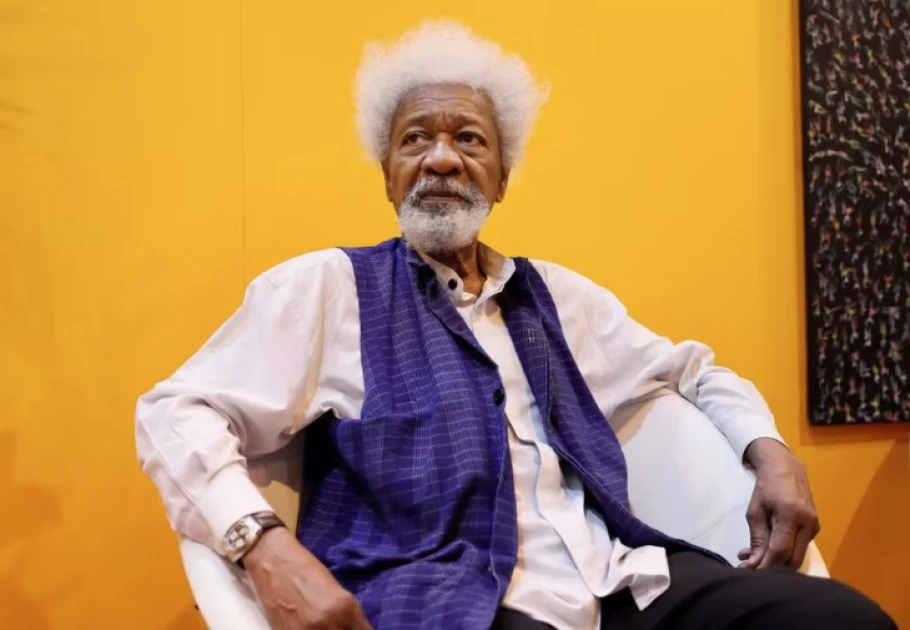
Nigerian writer Wole Soyinka. Thomas Samson/AFP

Audio By Vocalize
Akinwande
Oluwole Babatunde Soyinka, known simply as Wole Soyinka, can’t be easily
described. He is a teacher, an ideologue, a scholar and an iconoclast, an elder
statesman, a patriot and a culturalist.
The
Nigerian playwright, novelist, poet and essayist is a giant among his
contemporaries. In 1986, he became the first sub-Saharan African, and is one of
only five Africans, to be awarded the Nobel
prize for literature. This was in recognition of the way he “fashions the drama of existence”.
His
works reveal him as a humanist, a courageous man and a lover of justice. His
symbolism, flashbacks and ingenious plotting contribute to a rich dramatic
structure. His best works exhibit humour and fine poetic style as well as a
gift for irony and satire. These accurately match the language of his complex
characters to their social position and moral qualities.
His
works have such impact that some of them are used in schools in Nigeria and
some other anglophone countries in West Africa. Some have also been translated
into French.
Life
and activism
Soyinka
was born into a Yoruba family in Abeokuta, southwest Nigeria, on 13 July 1934.
His parents were Samuel Ayodele Soyinka and Grace Eniola Soyinka. He had his
primary education at St Peter’s Primary School in Abeokuta. In 1954, he
attended Government College in Ibadan, and subsequently University College
Ibadan (now the University of Ibadan) and the University of Leeds in England.
He
was jailed in 1967 for speaking out against Nigeria’s civil war over the
attempted secession of Biafra from Nigeria. Soyinka was also incarcerated for
taking over the radio station of the disbanded Nigerian Broadcasting
Corporation in Ibadan to announce his rejection of the 1965 Western Nigerian election
results.
He
joined other activists and democrats to form the National Democratic Coalition
to fight for the restoration of democracy in Nigeria.
He
now lives in Abeokuta.
Themes
and style
My
first contact with Soyinka was in secondary school when we were made to read
his play Lion and the Jewel. Some of my classmates then felt he was difficult
to read and assimilate. I later found out Lion and the Jewel was actually one
of the simplest titles.
Soyinka’s
works often address the clash of cultures, the interface between primitiveness
and modernity, colonial interventions, religious bigotry, corruption, abuse of
power, poor governance, poverty and the future of independent African nations.
His themes have remained constant over time and many African states are still
grappling with issues he has raised since the 1950s.
Through
his works, I discovered that he has deep knowledge and understanding of his
mother tongue, Yoruba. For instance, in Death and the King’s Horseman and other
plays, we see Yoruba wisecracks, philosophy and proverbs translated into his
language of communication, English. These enrich his writings.
I
find the changing forms of his creative works interesting in spite of the
unchanging content of the narratives or drama. Read King Baabu or The
Beatification of the Area Boy and Chronicles from the Land of the Happiest
People on Earth to observe the change in Soyinka’s style.
Forms
of writing
Soyinka’s plays cut across diverse
socio-economic, political, cultural and religious preoccupations. A Dance of
the Forests, one of the most recognised plays, was written and presented in
1960 to celebrate Nigeria’s independence. It reflects on the ugly past and
projects into a blossoming future.
His
1965 play Kongi’s Harvest premiered in Dakar, Senegal in 1966 at the first
Negro Arts Festival. The lead character, Kongi, was played by Soyinka himself.
It deals with themes of corruption, ego and paranoia. The lead character,
Kongi, is the archetype of dictatorship globally. He suppresses all voices of
reason, revelling in his illusion of power and thinking no one can stop him –
until he meets a tragic end.
Other
plays depict clashes of culture between white influence, colonial values and
black African orientations. Soyinka never blames but dramatises the evil people
do through characters with impact, strong plots, accurate settings and
language.
Soyinka
has written only three novels: The Interpreters (1965), Season of Anomy (1973)
and Chronicles from the Land of Happiest People on Earth (2021), which came
almost 50 years after his last. The novels focus mainly on Nigeria and its many
ills, including corruption, religious bigotry and inept governance.
The
characters in the first two novels have dreams which are sometimes dashed
through a tragic truncation of their lives. The latest captures contemporary
Nigeria, the Nigerian diaspora and the myths of an ever-crawling giant. It
paints a picture of things going wrong for the country.
Certain
poems stand out among Soyinka’s collection. These are Telephone
Conversation and Abiku. The former uses humour to talk about the serious issue
of an African experiencing racism as a new student in a British university. The
latter comments on Nigeria’s inability to develop; the poet explores the futility
of life.
Soyinka’s
non-fiction includes The Man Died: Prison Notes (1972), his autobiography, Ake:
The Years of Childhood (1981), Isara: A Voyage Around Essay (1990), Ibadan: The
Penkelemes Years (1989) and You Must Set Forth at Dawn (2006). In these works
he has narrated how the story of his life and his family intertwines with the
fate of Nigeria.
As
an essayist and intellectual, he has highlighted the specific failings of
individuals in the Nigerian polity. Soyinka is not afraid of mentioning names
of people he writes about, nor the wrongdoings he is accusing them of.
These
works include Myth, Literature and the African World (1976), Art, Dialogue, and
Outrage: Essays on Literature and Culture (1988), The Black Man and the Veil:
Beyond the Berlin Wall (1990) and The Open Sore of a Continent: A Personal
Narrative of the Nigerian Crisis (1996).
They
are essays that have contributed to Soyinka’s status as a global intellectual.
[Written by: Abayomi Awelewa, Lecturer in African and African Diasporan Literature, University of Lagos.]
Leave a Comment