

OPINION: Diaz - The future of retail shelf display
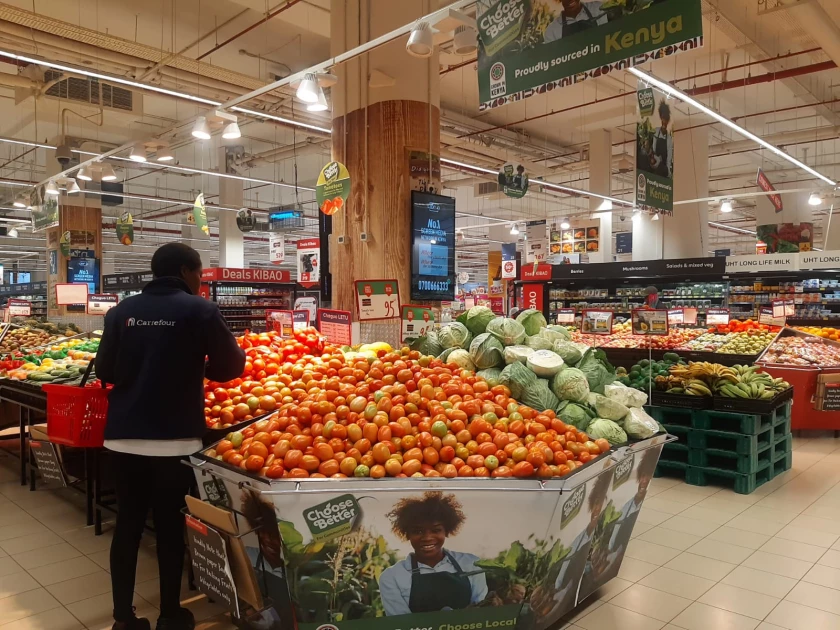
Inside retail giant Carrefour's fruit and vegetables section.

Audio By Vocalize
It has evolved into a precise blend of psychology, data, technology and creativity. As global retail changes rapidly, driven by digital innovation and shifting consumer expectations, the science of retail display is becoming a powerful tool in sales and marketing.
For African retail markets, from the modern supermarket aisles of Nairobi and Lagos to the open-air markets of Accra and Kampala, the future of shelf display represents both a challenge and an opportunity. Retailers that understand and adopt these innovations will connect more deeply with consumers and drive stronger results while those that choose to ignore will remain lagging behind.
Today, shelf display is now a science and not just art. While traditionally shelf display was rooted in visual appeal with neat shelves, bright packaging, and endcap promotions, today it is increasingly relying on data and behavioral science.
Research indicates that 82% of purchase decisions are made in-store, often in as little as 3 to 7 seconds. Retailers are pondering on issues such as where does a customer's eye go first? How do shoppers move through the store? What combinations of products increase buying intent?
The use of tools like eye-tracking studies, heat maps, and facial expression analysis is helping to answer these questions by revealing how visual cues, product placements, and even shelf height influence decision making.
Studies show that products placed at eye level can outsell those on bottom shelves by as much as 80%. In many developed markets, retailers test multiple shelf layouts in real time using digital displays and data analytics to optimize sales. This data-driven approach has been shown to increase sales by 10% to 20% for optimized categories.
This shift to data-driven shelf design is helping retailers move beyond guesswork and just the mere needs for aesthetics and every product placement is becoming a strategic decision backed by evidence.
One of the biggest changes in retail is the rise of digital and interactive shelf technologies. Digital price tags are replacing traditional paper tags, allowing prices to be updated instantly. The global market for Electronic Shelf Labels (ESLs) is projected to reach 3.4 billion dollars by 2027, growing at over 15% annually.
Retailers are using these to react quickly to competitors, run dynamic promotions, and even display short product videos or nutritional tips right on the shelf. This technology can reduce labor costs associated with manual price changes by up to 90% and virtually eliminate pricing errors.
The use of smart shelf sensors is also gaining currency. Built-in weight sensors and Radio Frequency Identification (RFID) technology is used to detect when a product is removed or replaced.
When integrated with inventory systems, these sensors help track stock levels in real time, reducing out-of-stocks and improving replenishment. Out-of-stocks cost retailers an estimated 1 trillion dollars globally each year in lost sales, and smart shelves can help recapture a significant portion of this revenue.
Another innovation increasingly being used in retail is the Interactive Shelf Displays. Touch screens or augmented reality (AR) overlays on shelves can show product information, suggested pairings, or special offers.
Imagine standing in front of a cereal section and seeing a screen recommend milk brands that pair well, or showing a quick recipe idea on your phone when you scan a QR code on the shelf. Studies indicate that AR experiences can increase conversion rates by 40% and boost customer engagement time by 75%.
These technologies are already in use in parts of Europe, Asia, and North America. In Africa, some of the larger retail chains and malls are beginning to pilot digital displays and interactive signage, especially in urban centers. The African retail market is expected to grow at a CAGR of 5.2% through 2025, creating a fertile ground for these innovations.
Personalization, the domain of online shopping, is now coming into physical retail. Using data from loyalty programs, mobile apps, and even Bluetooth beacons in stores, retailers can tailor shelf displays and promotions to individual shoppers.
For example, shoppers who frequently buy gluten-free products might see gluten-free brands highlighted as they browse the bakery aisle. A loyalty app might send a push notification with a special offer as a customer approaches a shelf of a preferred brand. Personalized promotions have been shown to lift sales by 20% to 30% compared to generic ones. According to McKinsey, 71% of consumers expect companies to deliver personalized interactions, and 76% get frustrated when this doesn't happen.
These experiences make customers feel understood and valued. As one global retail executive said, "Shopping in the future will feel less like browsing and more like being personally guided to what you want."
Retail is also starting to innovate towards shelf display interacting with E-Commerce and mobile Integration. Shelf display won't be confined to physical stores but rather will link seamlessly with online and mobile experiences.
QR codes or image recognition will allow customers to scan products with their phones and instantly access reviews and ratings, price comparisons, nutrition or manufacturing information and suggested uses or recipes. Currently, 56% of consumers have used their phones for in-store shopping assistance, and this number is rising.
Retailers can also integrate in-store displays with their e-commerce platforms. For example, if a product is out of stock on the shelf, a shopper could order it on the app and choose home delivery or in-store pickup. This online-offline integration, often called "endless aisle," can increase a retailer's effective inventory by up to 30% without increasing shelf space and keeps shoppers engaged with the retailer's ecosystem.
As retail evolves globally, African markets, already diverse and dynamic, are uniquely positioned to benefit from these innovations. Just as mobile money leapfrogged traditional banking in Africa, with sub-Saharan Africa accounting for nearly half of the world's mobile money accounts, digital shelf technologies can leapfrog legacy retail systems. Instead of investing in old-style shelving strategies, retailers can adopt smart displays, QR interactivity and digital pricing to create modern experiences for connected shoppers. Manufacturers invest in partnerships with retail giants to promote and grow their sales giving consumers healthy and competitive products across the region .
African consumers are among the world's most mobile-centric. With smartphone penetration projected to reach 65% in Sub-Saharan Africa by 2025 (up from 45% in 2020), and mobile data traffic expected to grow 6-fold by 2027, loyalty programs and mobile apps tied to shelf displays will resonate in markets where consumers are already comfortable with mobile payments, mobile browsing, and app-driven commerce.
Over 60% of consumers in Kenya and Nigeria have used their phones for retail payments, indicating a readiness for mobile-integrated shelf experiences.
Modernizing shelf display is not without challenges. The cost of technology can be high initially, with a typical ESL implementation costing between 10 dollars to 15 dollars per shelf tag. Infrastructure gaps (such as reliable electricity or internet) may slow adoption—in parts of Africa, power outages can occur 300+ days a year, requiring backup solutions.
Skills and training are needed to manage new systems, with a significant digital skills gap persisting across the continent. However, the potential benefits are significant and include reduced stockouts and waste (which can account for 4-5% of sales), more personalized shopping experiences, better alignment of products with consumer needs and increased competitiveness against informal markets and e-commerce.
For forward-thinking African retailers, the shelf of the future is not a distant concept, it is an immediate competitive advantage.
The largest retailers in Africa include South African-based conglomerates, with the Shoprite Group leading by revenue, market cap, and employee count. However ,top retailers driving fast-moving consumer goods (FMCG) and furniture across the continent include Pick n Pay, The SPAR Group, Woolworths, Steinhoff,
Shoprite Holdings, Carfoure, Naivas, Quick Mart, Walmart, Chandarana, Safaricom outlets all expanding and increasing revenue and employment across the continent.
Chris Diaz
Chairman, Adili Group
X - @DiazChrisAfrica
Leave a Comment