

OPINION: Why modernizing, expanding JKIA is a strategic investment in Kenya’s future
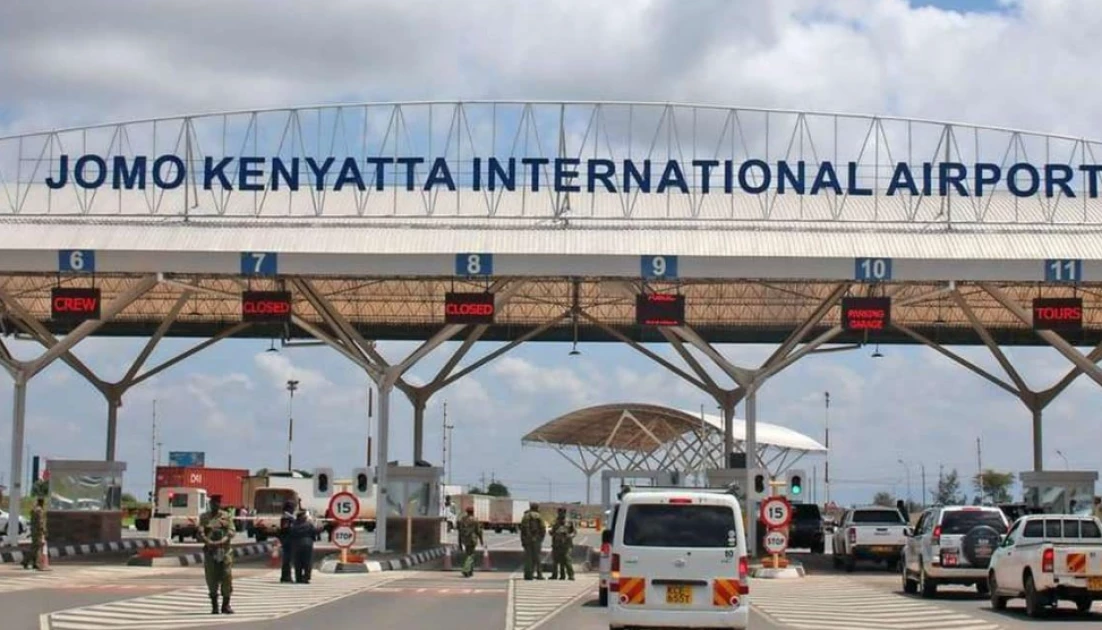
File image of the JKIA entrance.

Audio By Vocalize
By Dr Mohamud Gedi - Ag. Managing Director/CEO, Kenya Airports Authority
A country’s ambitions are often revealed at its airport. Before visitors experience its culture, landscapes or economy, they pass through a gateway that signals how prepared that nation is to compete in an interconnected world. Efficient airports accelerate tourism, trade and investment. When infrastructure falls behind demand, however, it risks becoming a bottleneck to growth.
For
Kenya, that gateway is Jomo Kenyatta International Airport (JKIA), the
country’s primary aviation hub and one of the most important gateways linking
East and Central Africa to global markets.
Over the
years, JKIA has become a critical pillar of Kenya’s economy. It connects
Nairobi to major global cities, supports regional commerce, facilitates
humanitarian operations across the region and welcomes millions of travellers
each year who come to experience Kenya as a destination.
From the
sweeping savannahs of the Maasai Mara National Reserve to the white-sand
beaches of the Kenyan Coast, Kenya remains one of Africa’s most sought-after
tourism destinations. A modern, efficient and welcoming airport is therefore
not simply an infrastructure asset, it is a vital component of the country’s
tourism competitiveness.
Recognising
both the opportunities and the pressures that lie ahead, the Kenya Airports
Authority, with strong support from the Ministry of Roads and Transport under
the leadership of Cabinet Secretary Davis Chirchir, has embarked on a long-term
transformation of JKIA guided by the JKIA Integrated Master Plan and
Feasibility Study prepared with the international aviation consultancy Dar
Al-Handasah.
This
vision aligns closely with the commitment of the President of the Republic of
Kenya, His Excellency, Dr William Samoei Ruto, whose administration has
prioritised the modernisation of the country’s aviation infrastructure as part
of a broader strategy to strengthen Kenya’s global connectivity and economic
competitiveness.
The
Master Plan looks ahead over the next two decades, and the projections are
striking. Passenger traffic through JKIA is expected to grow significantly,
reaching about 22.3 million passengers annually by 2045, representing an
average annual growth rate of approximately 4.6 percent.
Several
forces are driving this momentum. Kenya continues to strengthen its position as
a regional economic hub, while Nairobi remains a key centre for diplomacy,
commerce and international development in Africa. At the same time, the
country’s tourism sector continues to rebound strongly as global travellers
rediscover Kenya’s unique wildlife, landscapes and cultural experiences.
Equally
important is Nairobi’s strategic geographic location linking Africa with
Europe, the Middle East and Asia. As global aviation networks expand, airlines
increasingly see Nairobi as a natural gateway to East Africa. In recent years,
JKIA has experienced growing demand from international carriers seeking to
establish or expand routes to the city, reflecting Nairobi’s rising prominence
as a regional aviation hub.
Domestic
aviation is also projected to grow significantly as economic activity expands
across the country and air travel becomes more accessible. In this evolving
landscape, Kenya Airways is expected to deepen its focus on international connectivity,
reinforcing Nairobi’s role as a continental hub, while its subsidiary Jambojet
continues to strengthen links across the domestic market.
Cargo
growth presents an equally compelling case for expansion. JKIA has established
itself as one of Africa’s leading air cargo hubs and serves as the principal
export gateway for Kenya’s globally renowned horticulture sector.
In 2025,
the airport handled approximately 400,000 tonnes of cargo, much of it
consisting of fresh flowers, fruits and vegetables transported daily to markets
across Europe, the Middle East and beyond. According to Master Plan
projections, cargo volumes could rise to around 860,000 tonnes by 2045, more
than doubling over the next two decades.
This
growth supports thousands of farmers, exporters and logistics providers across
the country. Ensuring that JKIA has the infrastructure to handle expanding
cargo demand is therefore essential not only for aviation, but for Kenya’s
broader export economy.
The
Master Plan recognises that preparing for this future requires more than
expanding airport facilities; it requires positioning JKIA as a catalyst for
wider economic development.
For this
reason, the long-term vision includes the development of an Airport City,
Special Economic Zone and connectivity through rail and BRT around the airport.
Across the world, modern airports are evolving into integrated economic
ecosystems where logistics companies, export-oriented industries, conference
centres, hotels and commercial enterprises cluster around aviation
connectivity. Such developments generate employment, stimulate investment and
strengthen regional trade networks.
With its
strategic location and strong cargo capabilities, JKIA is uniquely positioned
to anchor such an aviation-driven economic hub, further cementing Nairobi’s
role as a regional centre for trade and logistics.
While
this long-term vision is ambitious, immediate improvements are also necessary
to address current operational pressures.
The
airport was originally designed to handle around 7.5 million passengers
annually. In 2025, however, JKIA processed approximately 8.9 million
passengers, placing increasing pressure on passenger facilities during peak
travel periods.
The project development therefore focuses on optimising and modernising the existing terminals as well as new terminal building. These improvements include reconfiguring passenger processing areas, introducing more digital systems and improving circulation within the terminal to reduce congestion.
Airside
enhancements, such as additional aircraft parking stands and rapid exit
taxiways, will also improve the efficiency of aircraft movements. These
measures are expected to increase the airport’s short-term capacity to around
12 million passengers annually, easing congestion while maintaining
uninterrupted operations.
Importantly,
these optimisation and modernisation works will be implemented concurrently
with the construction of a new passenger terminal, allowing capacity
improvements to be delivered faster while reducing the overall project
timeline.
The new
terminal represents the next major step in JKIA’s evolution. The facility will
accommodate an additional 10 million passengers annually in its first phase and
an additional 5 million passengers once the demand triggers. Designed with
modern passenger amenities, advanced processing technology and efficient
circulation systems, the terminal will provide a world-class travel experience
aligned with international aviation standards.
Another
transformative component of the masterplan is the development of a second runway.
Currently, JKIA operates with a single runway, a configuration that inevitably
limits operational flexibility. Maintenance activities or operational
disruptions can quickly affect aircraft movements and scheduling.
The
construction of a second runway will fundamentally strengthen the airport’s
operational resilience. A dual-runway configuration will increase airfield
capacity, improve scheduling reliability for airlines and allow the airport to
accommodate greater aircraft movements as demand grows.
Together,
the modernisation of existing terminals, the construction of a new passenger
terminal, the development of a second runway and the vision of an Airport City
represent more than infrastructure projects. They are a strategic investment in
Kenya’s future.
With the
full backing of the Government of Kenya, JKIA is being transformed into a
modern, world-class gateway, one that will connect Kenya to global markets
while showcasing the country’s ambition and promise as a destination of choice.
For every passenger landing, every tonne of cargo departing and every investor arriving in Nairobi, JKIA will stand as a testament to what Kenya can achieve when vision meets action. The journey toward the next generation of aviation in Kenya is underway, and the sky is only the beginning.
Leave a Comment